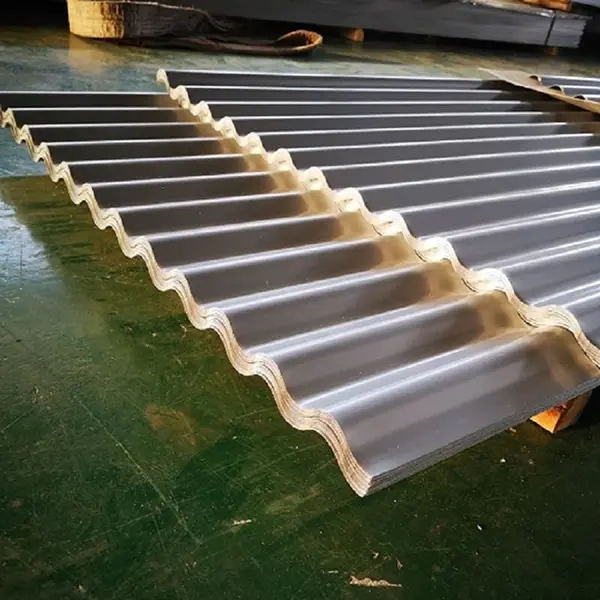
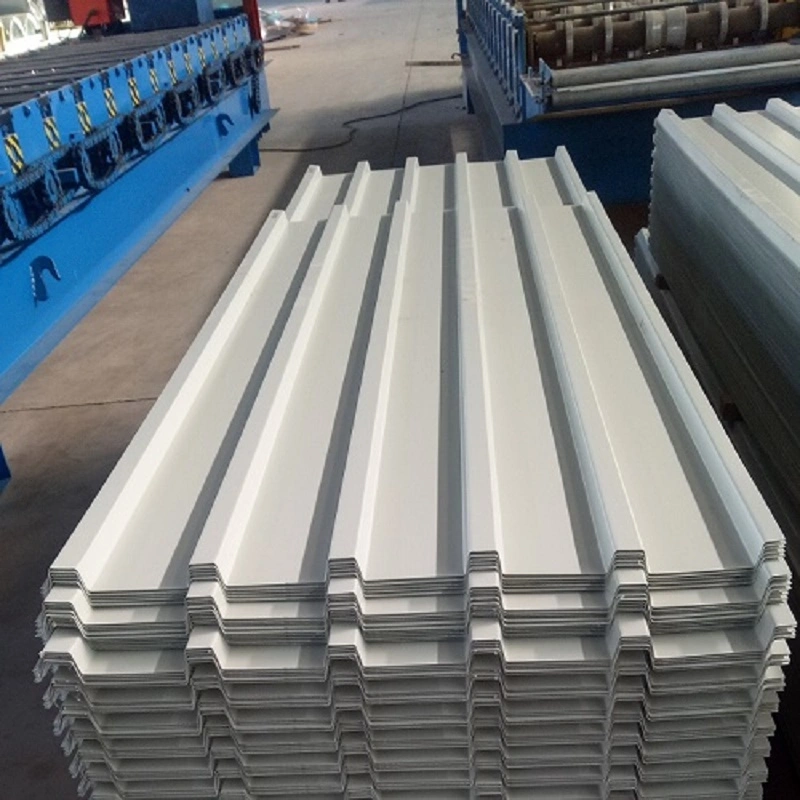
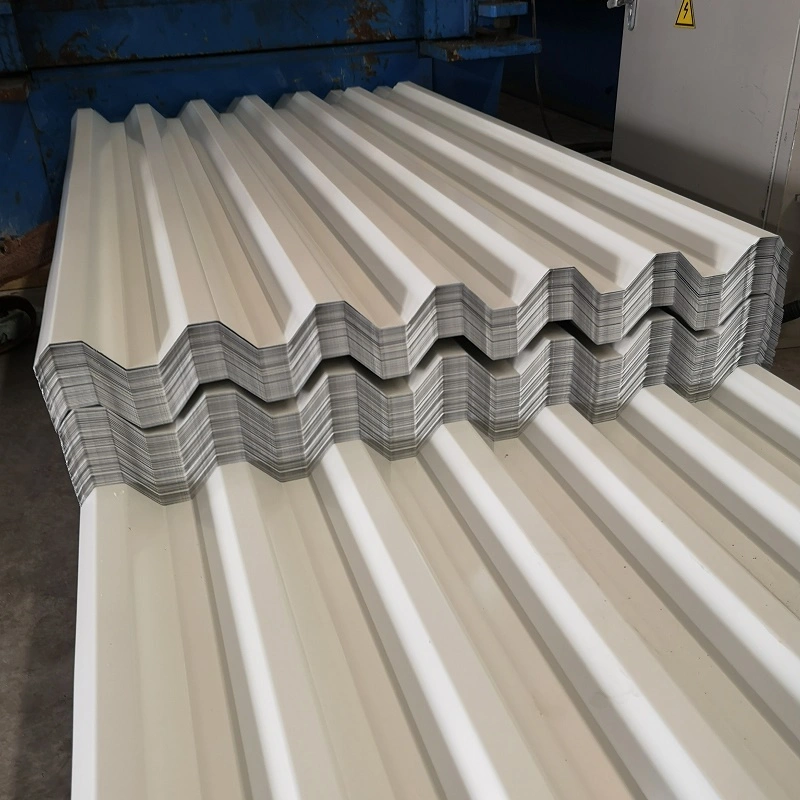
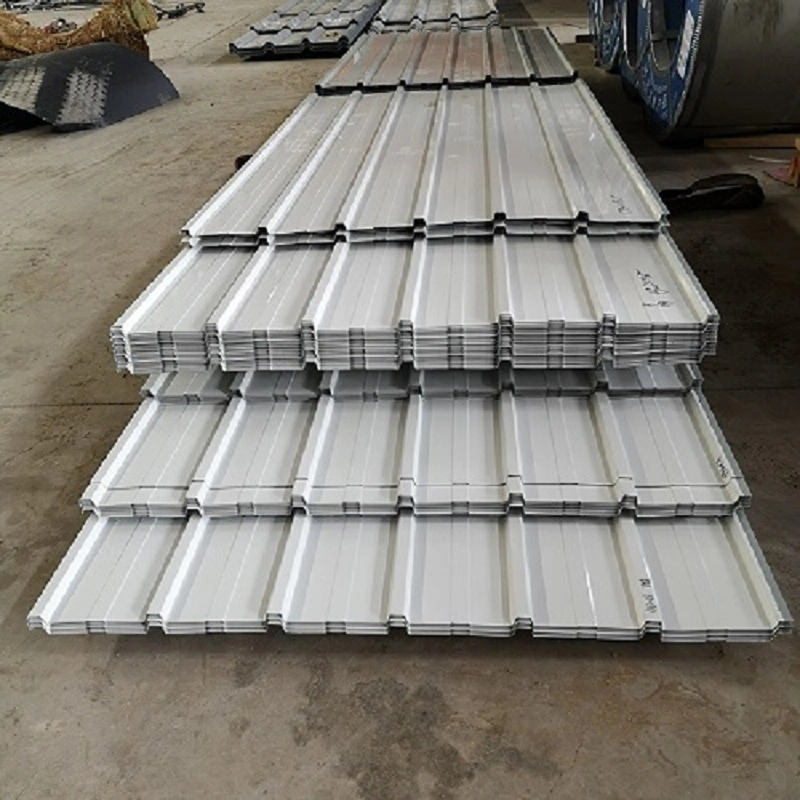
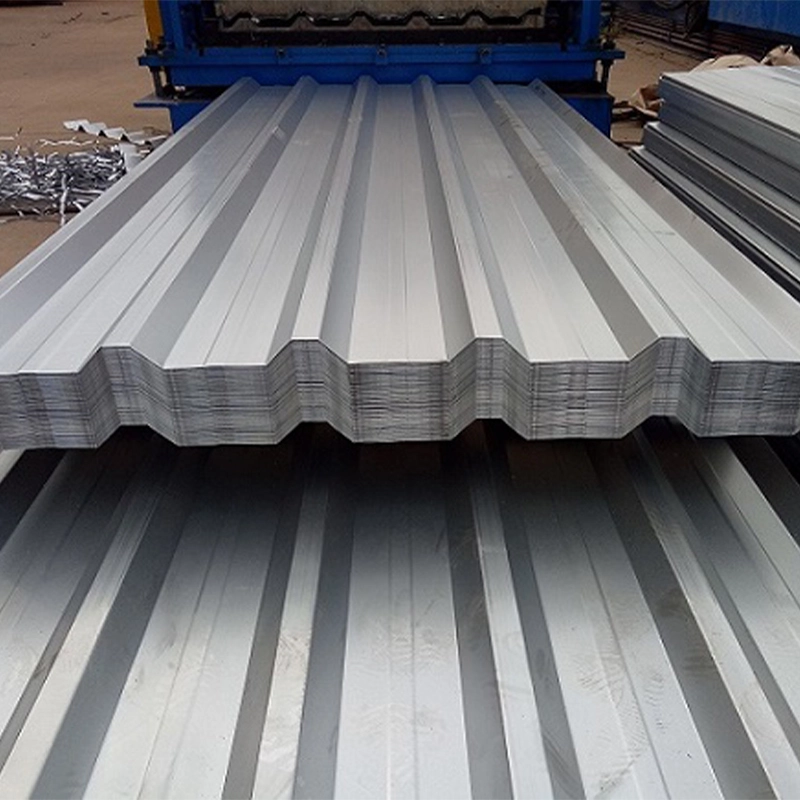
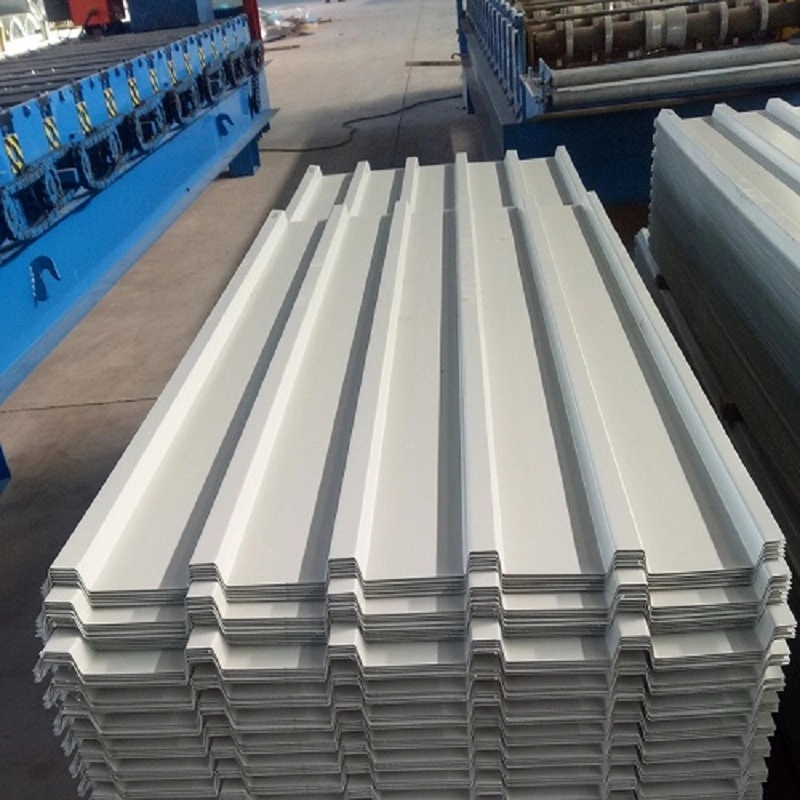
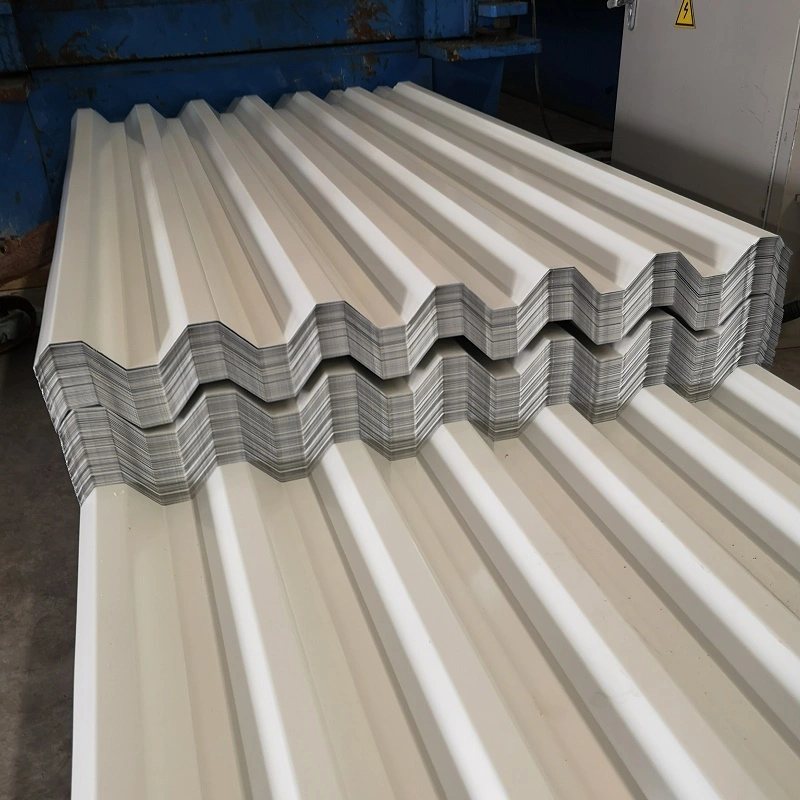
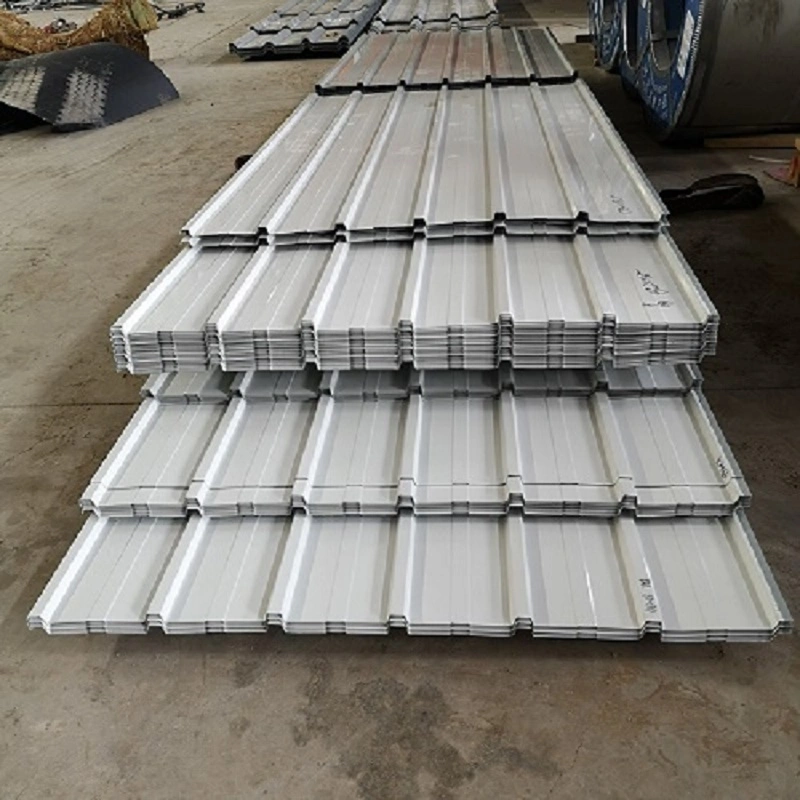
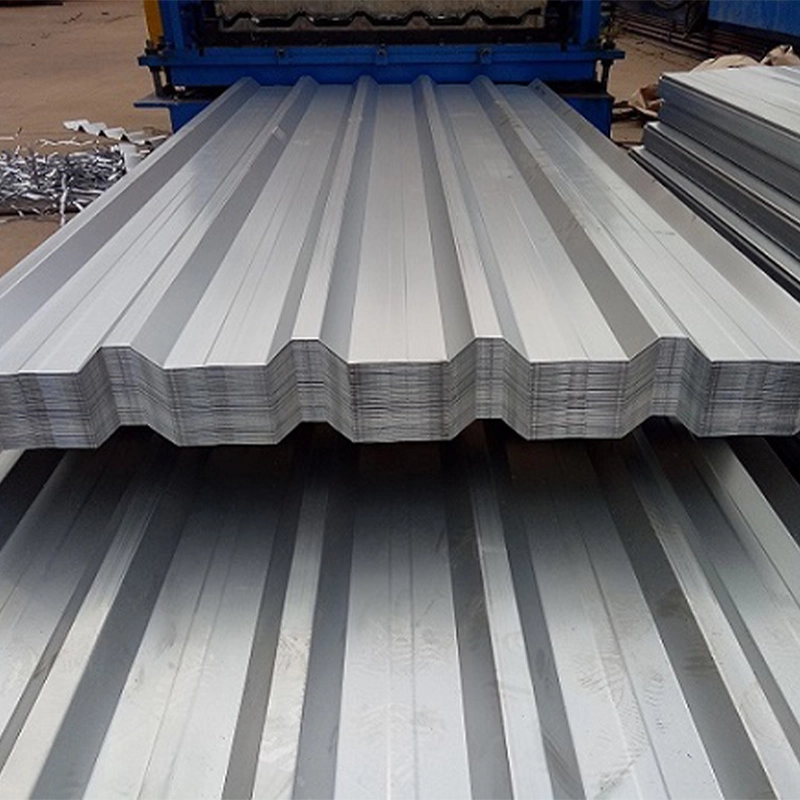
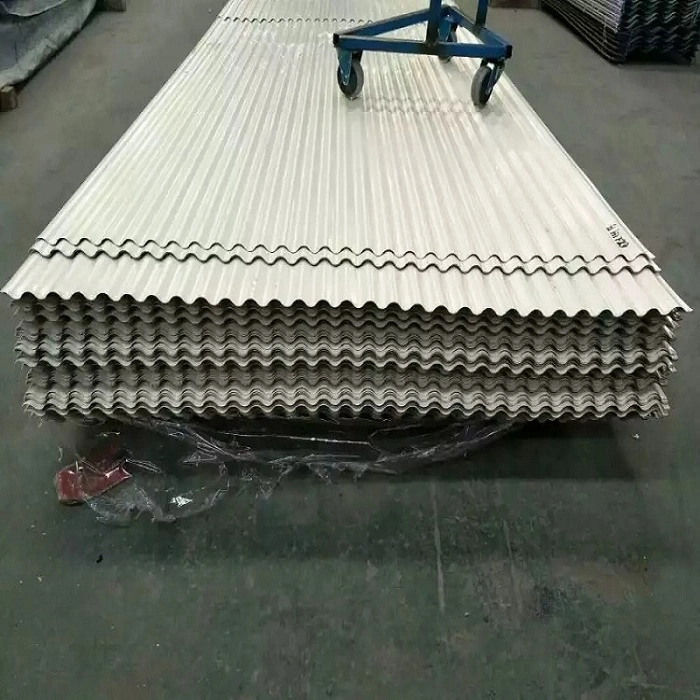
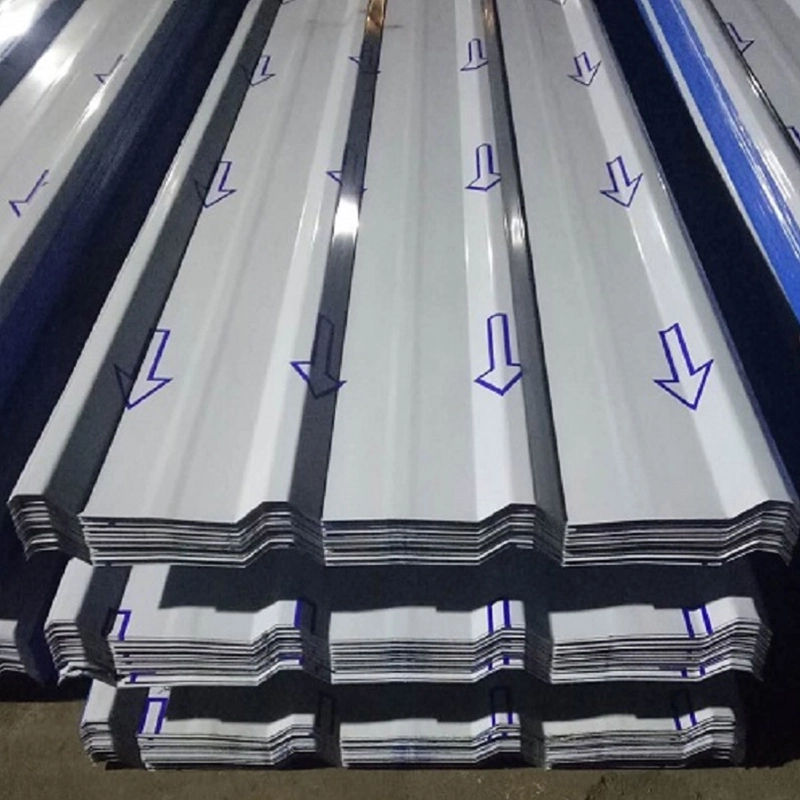
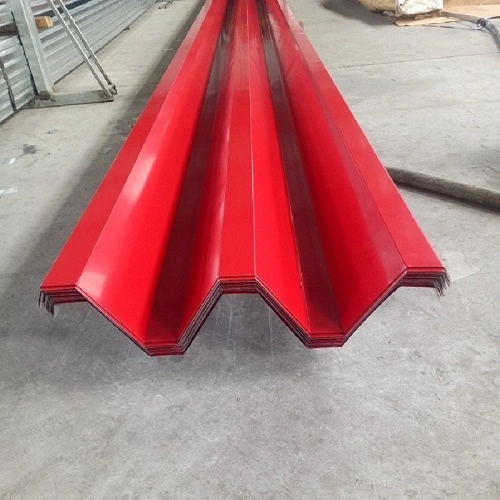
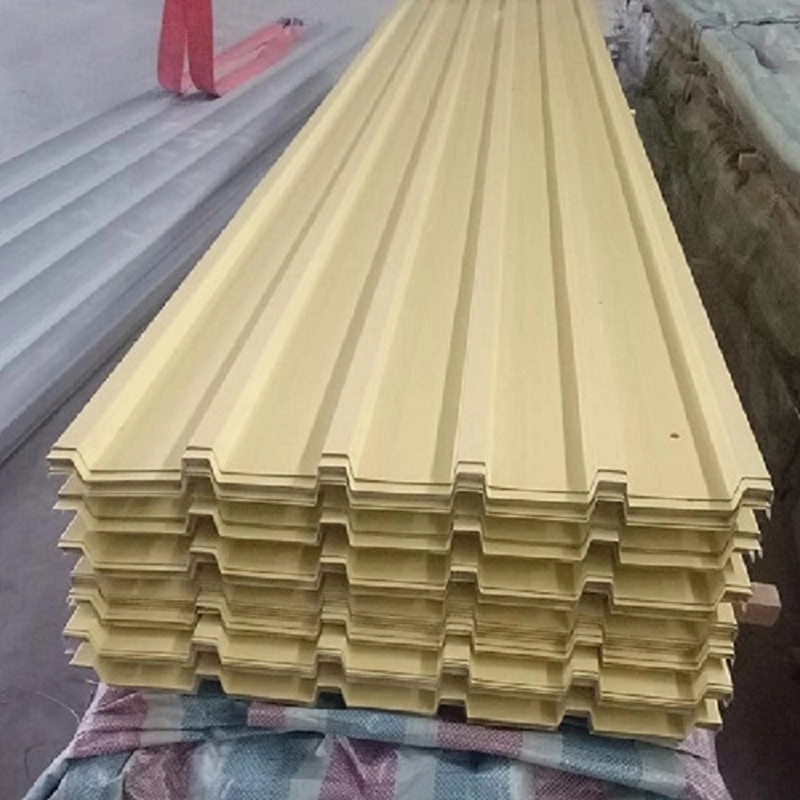
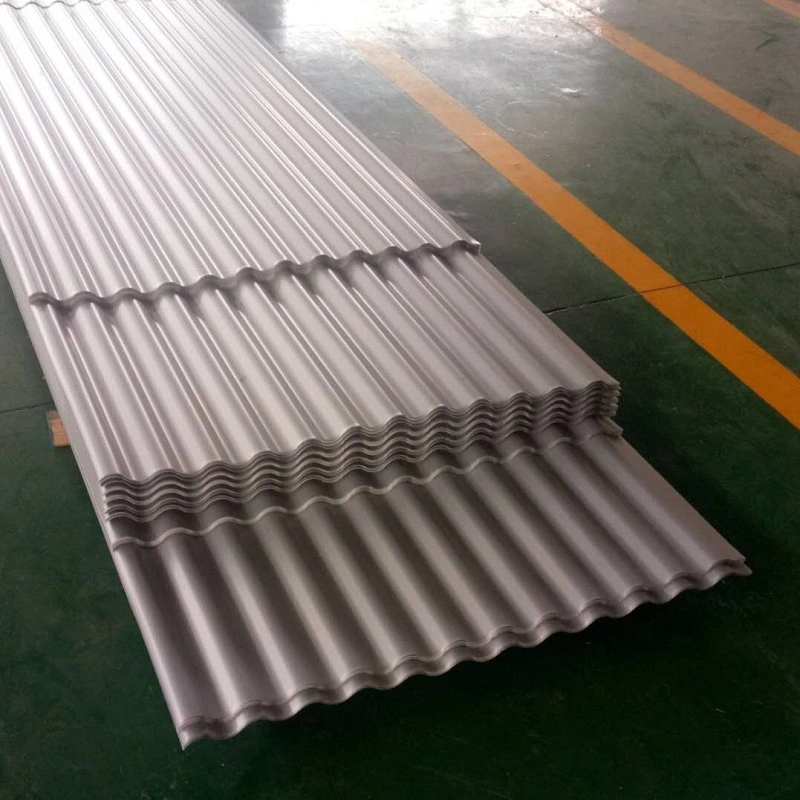
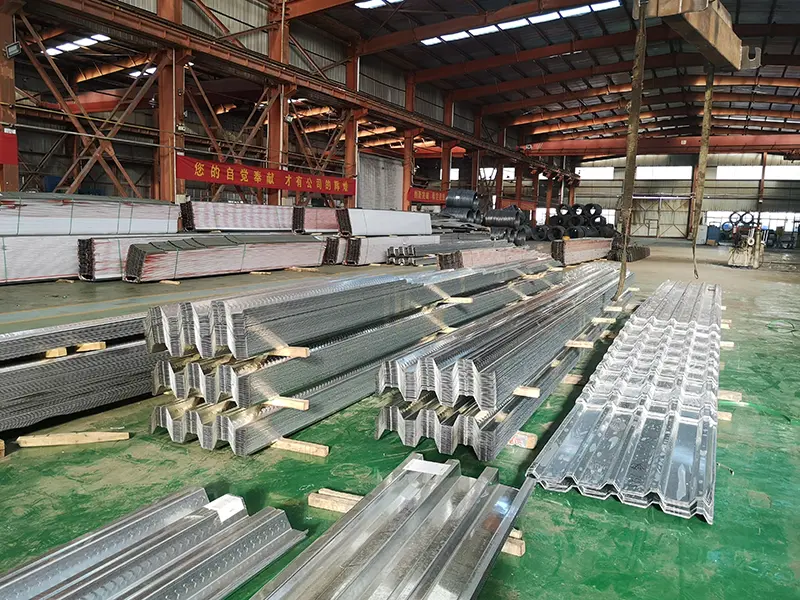
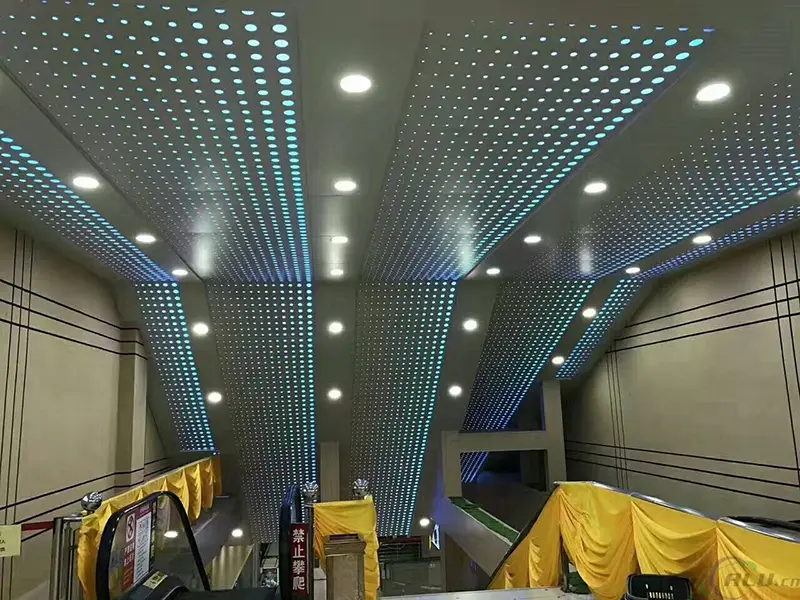
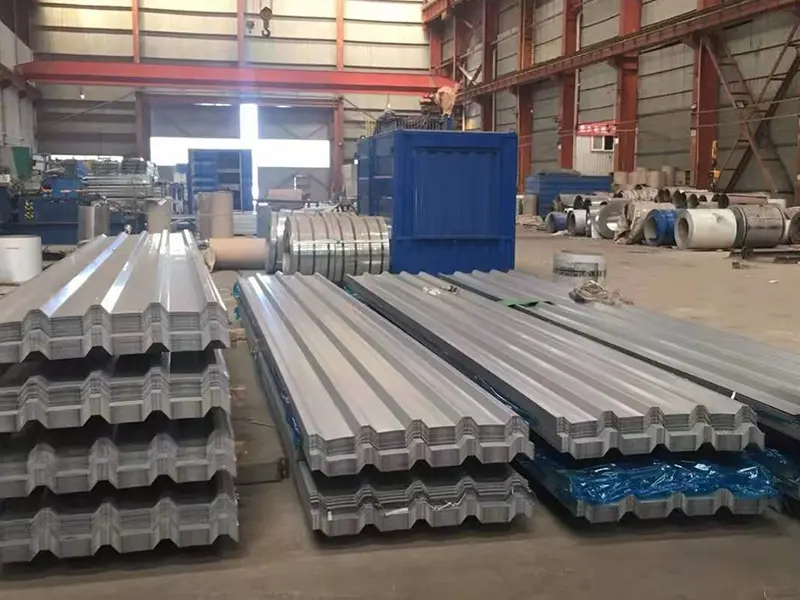
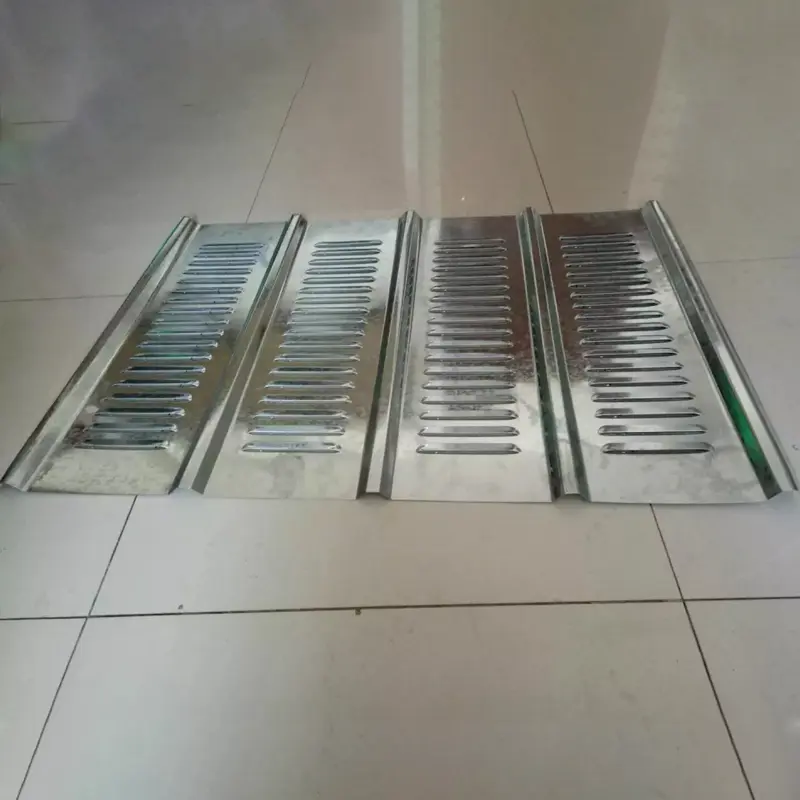
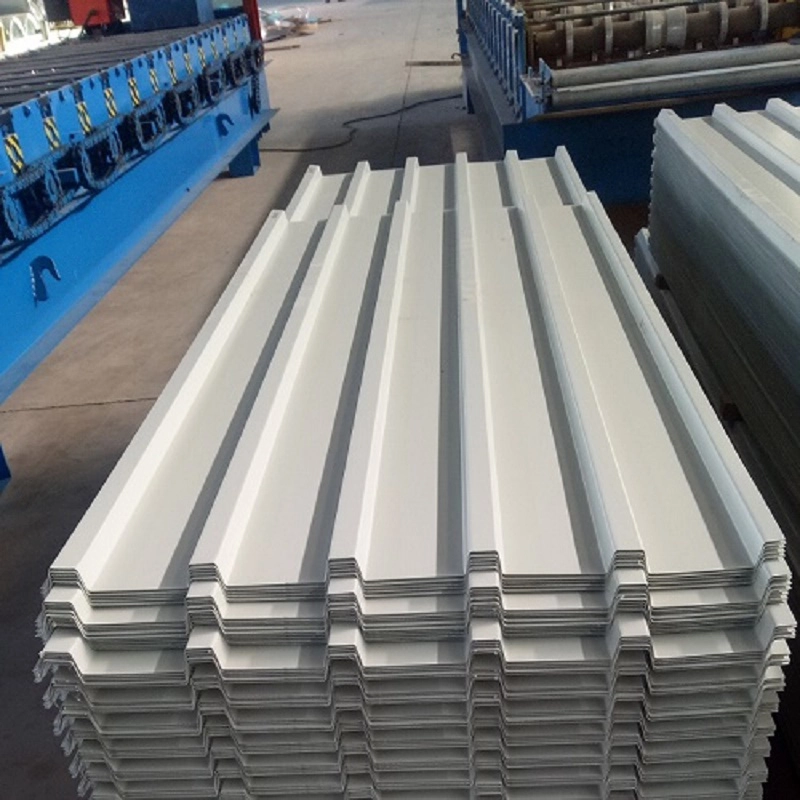
SENBO Color-coated Corrugated Steel Sheet combines a durable coated-steel surface with a lightweight corrugated profile. Available with PE or PVDF coatings and thicknesses of 0.13–1.2 mm, it suits roofing and wall cladding for warehouses, industrial buildings, and temporary structures. SENBO supports wholesale supply, bulk orders, and customized sheet specifications.
Color-coated corrugated steel sheet is produced by shaping a pre-painted steel coil into a corrugated profile. The base coil is cold-rolled or hot-dip galvanized steel with grades such as DX51D, Q195, or SGCC. Before painting, the surface undergoes degreasing, phosphating, and chromating. The coil then receives a roller-coated finish, typically polyester or PVDF, with a top-side dry film thickness of 15 μm to 25 μm and a back-side thickness of 5 μm to 10 μm. SENBO supplies these sheets after checking coil thickness, coating weight, and surface condition, and the roll forming process includes periodic verification of profile geometry.
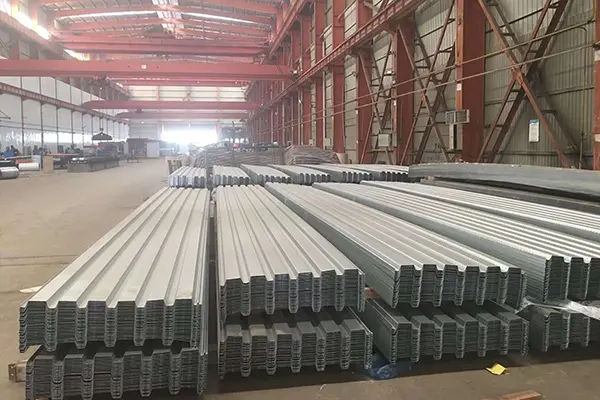
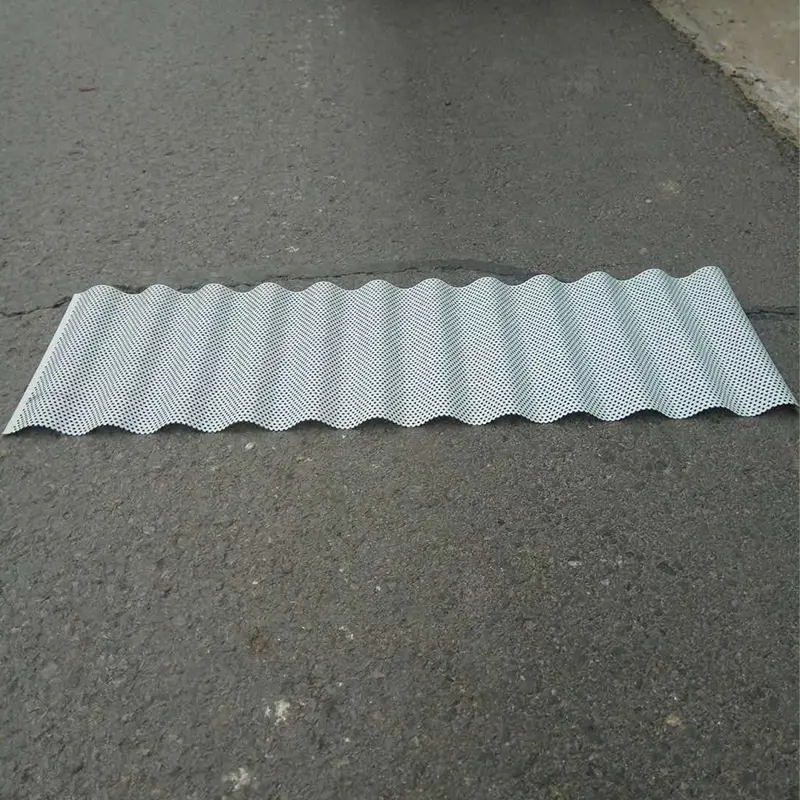
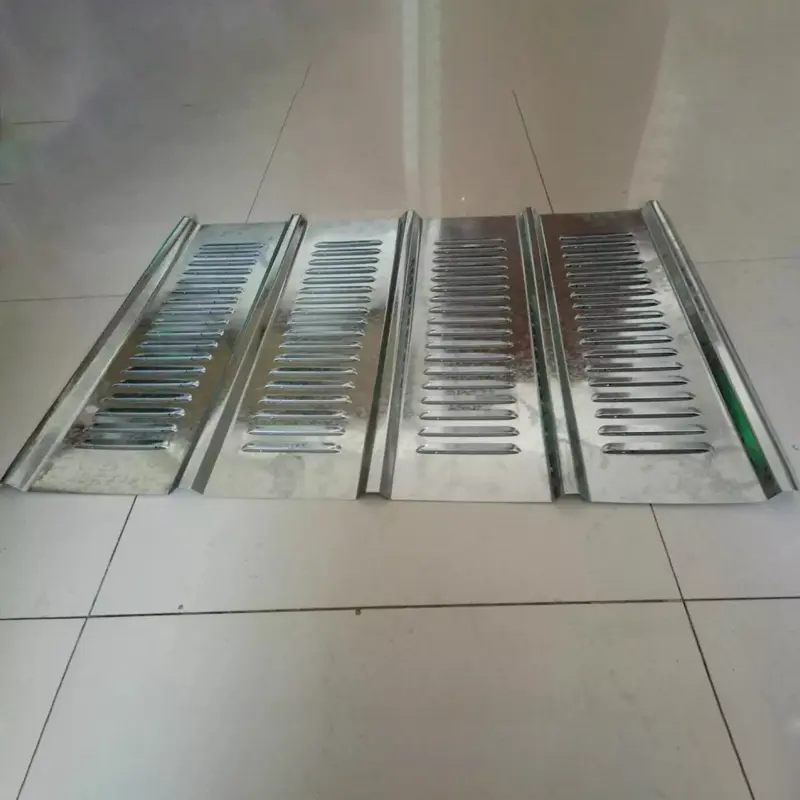
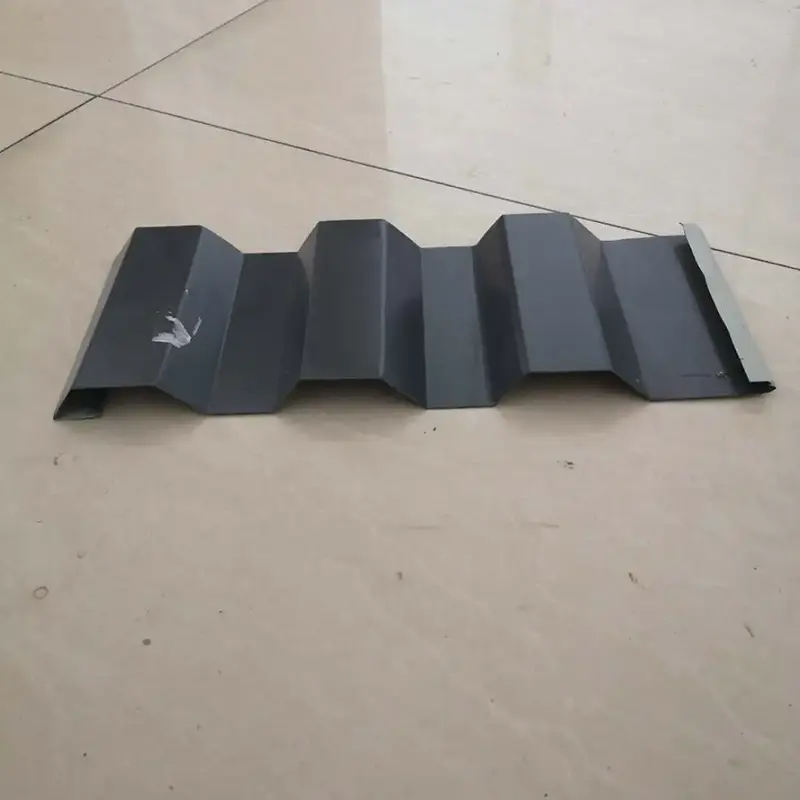
The Color-coated Corrugated Steel Sheet is cold-formed into a cross-section of parallel ribs and valleys. This shape provides high longitudinal flexural stiffness and effective water drainage while keeping the material thickness between 0.2 mm and 1.2 mm. Common profiles include YX10-130-910, YX15-225-900, YX25-205-820, YX35-125-750, and YX51-250-750. Effective coverage widths range from 300 mm to 1,150 mm. Sheet length is cut to order. The product follows GB/T 12755-2008, which specifies requirements for material composition, mechanical properties, coating, and dimensional tolerances.
Key Specifications
Item
Value
Reference or Notes
Base material grade
DX51D, Q195, Q195L, SGCC
Cold-rolled or hot-dip galvanized coil
Common thickness
0.13–1.2 mm
Thickness selected by load and span
Effective coverage width
300–1150 mm
Depends on profile type
Yield strength
270–380 MPa
Typical range for these grades
Tensile strength
≥300 MPa
Meets structural envelope requirements
Galvanized coating
30–180 g/m²
Double-sided coating weight
Paint finish
PE or PVDF
Top 15–25 μm; back 5–10 μm
Service life
15–20 years
Under normal conditions and proper maintenance
Profile examples
YX15-225-900, YX25-205-820, YX35-125-750
Also YX10-130-910 and YX51-250-750
Applicable standard
GB/T 12755-2008
Profiled steel sheets for building
Product Characteristics
Light weight with adequate stiffness: The corrugated profile increases bending stiffness without adding material thickness, which helps reduce structural loads.
Effective drainage: The parallel rib and valley pattern moves rainwater quickly toward the eaves and reduces the number of transverse overlaps.
Corrosion protection: A galvanized or Al-Zn metallic layer plus an organic topcoat provides two barriers against atmospheric corrosion.
Color and size flexibility: RAL colors are available, and sheet length, thickness, and profile can be adjusted to match project drawings.
Fast installation: Factory-prefabricated sheets are installed directly on purlins, which shortens site work compared with cast-in-place or masonry systems.
Field Application Examples
1. Roof and Wall Enclosures for Industrial Buildings
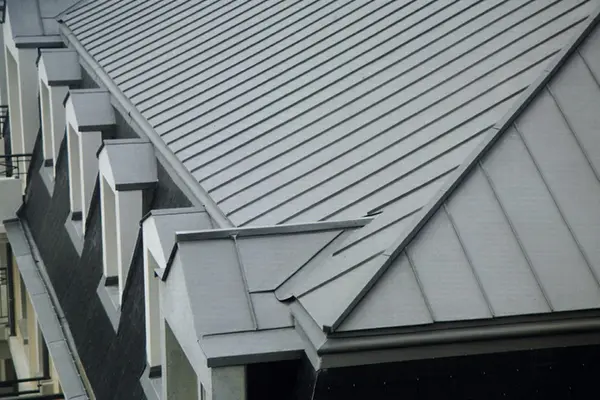
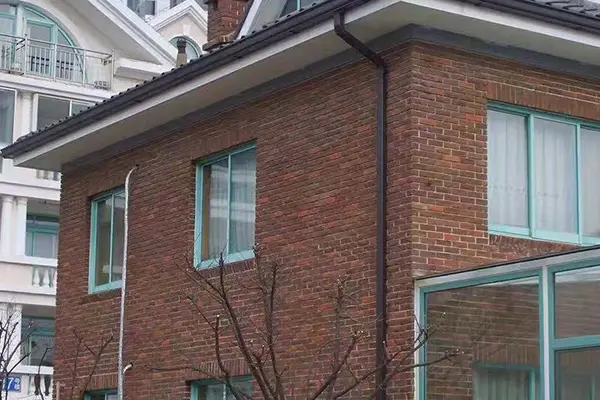
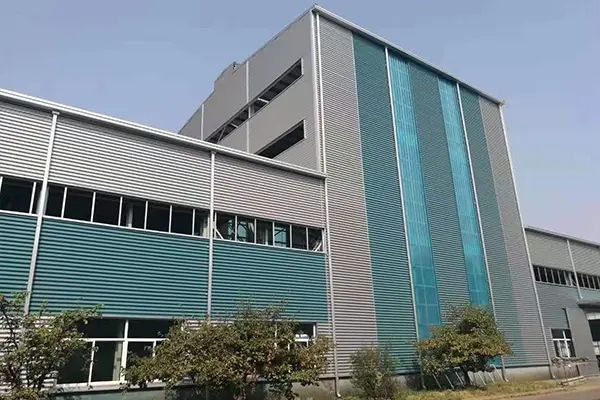
These Color-coated Corrugated Steel Sheets are frequently used for roofs and walls in industrial plants and warehouses. The 760-type profile is common for roofing because its geometry supports good drainage and limits the number of side laps. In one coastal project, a 48,000 m² plant at Southeast Copper Industry used a color steel roof with a distributed photovoltaic system. The roof performed acceptably under the region's rainy conditions, demonstrating the material's suitability for large factory envelopes.
2. Modular Buildings and Temporary Structures
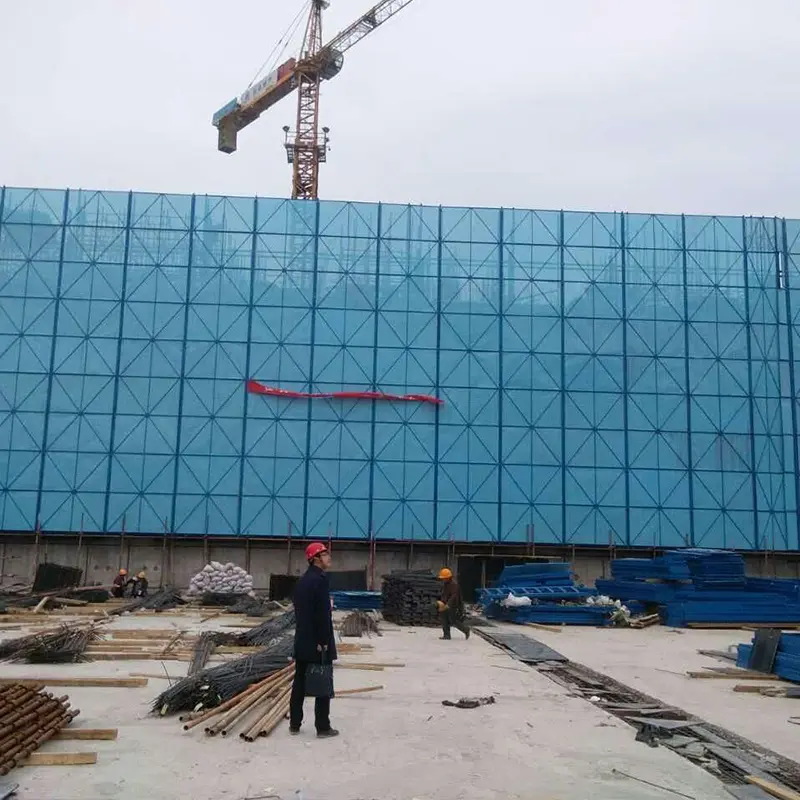
Corrugated color-coated sheets are well suited to modular and temporary construction because they are light, easy to cut, and quick to install. The Shanghai Nanhe Branch Line Park project included a station built with color-coated corrugated roofing and modular methods in 45 days. Similar applications include prefabricated cabins, temporary offices, site hoardings, and canopies.
3. Special Enclosures
The profile is also used in certain specialized environments, such as ship cabin interiors. In that case, the corrugation provides surface flatness and visual structure while reducing the amount of light-gauge steel framing required behind the panel.
Site Handling and Installation Notes
Keep sheets dry and store them on level supports. If outdoor storage is necessary, use a breathable cover and elevate the stack.
Handle bundles with wide slings to avoid damaging ribs or scratching the paint.
Use shears or nibblers for cutting. Avoid abrasive discs that generate heat and can damage the coating at the cut edge.
Specify fasteners and washers compatible with the sheet coating to minimize galvanic corrosion.
Follow the manufacturer's lap details for side laps and end laps. Apply sealant where indicated for the roof slope and wind zone.
Check purlin alignment before placing sheets. Misalignment can cause visible waviness and stress the ribs.
Quality Control and Documentation
Mill certificates should confirm the base metal grade, galvanized coating weight, and paint film thickness. During production, profile dimensions such as rib height, pitch, and effective width are checked at regular intervals. Before shipment, sheets are inspected for coating defects, surface scratches, and dimensional accuracy. For large projects, samples can be sent for third-party salt spray or accelerated weathering tests if required.
Selection Considerations
Identify the atmospheric corrosion category of the site before selecting the galvanized coating weight and paint type.
Confirm the design wind load and purlin spacing to choose the correct sheet thickness and profile.
Review the roof slope and drainage layout to avoid ponding and ensure water flows to the eaves.
For long continuous sheets, plan the transport route and site access. On-site roll forming may be an option if transport is limited.
If the building is in a high-fire-risk area, note that the metal sheet itself is non-combustible, but the overall roof assembly including insulation must be evaluated separately.
Frequently Asked Questions
How do I choose between PE and PVDF coatings?
PE is a standard, economical finish for general industrial buildings in mild environments. PVDF provides better color retention and resistance to UV and salt spray, making it preferable for coastal or highly corrosive locations. The choice should match the project's expected service life and environmental exposure.
What is the minimum roof slope for corrugated color-coated sheets?
A slope of 5% is commonly recommended for screw-fixed lapped systems. Lower slopes require additional sealing and drainage design, and the acceptable minimum should be confirmed by the project engineer based on local rainfall intensity.
Can these sheets be installed on curved roofs?
Some profiles can be curved to a large radius by roll forming or press braking. The minimum radius depends on the sheet thickness, rib geometry, and coating flexibility. The supplier should confirm the forming limit before the order is placed.
How is color consistency maintained across a large roof?
All sheets for the same surface should be ordered from the same coil batch whenever possible. If multiple batches are unavoidable, request a color reading and agree on a tolerance such as ΔE ≤ 1.5. Proper storage and installation sequence also help avoid visible variation.
Hot Tags: color coated corrugated steel sheet, corrugated steel roofing sheets, prepainted corrugated steel sheet
Send SENBO an inquiry for steel building materials. Request a free quote, sample or bulk order price list. Our sales team responds within 24 hours with factory direct pricing, stock availability and shipping options.
We use cookies to offer you a better browsing experience, analyze site traffic and personalize content. By using this site, you agree to our use of cookies.Privacy Policy