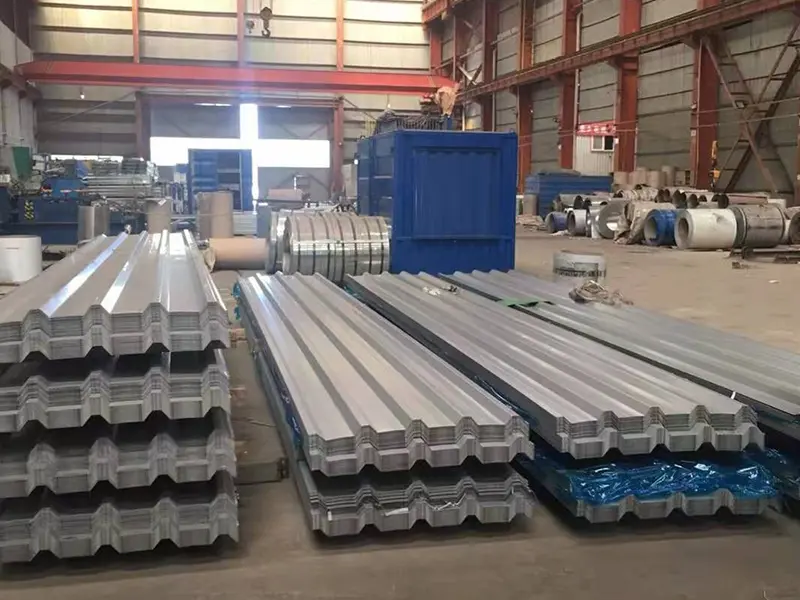
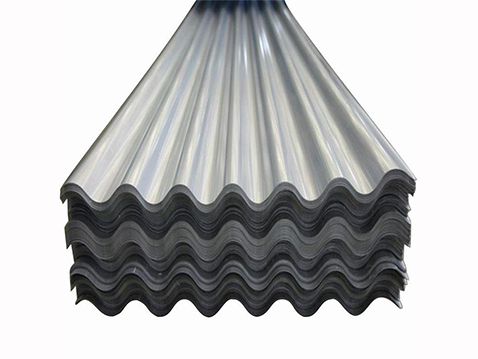
The essential difference between corrugated and trapezoidal roof panels lies in geometric section design, not appearance.
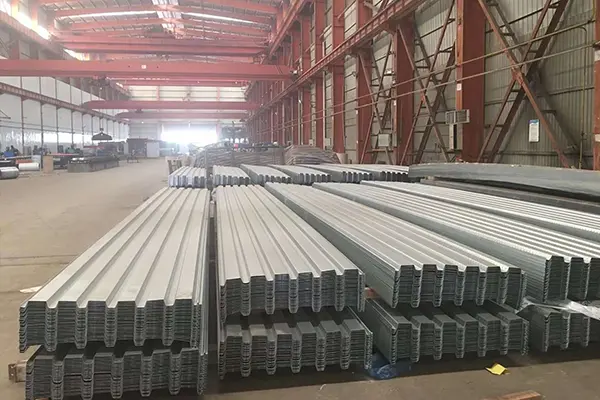
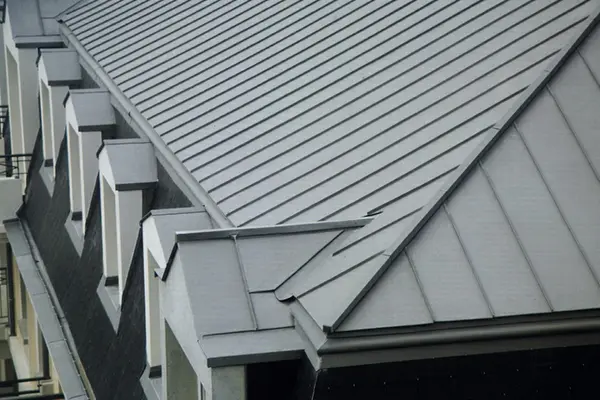
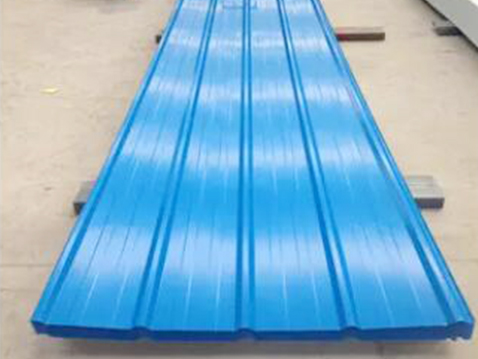
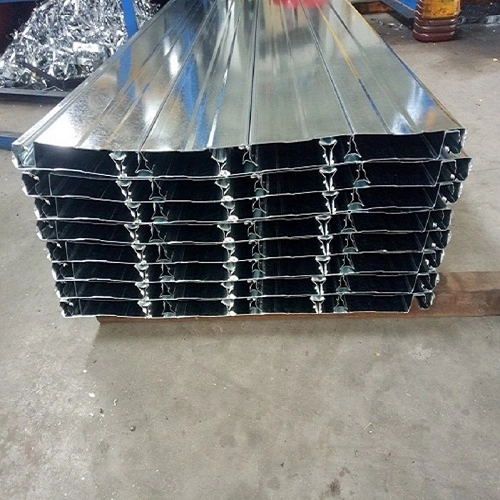
Corrugated panels feature continuous curved profiles with multiple smooth drainage channels. Trapezoidal panels adopt rigid angular ribs with flat panels in between, delivering neat linear aesthetics and directional structural strength.
These two profiles differ greatly in drainage performance, structural stiffness, coverage efficiency, load transfer and installation tolerance.
Importantly, the profile shape alone cannot define roof performance. Final waterproofing, rigidity and durability depend on sheet thickness, rib depth, rib spacing, roof slope, purlin layout, overlapping design and fastener installation. Each profile has its own advantages for different project conditions.
Core Performance Comparison
1. Water Drainage
Corrugated profiles provide continuous curved grooves with multiple smooth water flow paths.
Trapezoidal panels form wider but fewer flat drainage troughs between rigid ribs.
Actual drainage capacity is determined by roof slope, groove depth, panel flatness and on-site conditions, rather than panel type.
2. Structural Stiffness
Corrugated curves distribute stress evenly across the whole sheet, making them ideal for curved roof structures.
Overall stiffness relies on material thickness, rib geometry and support spacing, not visual profile depth.
3. Effective Coverage
Corrugated side laps consume full wave modules with fixed dimensions.
Trapezoidal panels lap along standardized edge ribs for stable installation modules.
Only effective coverage width (after lap deduction) counts for project calculation, which directly affects material quantity and roof layout. Improper overlapping causes leakage and poor sealing.
4. Load Transfer & Installation Tolerance
Corrugated panels transfer loads evenly through continuous curved surfaces.
Trapezoidal ribs transmit structural loads directly to purlin supports.
Corrugated roofing requires precise alignment; misalignment easily causes seam leakage. Trapezoidal panels demand flat and squared substructure; uneven base leads to poor fitting.
Application Scenarios
Corrugated Panels
Suitable for curved roofs, agricultural buildings, small workshops and daylighting roofs with soft visual effects and flexible structural adaptability.
Trapezoidal Panels
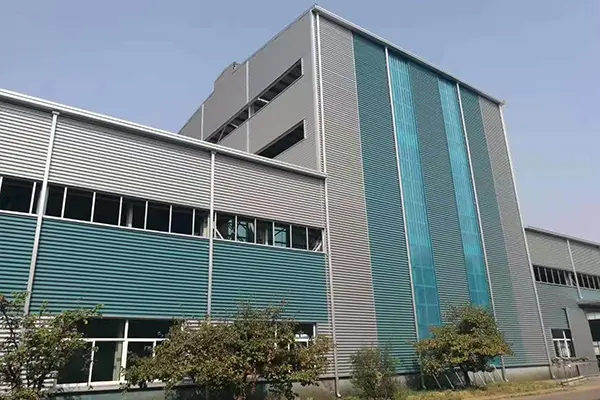
Widely used in large factories, warehouses, commercial buildings and wall cladding, featuring high rigidity, neat appearance and strong load-bearing potential.
Key Selection Summary
1. Trapezoidal panels are not always stronger. Thick, deep-profile corrugated sheets with dense supports can achieve superior stiffness.
2. Trapezoidal structures do not guarantee better drainage. Deflection, insufficient slope and blockage will weaken drainage performance significantly.
3. Corrugated and trapezoidal profiles are structurally incompatible and cannot be directly overlapped. Special transition flashings are required.
The reliability of a roofing system comes from the perfect match of profile geometry, material specification, support structure and standardized installation, not merely the roof panel style.
We use cookies to offer you a better browsing experience, analyze site traffic and personalize content. By using this site, you agree to our use of cookies. Privacy Policy