SENBO Windbreak and Dust Suppression Mesh controls dust at open-air yards, coal yards, and ports. Available as perforated metal panels or flexible HDPE mesh. Metal options: galvanized, color-coated, aluminum-magnesium alloy, stainless steel. Mesh: HDPE with UV stabilizers, 200–500 g/m². Single layer cuts dust 65–85%; double layer 90–98%. Proven at Fangchenggang Port: TSP reduced to 47.02 μg/m³.
SENBO Building Materials is a manufacturer and supplier of windbreak and dust-suppression systems for open-air bulk material storage yards. Our core production base is located in Jinghai Economic Development Zone, Tianjin, China. We specialize in perforated metal panels and flexible woven mesh for demanding industrial and port applications.
Our products have been validated through wind tunnel testing, numerical simulation, and full-scale field projects such as the 14 km windbreak installation at Fangchenggang Terminal. We combine structural engineering, aerodynamic design, and material durability to deliver reliable dust control solutions that meet environmental compliance standards.
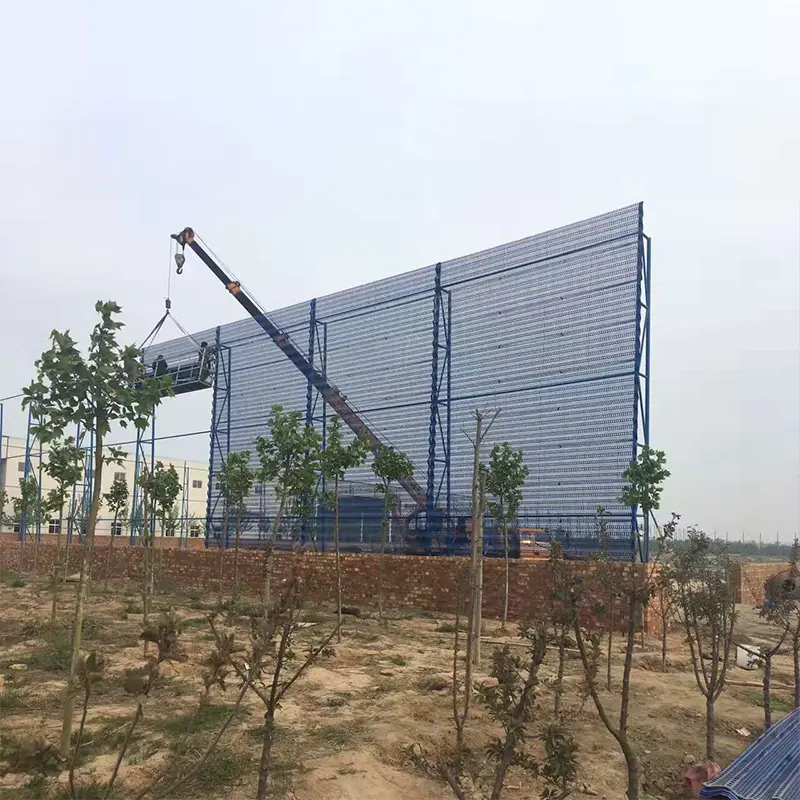
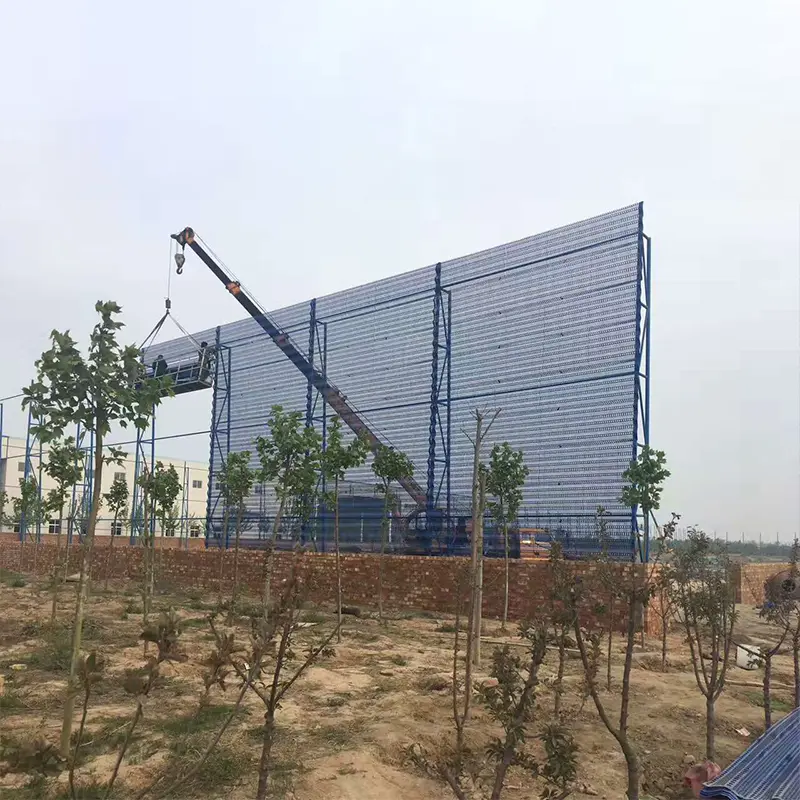
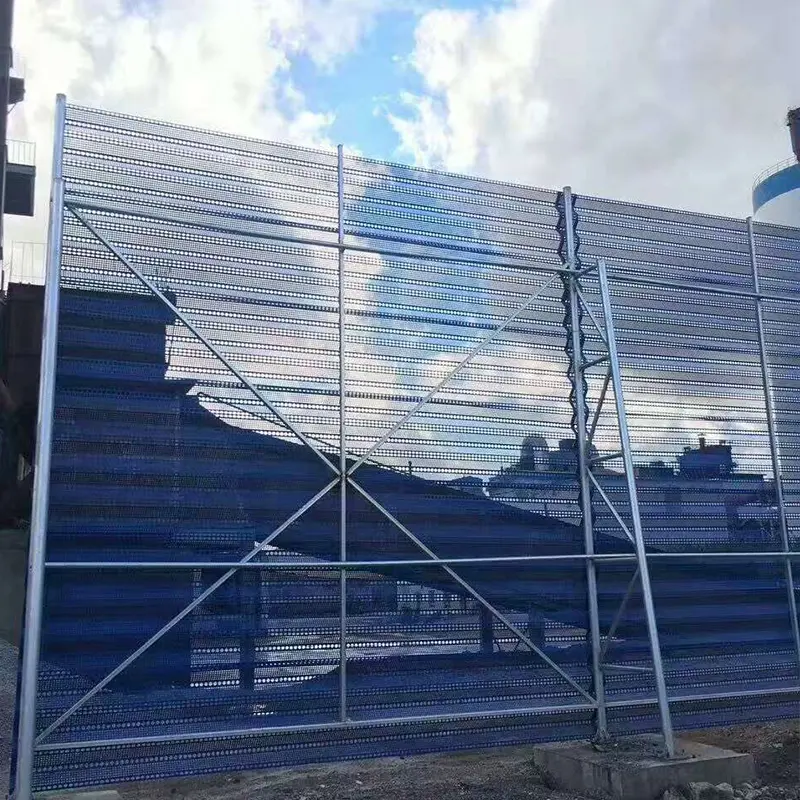
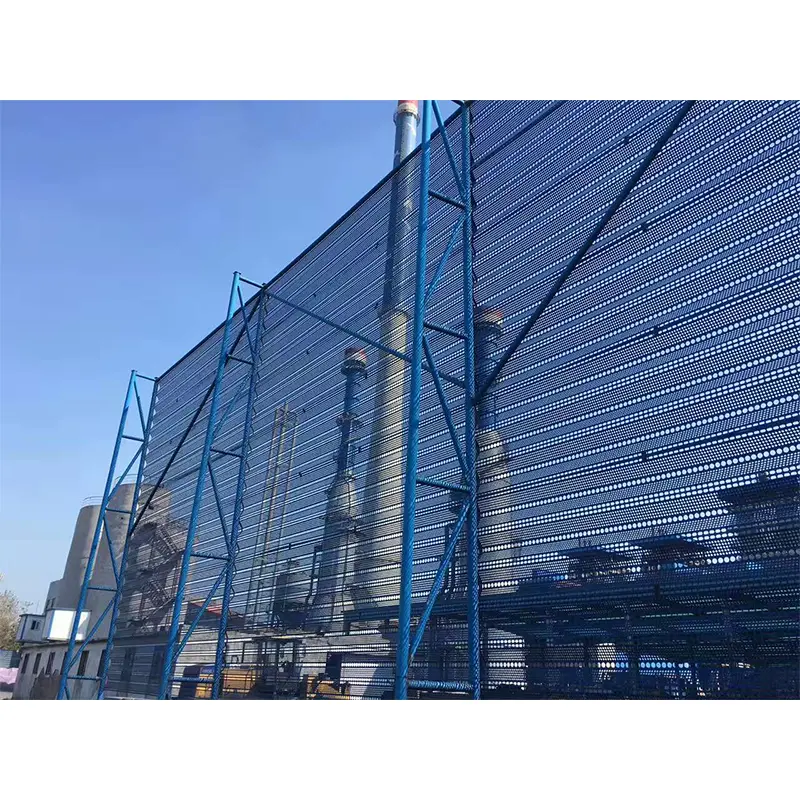
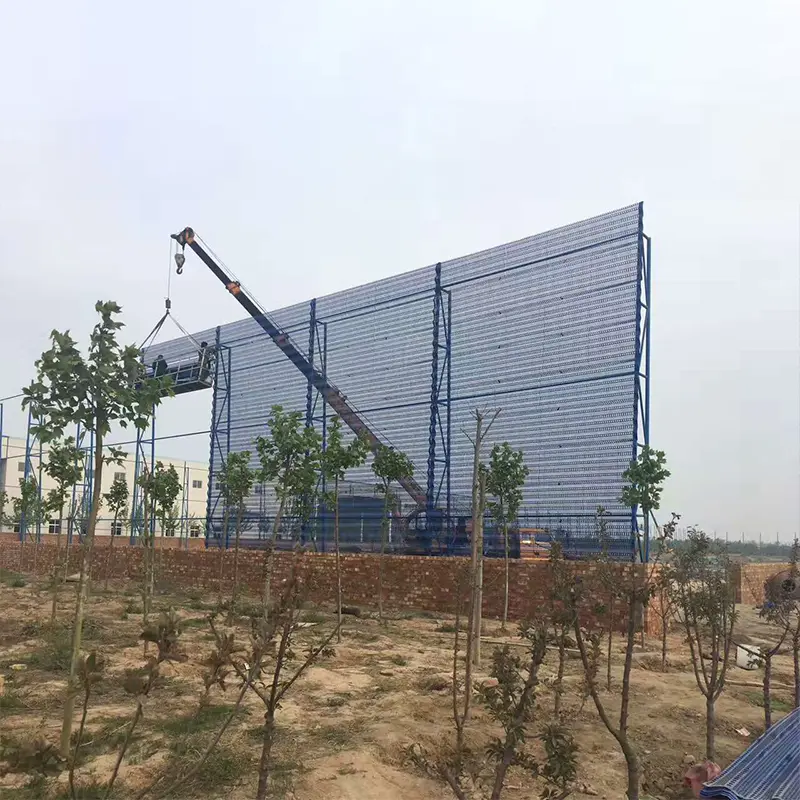
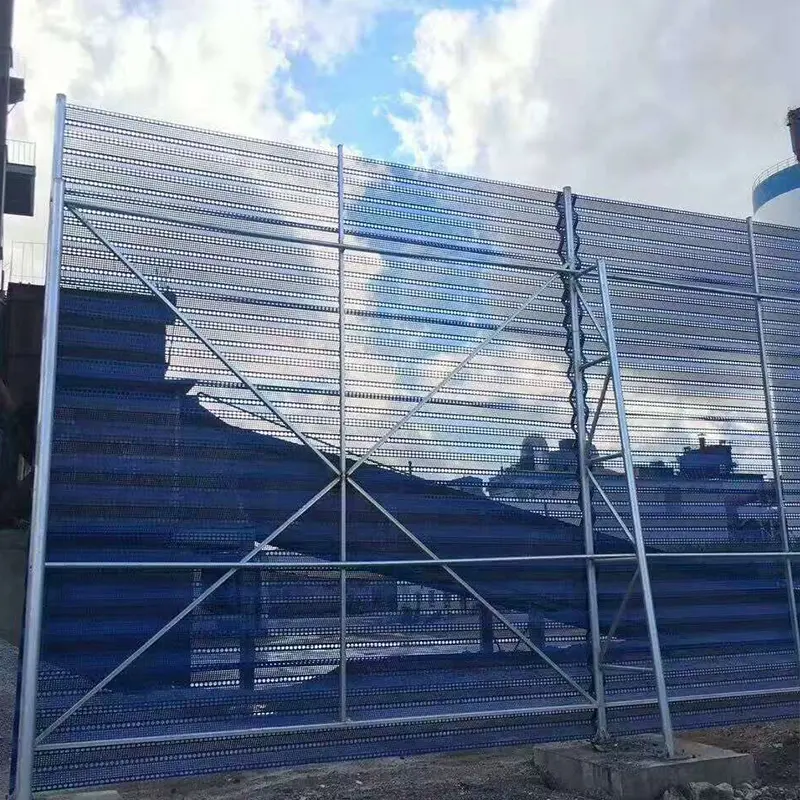
Windbreak and Dust Suppression Mesh, also known as windbreak walls or dust-suppression barriers, consists of perforated metal panels or polymer woven mesh mounted on a steel support structure. Typically installed on the upwind side or around the perimeter of open-air bulk material storage yards, these facilities suppress dust dispersion by altering the natural wind flow field.
Working Principle
When a dust-laden airflow passes through the windbreak and dust-suppression net, dust suppression is achieved through three mechanisms. First, it reduces the incoming wind speed and kinetic energy. Second, it minimizes eddy current turbulence within the storage yard area to prevent dust from becoming airborne. Third, it utilizes the porous structure to dissipate and redistribute a portion of the airflow energy, thereby keeping the wind friction velocity at the yard surface below the threshold for dust suspension.
Product Classification
Products are categorized into two main types based on material.
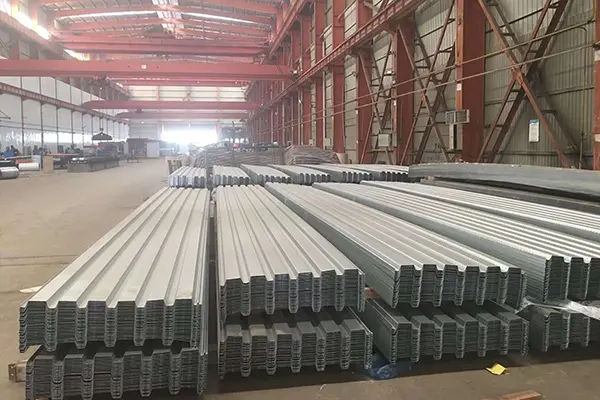
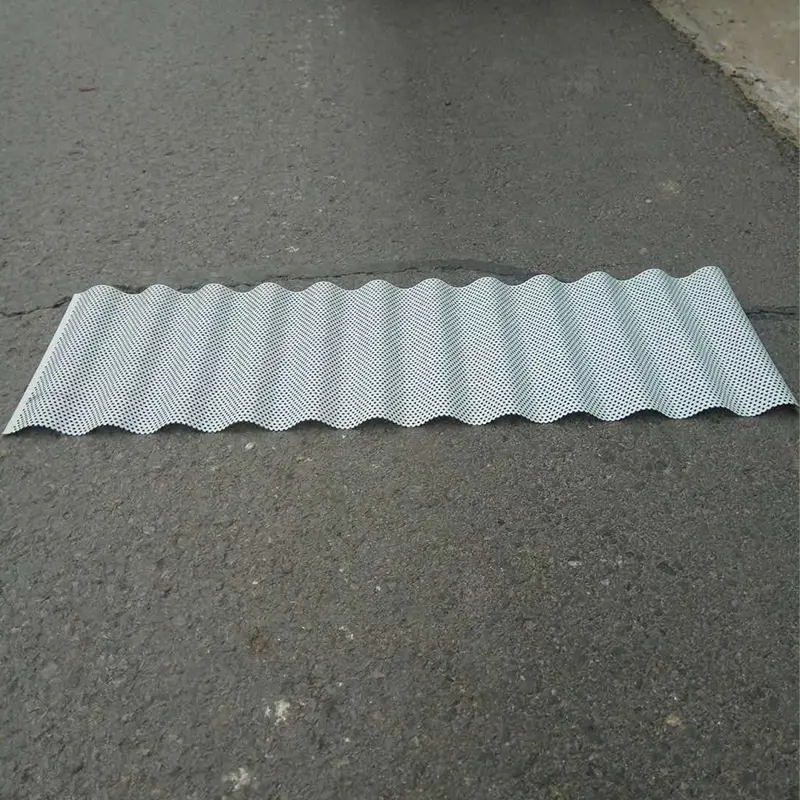
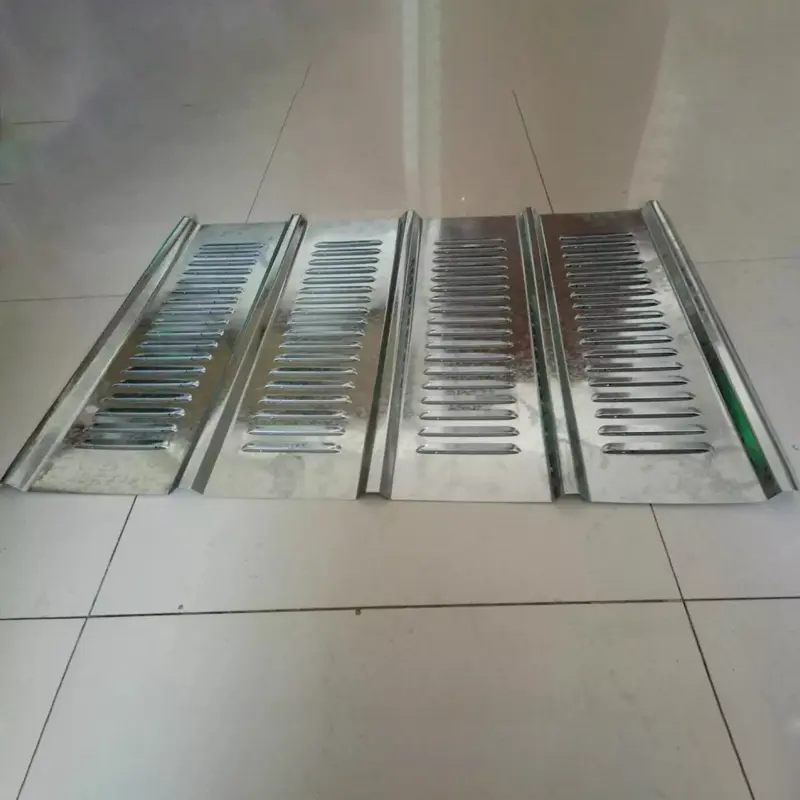
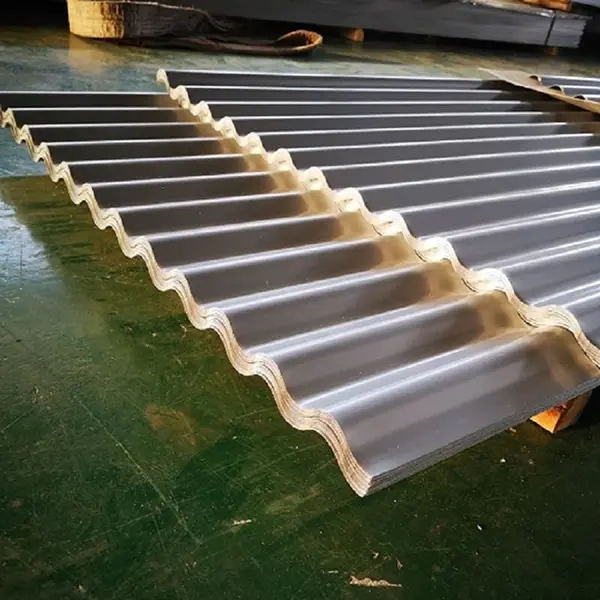
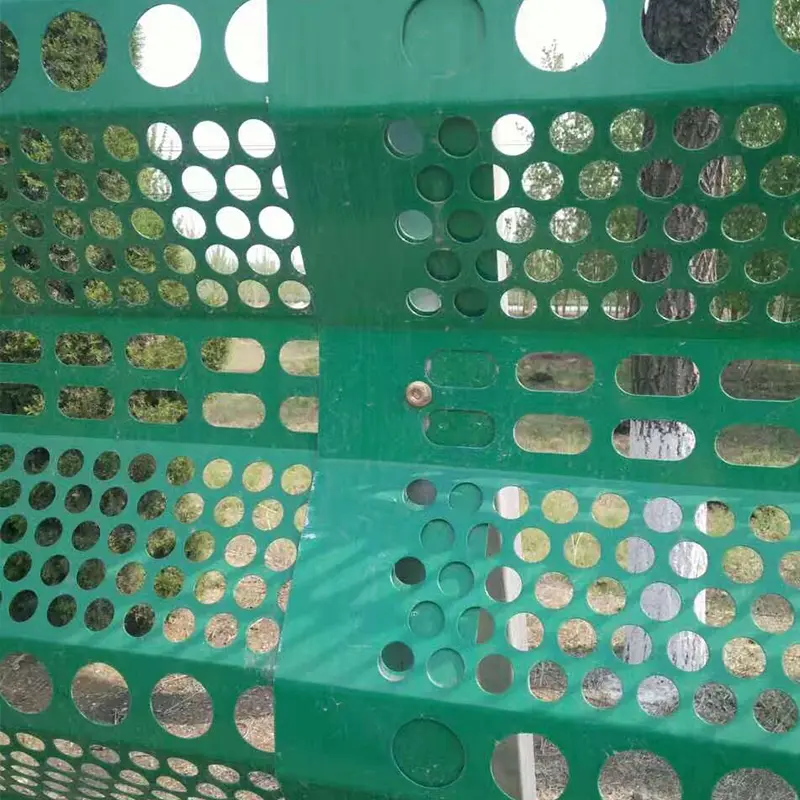
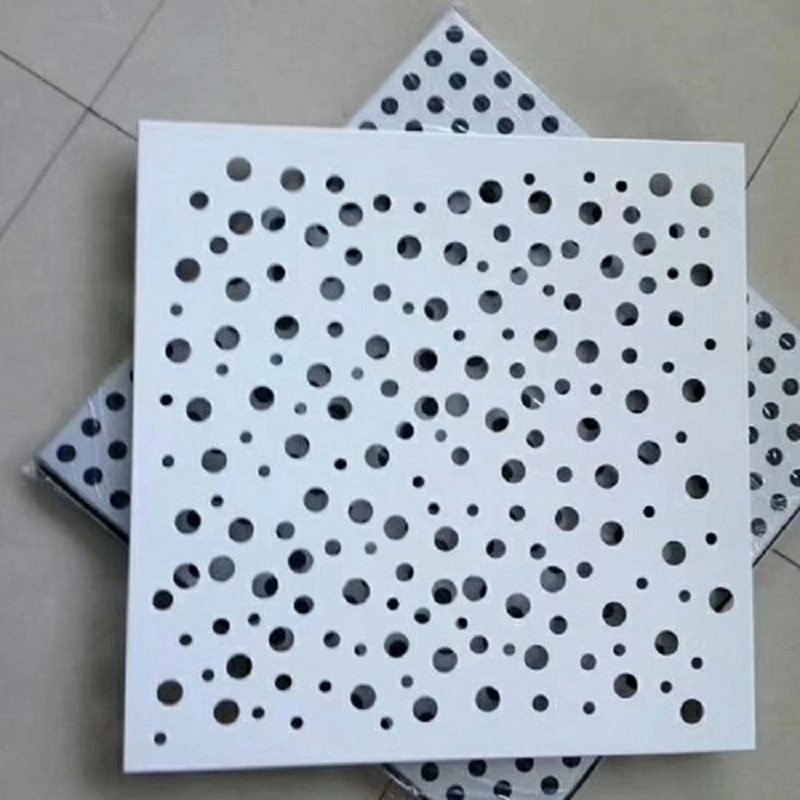
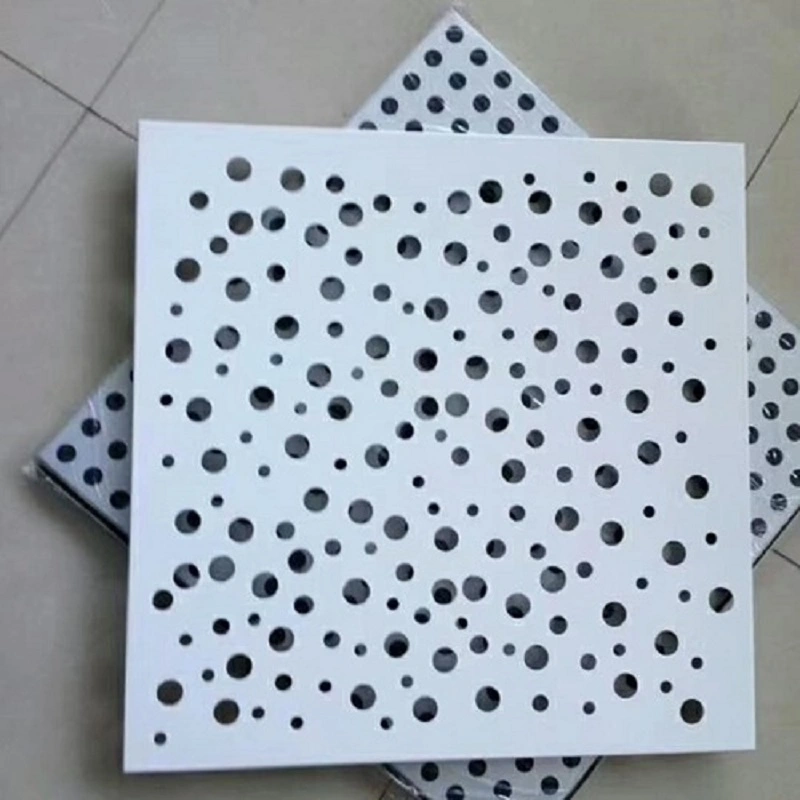
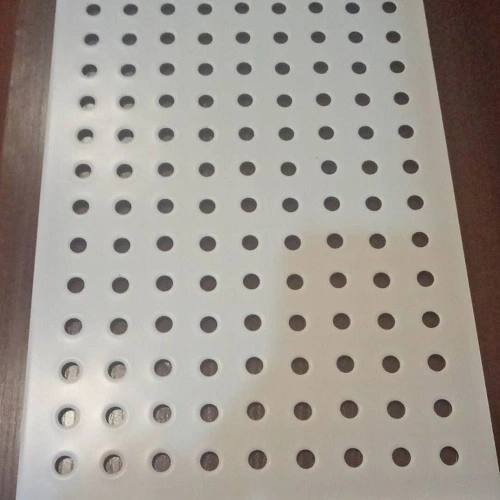
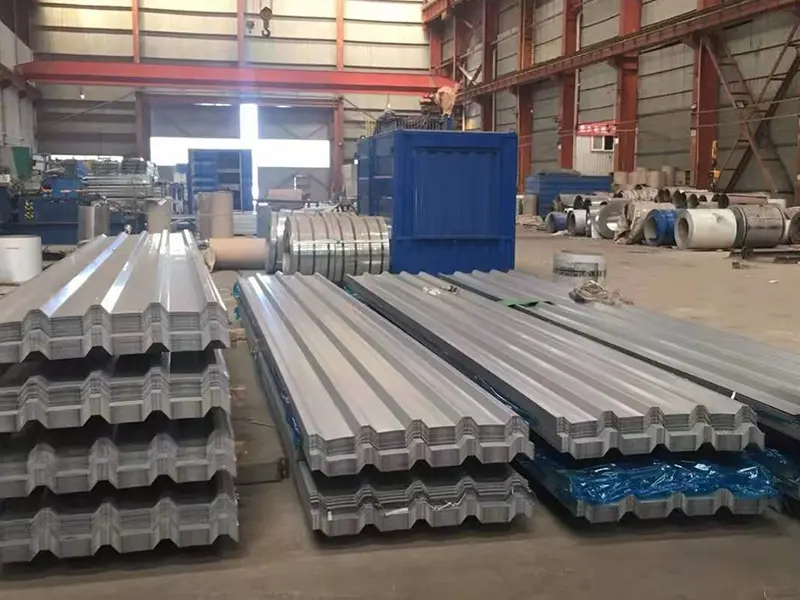
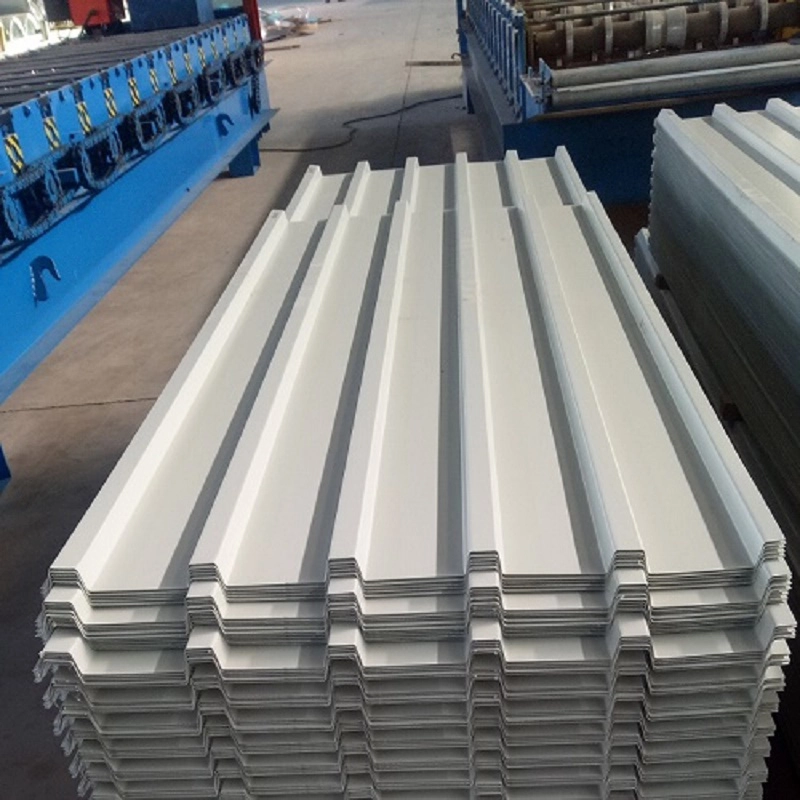
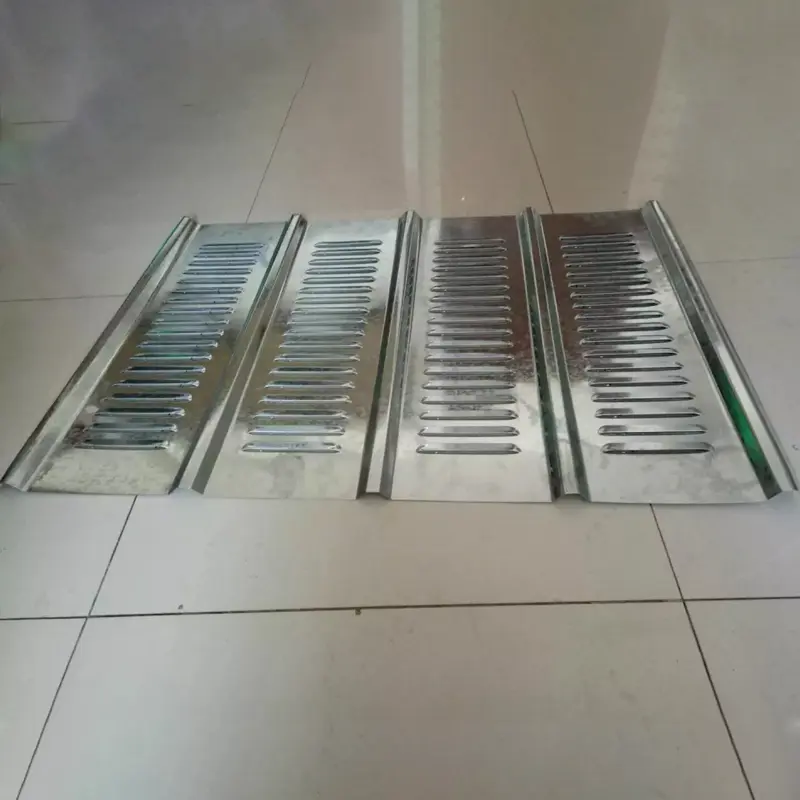
1. Perforated Metal Panels: Manufactured from base materials such as low-carbon steel, galvanized steel, color-coated steel, aluminum-magnesium alloy, or stainless steel. Processes include shearing, bending, perforating, profiling, cleaning, and electrostatic powder coating.
Types include single-peak (formed width 250–500 mm), double-peak (formed width 400–600 mm), and triple-peak (formed width 825 mm) designs, with peak heights ranging from 50 to 100 mm. Wind tunnel tests have verified that a peak height of 75 mm offers optimal windbreak performance under the tested conditions.
2. Flexible Woven Nets: Made from high-density polyethylene (HDPE) with additives such as UV stabilizers, anti-aging agents, and flame retardants, produced via a specialized weaving process.
Specifications include a weight of 200–500 g/m², a mesh aperture of 3–5 mm, and a width of 1–5 m (splicable); standard length is 100 m per roll. Key characteristics include flame retardancy (flame retardant time > 4s), high tensile strength per unit width (220 kN/m), and impact resistance.
Performance Verification
1. Dust Suppression Effectiveness: Verified by Wind Tunnel Tests and Field Measurements
Wind tunnel tests indicate that windbreak panels with a 30% porosity rate yield the highest measured windbreak performance under the tested conditions. The ideal windbreak distance is approximately 10 times the net height, while the effective sheltered distance can reach approximately 16 times the net height under the same test configuration. Under low-wind conditions, the average dust suppression efficiency of the net reaches 89.77%; under high-wind conditions, when combined with a spray system, the average efficiency reaches 87.55%. A single-layer net achieves 65%–85% dust suppression based on the referenced measurement method, while a double-layer net can exceed 95%.
2. Wind-blocking performance: Reducing wind speed by 70%–90% within the sheltered zone
By reducing incoming wind speed and internal wind pressure while dissipating a portion of airflow energy, flexible wind-blocking and dust-suppression nets can lower average wind speeds within the sheltered zone by 70%–90% under the measured wind conditions. The exact reduction depends on barrier height, porosity, wind direction, and distance from the barrier.
3. Large-scale project validation: 14 km windbreak at Fangchenggang Terminal
Fangchenggang Terminal installed an 18-meter-high, 14-kilometer-long windbreak as part of an integrated dust-control system. Combined with smart spraying and covering measures, this created a comprehensive, multi-dimensional protection system. Following implementation, the annual average concentration of Total Suspended Particulates (TSP) dropped to 47.02 μg/m³, and PM2.5 levels fell to 14.36 μg/m³. These real-world project data validate the effectiveness of an integrated dust-control system combining windbreak barriers, spraying, and material covering. Additional project details and monitoring reports are available upon request.
4. Configuration study: Comparison of layout schemes
Numerical simulation studies using an open-air coal storage yard as a case study indicate that a closed-loop (rectangular) layout yields the best dust suppression results. Among semi-enclosed (U-shaped) configurations, placing the barrier on the windward side (upstream of the prevailing wind) is more effective than placing it on the leeward side (downstream); an L-shaped layout positioned on the windward side performs the worst under the simulated conditions.
5. Mechanical properties: Validation of impact resistance and weatherability
Perforated metal panels subjected to impact tests, involving a 1 kg steel ball dropped freely from a height of 1.5 meters, showed no fractures or punctures. The flexible woven netting features a tensile strength of 220 kN/m, and its impact resistance meets the GB16909-1997 standard. Test reports are available upon request to verify compliance.
Key Specifications Overview
All parameters listed below are based on factory standard production or referenced testing. Customization is available to meet specific project requirements.
Single-peak: 250–500 mm / Double-peak: 400–600 mm / Triple-peak: 825 mm
1–5 m (splicable)
Peak Height
50–100 mm (Optimal: 75 mm under tested conditions)
Not applicable
Wind tunnel test
Opening Ratio / Porosity
30% (Optimal for windbreak under tested conditions)
40%–60% (Air permeability)
Referenced wind tunnel test
Single-layer Dust Suppression Rate
65%–85%
65%–85%
Based on referenced measurement method
Double-layer Dust Suppression Rate
≥95%
≥95%
Based on referenced measurement method
Wind Speed Reduction
70%–90% within sheltered zone
Under measured wind conditions
Surface Treatment
Electrostatic powder coating
UV-resistant & flame-retardant additives
Flame Retardancy
Non-combustible (metal substrate)
Flame retardancy time > 4s
Key Advantages
1. Significant, Verifiable Dust Suppression. Validated by wind tunnel tests and field measurements, the dust suppression rate is 65%–85% for single-layer mesh and ≥95% for double-layer mesh. The 14 km windbreak project in Fangchenggang demonstrated a reduction in TSP levels to 47.02 μg/m³ as part of an integrated dust-control system.
2. Scientifically Sound Windbreak Principle. Reduces on-site wind speed by 70%–90% within the sheltered zone through a triple-action mechanism: lowering wind speed, minimizing eddy currents, and dissipating airflow energy.
3. Diverse Materials, Flexible Selection. Perforated metal panels offer high strength, flame retardancy, and aging resistance, making them suitable for permanent installations. Flexible woven mesh is lightweight, quick to install, and cost-effective, ideal for temporary use or large-scale storage yards.
4. Weather and Corrosion Resistant, Long Service Life. Metal panels feature an electrostatic powder coating that provides UV resistance and impact resistance. Flexible mesh incorporates UV and anti-aging additives, ensuring durability in outdoor environments.
5. Flexible Layout, High Adaptability. Can be configured in various shapes (such as rectangular, U-shaped, or L-shaped) and combined with spraying and covering systems to create a comprehensive, multi-dimensional dust suppression solution adaptable to storage yards of any size.
Applicable Scenarios
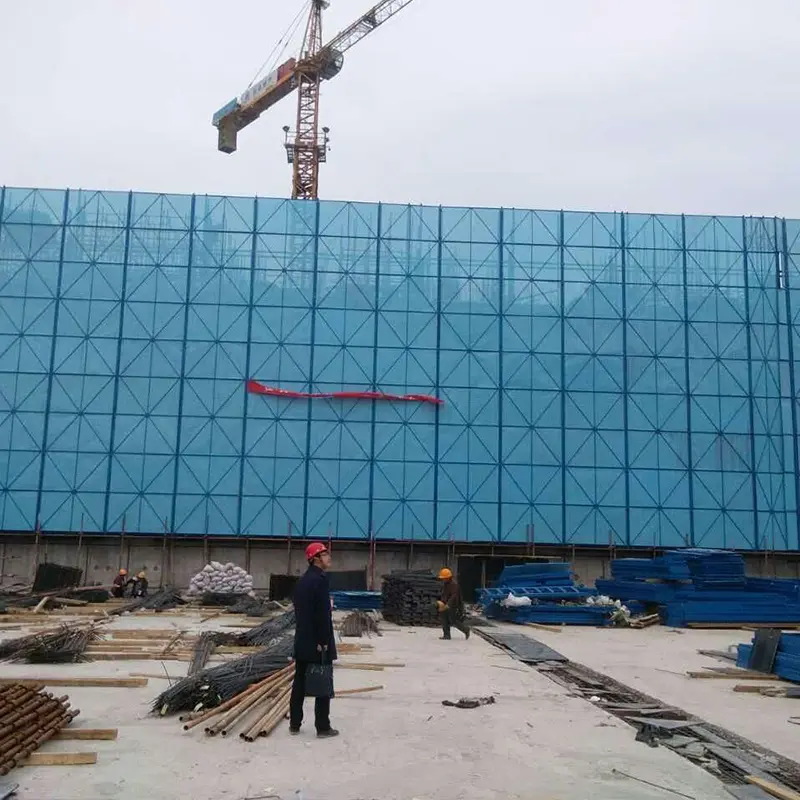
1. Windbreak and dust suppression for open-air coal storage yards at coal mines, coking plants, and power stations.
2. Dust control for bulk cargo yards at ports and terminals, such as the 14 km windbreak mesh project at Fangchenggang Port.
3. Dust suppression barriers for open-air material yards in the steel, building materials, and cement industries.
4. Dust control for coal storage yards at railway and highway coal collection and distribution stations.
5. Temporary or permanent windbreak facilities for construction sites, roadways, and highway corridors.
How to Select a Windbreak and Dust Suppression System
For coal yards and heavy industrial sites: Consider permanent perforated metal panels with 30% porosity and peak heights of 75 mm for optimal windbreak performance. Select galvanized or Al-Mg alloy substrate with electrostatic powder coating for long-term corrosion resistance.
For port terminals and coastal areas: Choose Al-Mg alloy or stainless steel panels with high corrosion resistance. Consider barrier height and wind load calculations in accordance with local design codes.
For temporary construction sites or short-term storage: Flexible HDPE woven mesh is lightweight, quick to install, and cost-effective. Ensure UV stabilizers and flame retardants are included for outdoor durability.
For high dust-generating operations: Combine windbreak barriers with a spray system and material covering to achieve maximum suppression, as demonstrated in the Fangchenggang project.
Why Choose Windbreak and Dust Suppression Mesh?
Are you seeking an efficient, reliable solution for dust control at open-air bulk material storage yards? Windbreak and dust suppression mesh, available in perforated metal panels or high-polymer woven mesh, has been validated through extensive projects, including wind tunnel testing and the 14 km installation at Fangchenggang Port. Single-layer mesh achieves a dust suppression rate of 65%–85%, while double-layer mesh exceeds 95%, reducing wind speed by 70%–90% within the sheltered zone.
Metal panels suit high-standard permanent facilities, whereas flexible woven mesh meets the needs of large-scale temporary sites. Electrostatic powder coating or UV-resistant treatments ensure weatherability and longevity. By choosing windbreak and dust suppression mesh from SENBO, you gain a proven, flexible solution that creates a visible green barrier, effectively suppressing dust and ensuring compliance with environmental emission standards.
Frequently Asked Questions
1. What is the optimal porosity for a windbreak and dust suppression panel?
Based on the referenced wind tunnel tests, a porosity of 30% produced the highest windbreak performance under the tested conditions. However, the optimal value may vary depending on local wind speed, barrier height, and site layout. Our engineering team can assist with site-specific calculations.
2. How high should the windbreak barrier be relative to the stockpile?
Typically, the barrier height should be 1.2 to 1.5 times the stockpile height for effective protection. For example, if the stockpile is 10 meters high, the barrier should be 12 to 15 meters. Wind tunnel tests indicate the effective sheltered distance can reach up to 16 times the barrier height under ideal conditions.
3. What is the difference between perforated metal panels and flexible woven mesh?
Perforated metal panels are rigid, fire-resistant, and suitable for permanent installations in high-wind or heavy industrial environments. Flexible woven mesh is lightweight, quick to install, and more cost-effective for temporary or large-scale applications. Both can achieve similar dust suppression rates when properly configured.
4. Can the windbreak mesh be used in coastal or highly corrosive environments?
Yes. For coastal areas, we recommend Al-Mg alloy or stainless steel perforated panels with a suitable powder coating. For flexible mesh, ensure it contains UV stabilizers and anti-aging additives. Panels installed in coastal regions have shown no significant corrosion after three years of service.
5. Do you provide installation guidance or technical support?
Yes, we offer technical consultation on barrier layout, structural design, and installation. Our team can provide wind load calculations, connection details, and on-site guidance upon request.
6. What information do I need to provide for a quotation?
Please provide the site location, prevailing wind direction, stockpile dimensions, required barrier height, material preference (metal or HDPE), and any specific environmental or fire rating requirements. Our team will prepare a detailed proposal and quotation.
About SENBO Building Materials
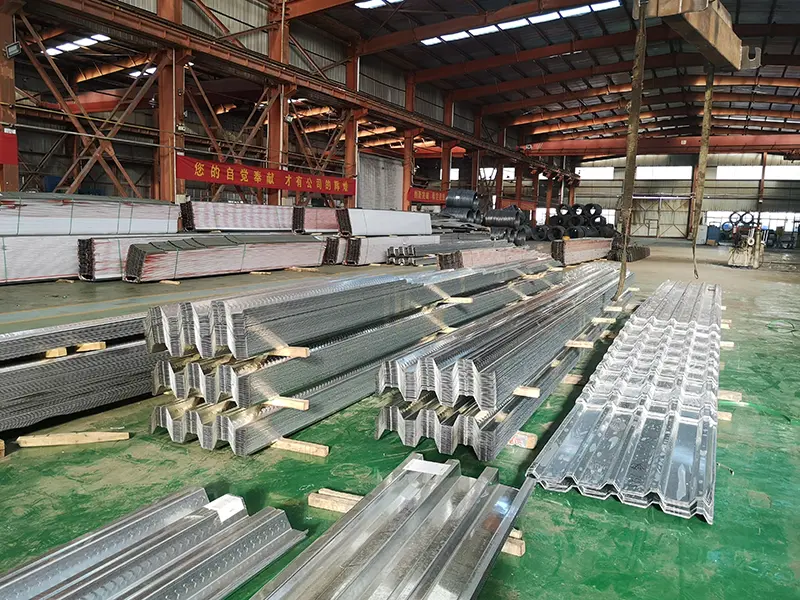
Tianjin SENBO Building Materials Technology Co., Ltd. is a manufacturer of windbreak and dust-suppression systems, perforated metal panels, climbing scaffold mesh, and other metal envelope products. Our production base is located in Jinghai Economic Development Zone, Tianjin, China, equipped with automated production lines and a four-stage quality inspection process.
Hot Tags: Windbreak and Dust Suppression Mesh Manufacturer, Windbreak Mesh Supplier, Dust Suppression Mesh Wholesale
Send SENBO an inquiry for steel building materials. Request a free quote, sample or bulk order price list. Our sales team responds within 24 hours with factory direct pricing, stock availability and shipping options.
We use cookies to offer you a better browsing experience, analyze site traffic and personalize content. By using this site, you agree to our use of cookies.Privacy Policy