Tianjin SENBO Building Materials Technology Co., Ltd.
Products
Alu-Mg-Mn Alloy Sheet
  • Alu-Mg-Mn Alloy SheetAlu-Mg-Mn Alloy Sheet
  • Alu-Mg-Mn Alloy SheetAlu-Mg-Mn Alloy Sheet
  • Alu-Mg-Mn Alloy SheetAlu-Mg-Mn Alloy Sheet

Alu-Mg-Mn Alloy Sheet

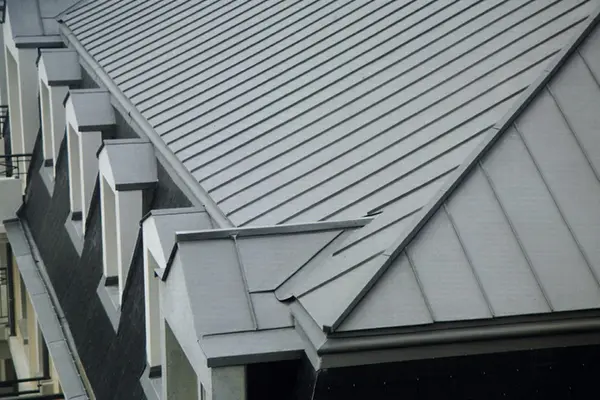
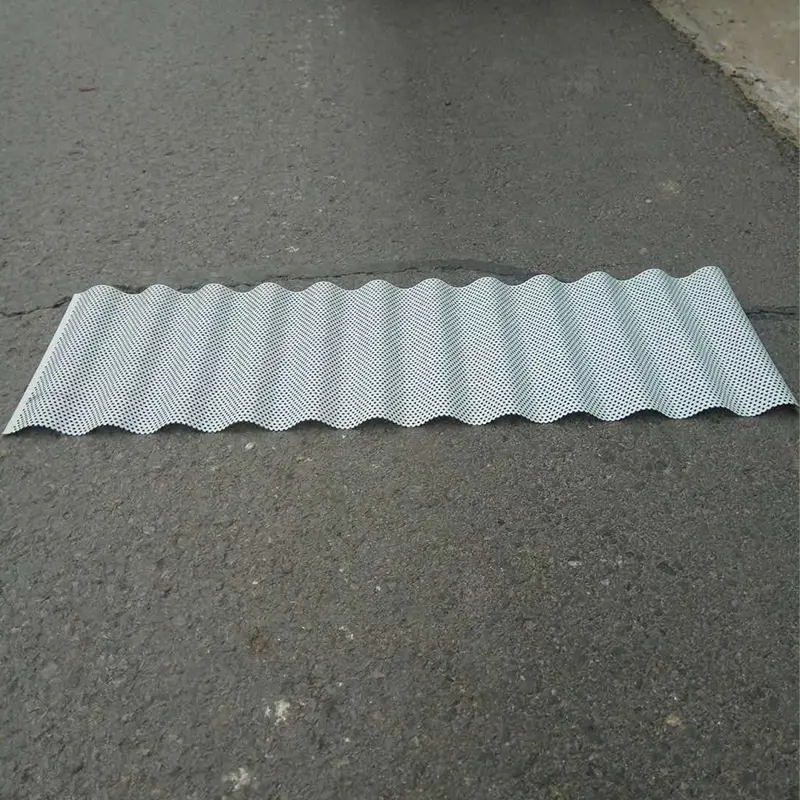
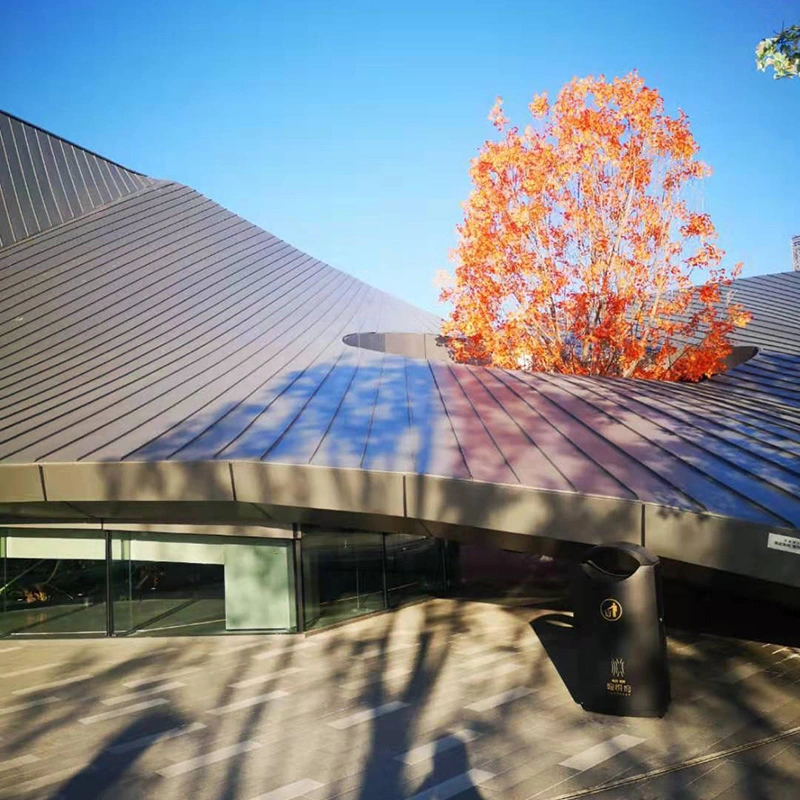
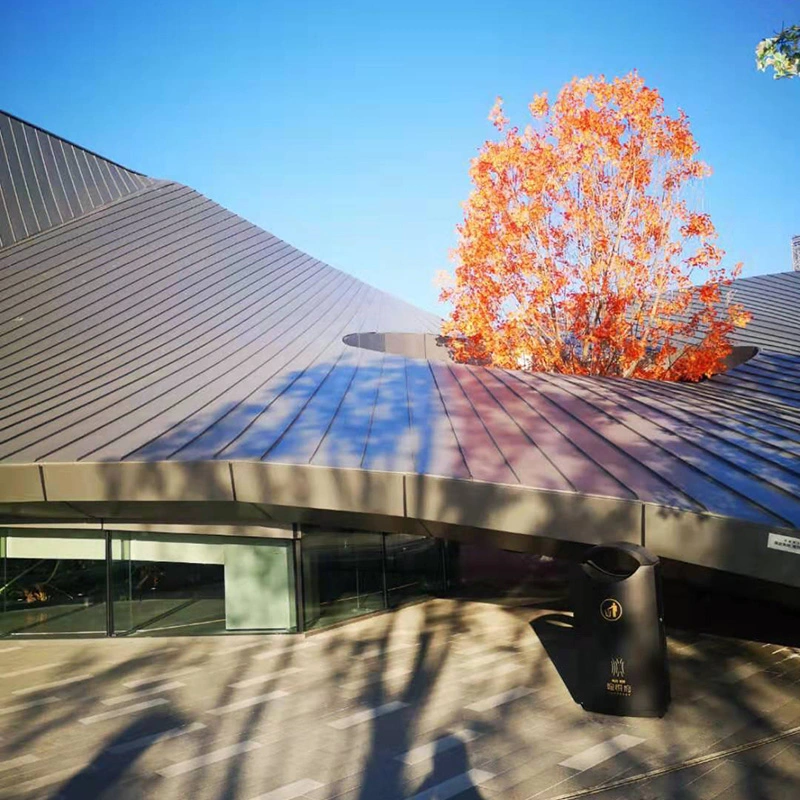
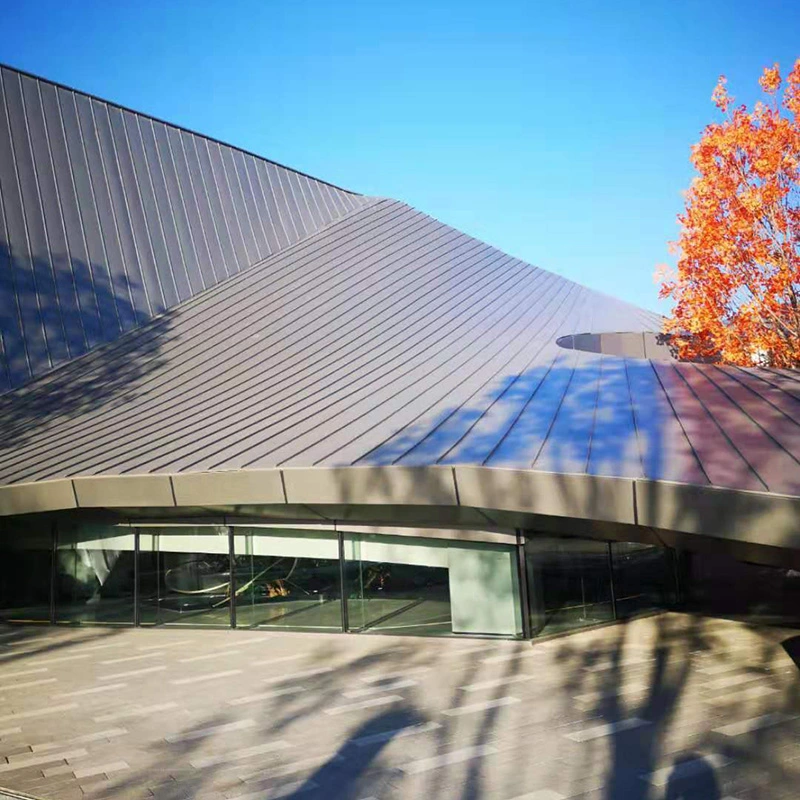
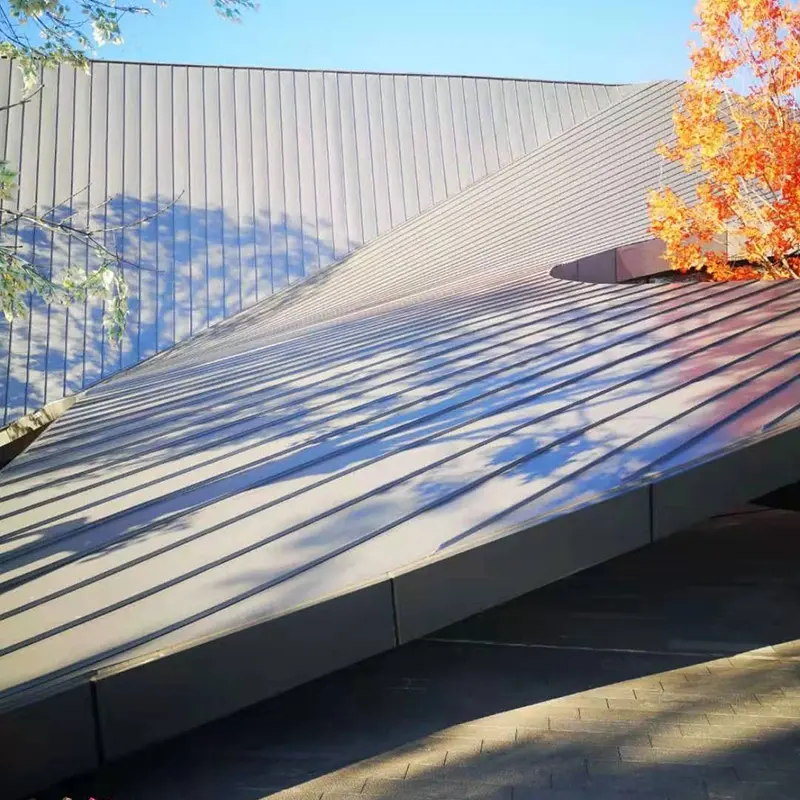
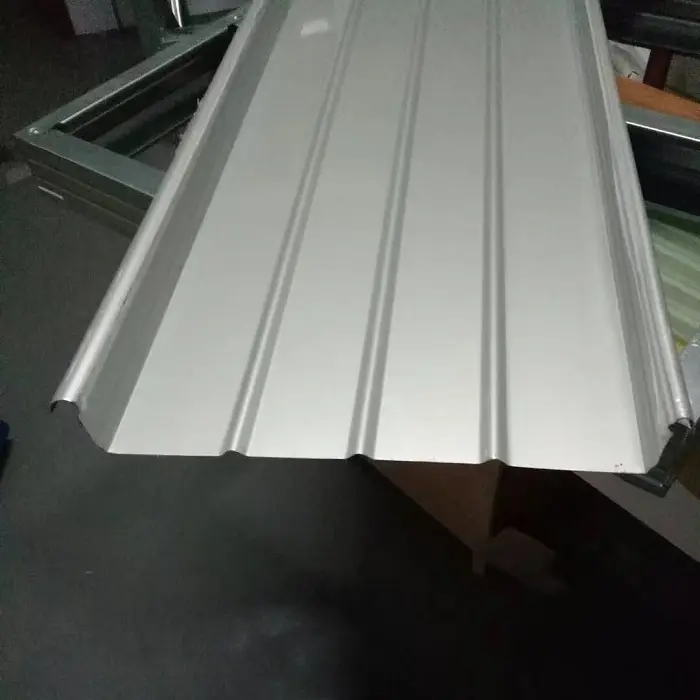
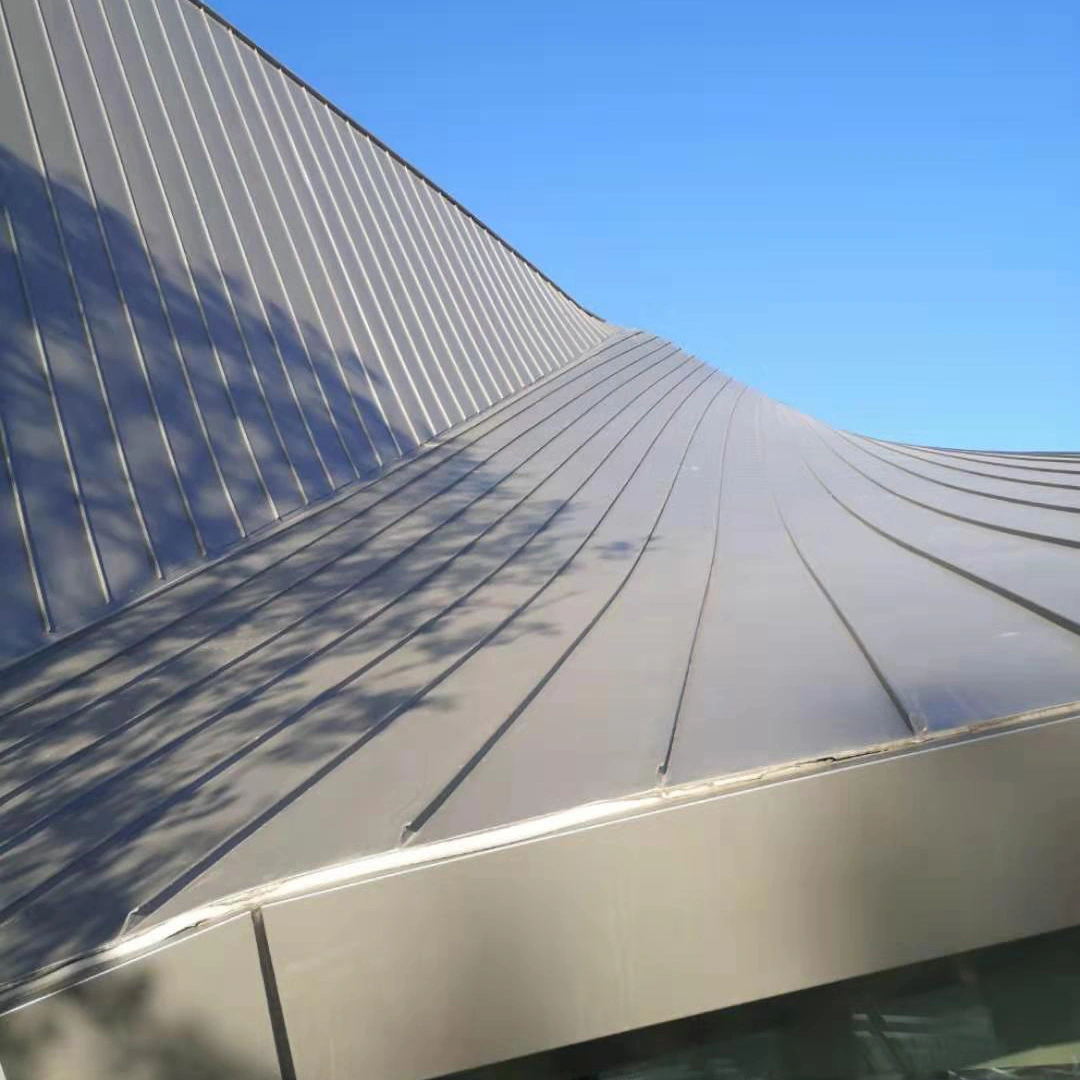
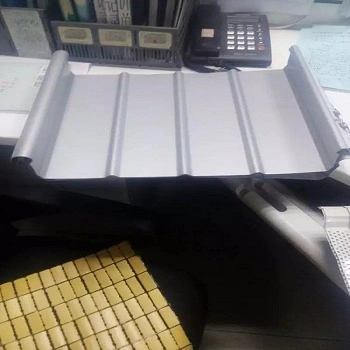
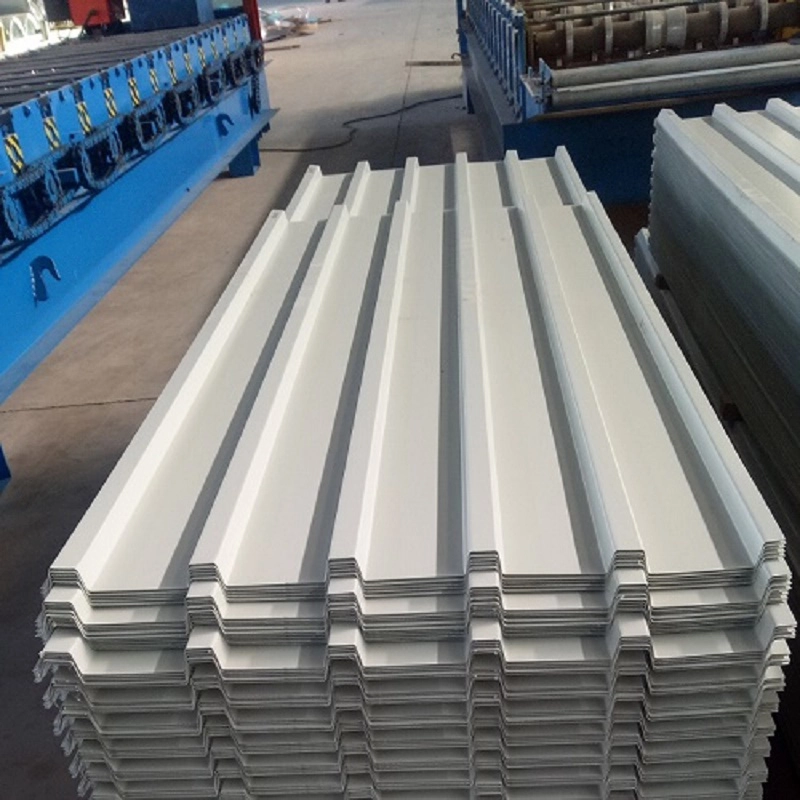
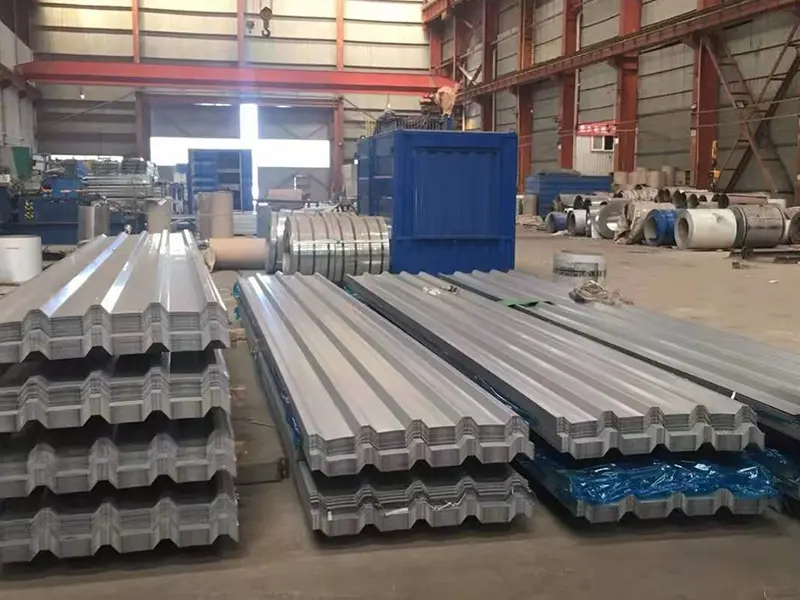
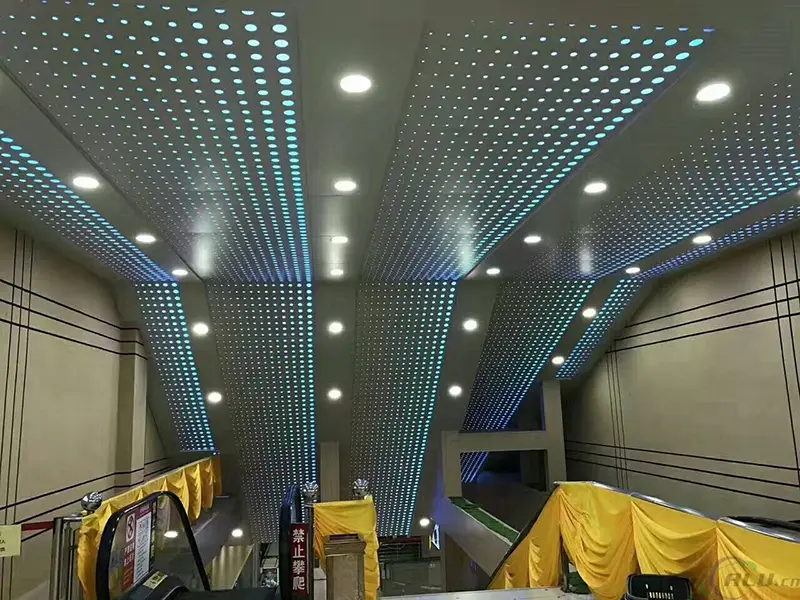
SENBO Alu-Mg-Mn Alloy Sheets use AA3004 alloy for lightweight, high-strength and corrosion-resistant roofing and exterior wall systems. Designed for long-term architectural applications, they support standing-seam installation and reliable weather protection. Architects, contractors and project buyers can specify or source these panels for durable, low-maintenance metal roofing projects.

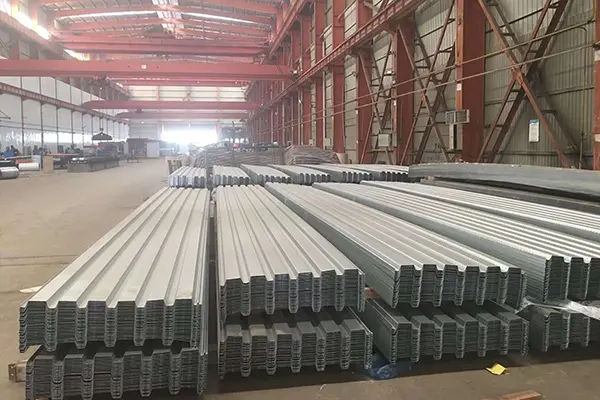
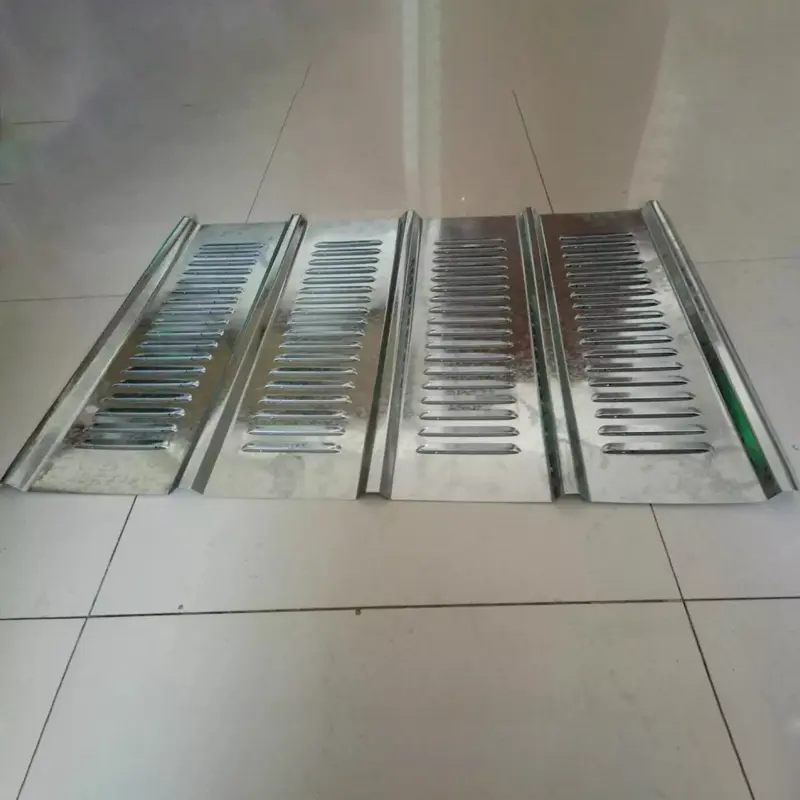
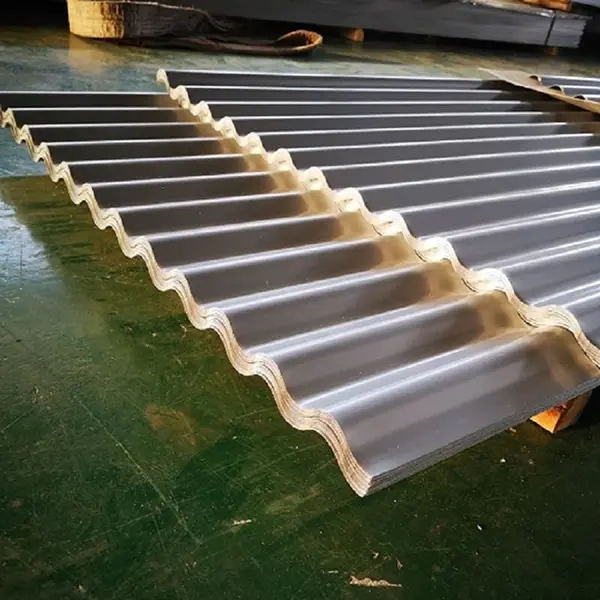
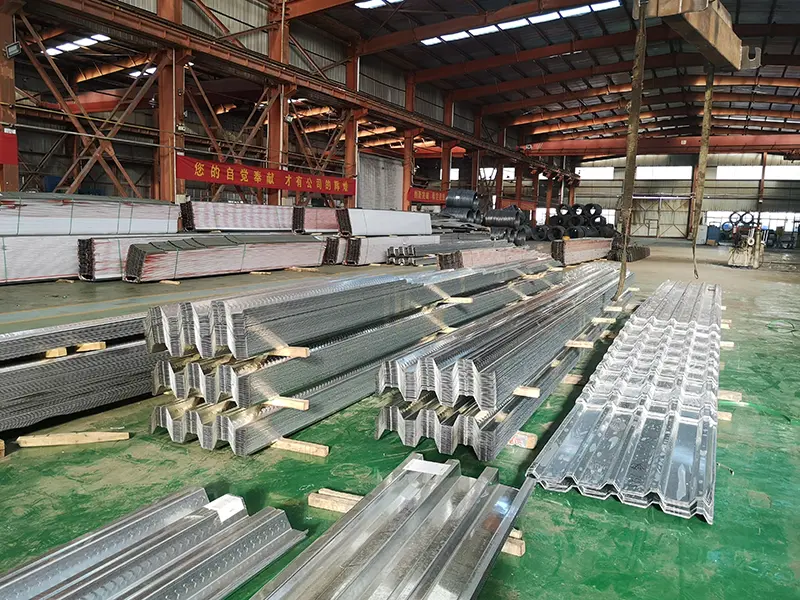
Alu-Mg-Mn Alloy Sheets are roll-formed from AA3004 aluminium strip for use in standing seam roof and wall systems. The alloy contains manganese and magnesium for improved strength and corrosion resistance, making it suitable for large public buildings where long spans and low maintenance are required. SENBO carries out incoming material verification on alloy grade, tensile properties, and coating thickness before forming. The production team also checks rib geometry and panel width at regular intervals to keep the profiles within the specified tolerance.

Alloy Composition and Coating

AA3004 contains approximately 1.0% to 1.5% manganese, 0.8% to 1.3% magnesium, and small amounts of silicon, copper, and zinc. This formulation balances formability with structural strength. The Alu-Mg-Mn Alloy Sheet surface is coated before roll forming using a PVDF fluorocarbon system with a minimum resin content of 70%. The coating process is carried out on a continuous line and includes cleaning, chromate treatment, primer, and topcoat. The finished coating provides consistent colour and long-term weather resistance.

Alu-Mg-Mn Alloy Sheet Alu-Mg-Mn Alloy Sheet Alu-Mg-Mn Alloy Sheet

Technical Data

Property Value Basis / Comment
Base alloy AA3004 (AlMg1Mn1) Mn 1.0–1.5%, Mg 0.8–1.3%, balance Al
Thickness 0.7–1.2 mm 0.6 mm possible for corrugated profiles
Common profiles YX65-300, YX65-400, YX65-430, YX65-500 Standing seam; other sections on request
Density 2.73 g/cm³ About one third of steel
Tensile strength 240–285 MPa H36/H46 temper
Yield strength ≥190 MPa Minimum
Elongation ≥3% At break
Thermal expansion coefficient 0.000023 /°C 20–100°C
Fire rating A1 Non-combustible
Service life >50 years Coating warranty 15–20 years
Relevant standards GB 50345, GB 50207, EN 573-3 Design and material references

Performance Evidence from Completed Projects

Weight Saving and Structural Benefits

The density of aluminium is 2.73 g/cm³, while steel is 7.85 g/cm³. For the same panel area, the aluminium roof weighs about one third as much as a steel roof. This weight reduction lowers the load on purlins, columns, and foundations. The tensile strength of AA3004 in H36 temper reaches 240 to 285 MPa, which is adequate for standing seam profiles and for long panels that must resist wind uplift and thermal movement. Several airport and stadium projects have used this material specifically to reduce structural steel tonnage.

Long-term Corrosion Behaviour

Aluminium forms a thin, dense oxide layer when exposed to air. This layer prevents further oxidation of the base metal. Independent measurements indicate an annual thickness loss of roughly 0.5 micrometres in normal atmospheric conditions. A 0.7 mm panel would still retain about 0.65 mm after 100 years of exposure. The PVDF coating adds an additional barrier against industrial pollutants and salt spray. These two mechanisms support the specified design life of more than 50 years.

Thermal Movement and Standing Seam Design

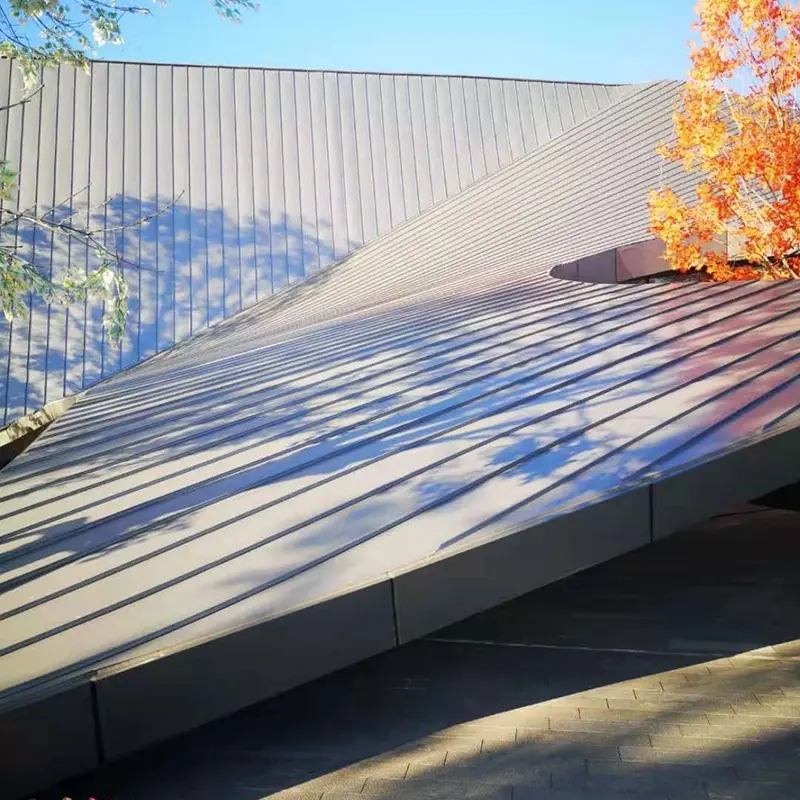
Metal roofs expand and contract with temperature changes. The standing seam system uses sliding T-clips that allow each panel to move along the slope while remaining fixed to the purlins. This prevents buckling or fastener fatigue. Single panels can be produced in lengths up to 120 metres without end laps, which removes potential leak points and improves watertightness. At Xiamen Xiang'an Airport, individual panels reached 101 metres. High-altitude roll forming machines produced the panels on site at 48 metres above ground, which increased installation efficiency by more than 35%.

Wind Uplift Verification

The roof system at Xiamen Xiang'an Airport underwent wind uplift testing in a laboratory. The test programme simulated severe typhoon conditions using static and dynamic pressure loading. Four rounds of validation confirmed that the system can withstand wind forces equivalent to a Category 17 super typhoon. The tests covered metal roof panels, purlins, gutters, and fasteners, not just the panel alone.

Fire and Lightning Protection

The system achieves a Class A1 fire rating. The metal surface can withstand sparks and flames without contributing to fire spread. For lightning protection, panels with a thickness of 0.7 mm or more may serve as air terminals according to GB 50057. This eliminates the need for separate lightning rods that would require roof penetrations. The standing seam profile itself provides a continuous conductive path when correctly connected.

Product Characteristics

  • Low structural weight: With a density of 2.73 g/cm³, the panels reduce dead load on purlins, columns, and foundations compared with steel cladding of the same coverage.
  • Long service expectation: The natural aluminium oxide layer and PVDF coating together support a design life beyond 50 years, with coating warranties typically 15 to 20 years.
  • Seam integrity without sealant: The standing seam joint is mechanically locked, so waterproofing does not depend on sealant that can age, crack, or require replacement.
  • Thermal movement accommodation: Sliding T-clips allow panels to expand and contract along the roof slope, preventing stress buildup in long runs.
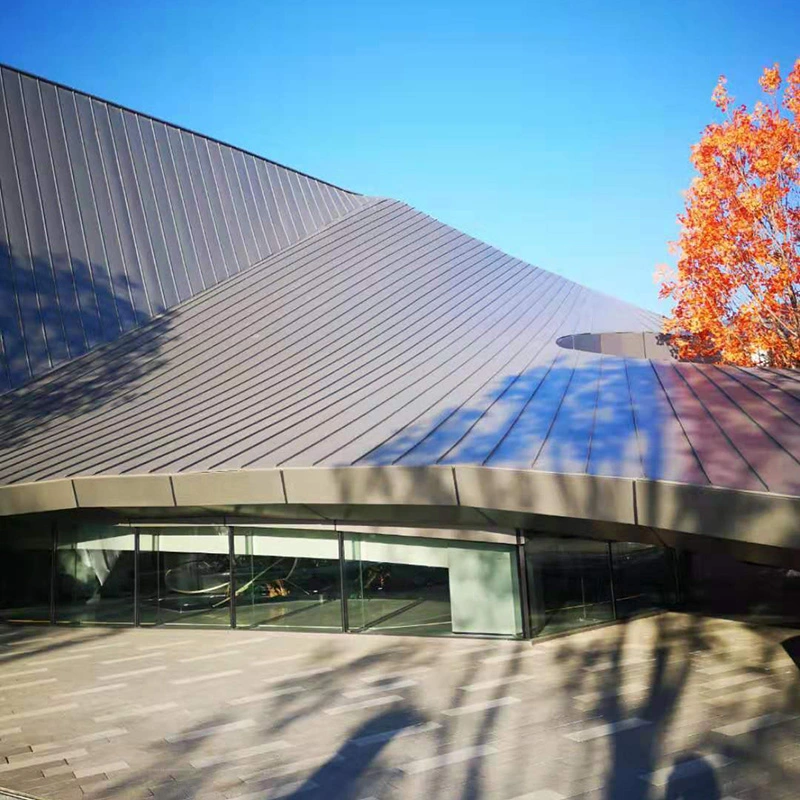
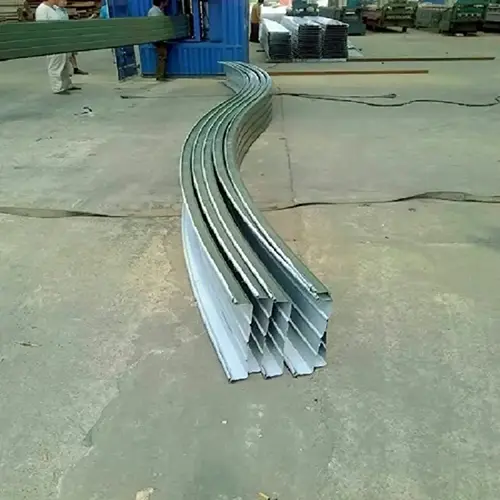
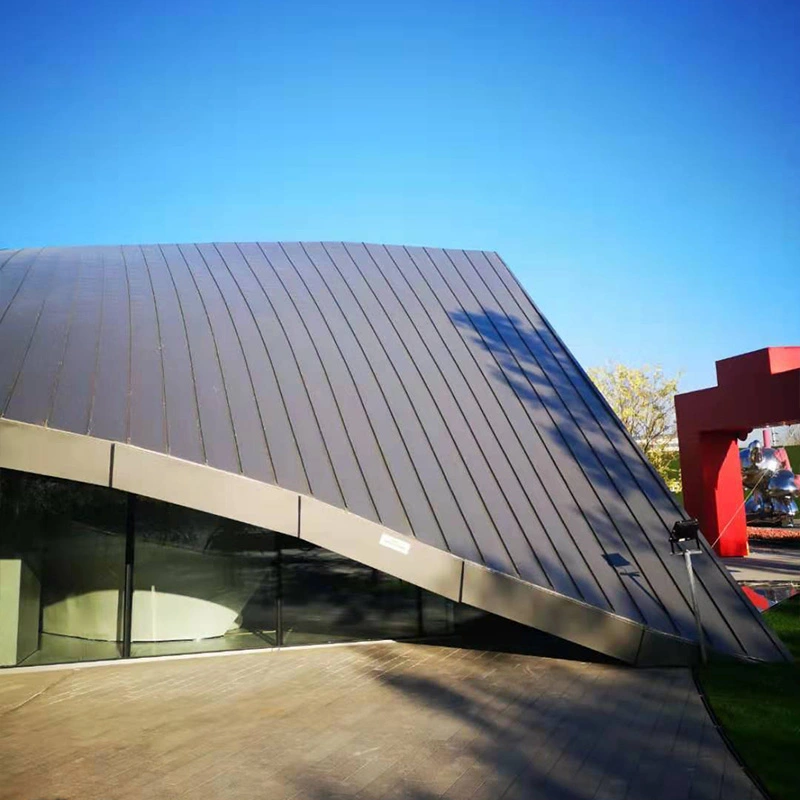
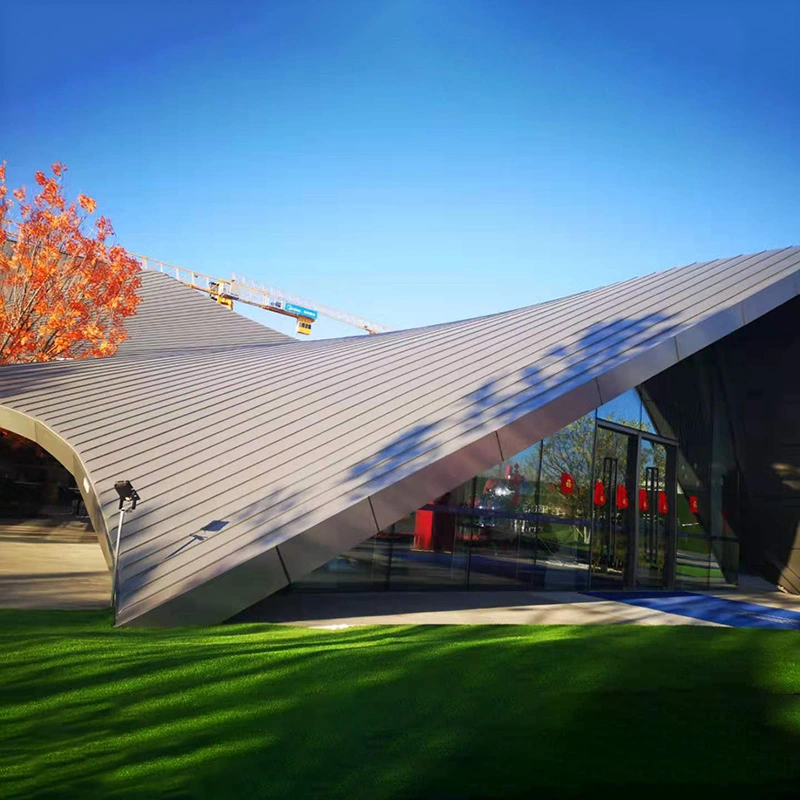
  • Broad forming capability: The alloy can be shaped into straight, curved, tapered, and fan-shaped panels, making it suitable for domes, vaults, and free-form surfaces.
  • Fire and lightning compatibility: The material is non-combustible, and panels 0.7 mm or thicker can act as lightning air terminals, avoiding additional roof penetrations.

Typical Applications

  • Roof and wall cladding for airport terminals and high-speed railway stations where long spans and low maintenance are priorities.
  • Large public buildings, including stadiums, exhibition centres, and theatres, that benefit from lightweight, durable roofing.
  • Buildings in coastal or industrial zones where corrosion resistance is a key requirement.
  • Renovation and over-roofing projects where the existing structure cannot support heavy steel panels.
  • Complex roof forms requiring curved or tapered panels, such as domes, vaults, and free-form surfaces.

Design and Installation Considerations

  • Choose the panel profile and thickness based on span, wind load, and roof slope. A minimum slope of 5% is common for standing seam systems, but lower slopes may be acceptable with additional sealing.
  • Specify the T-clip spacing according to the calculated wind uplift load. Closer spacing is needed near roof edges and corners.
  • Confirm the minimum bend radius for curved panels with the manufacturer before fabrication.
  • Use fasteners and clips made from compatible materials to avoid galvanic corrosion. Stainless steel or aluminium clips are preferred.
  • Store panels under cover and keep them dry. If outdoor storage is necessary, elevate the stack and use a breathable cover to prevent condensation.
  • During installation, check panel alignment and clip engagement before seaming. Use the correct seaming machine settings for the specific profile.

Common Questions from Project Teams

How does AA3004 compare with AA3003 for roofing?

AA3004 has higher manganese and magnesium content than AA3003, giving it better strength and corrosion resistance. For standing seam roofs, AA3004 is often preferred because it can handle higher wind loads and longer spans without adding thickness.

Can Al-Mg-Mn panels be used for walls as well as roofs?

Yes, the same material and standing seam profile can be applied to wall cladding. The profile dimensions and clip design may differ, and wind load requirements for walls must be checked separately.

What is the minimum roof slope for a standing seam Al-Mg-Mn roof?

A slope of 5% is typical for standard details. Lower slopes down to about 1.5 degrees may be possible with continuous panels and careful sealing, but the project engineer should verify the design for the specific climate and rainfall intensity.

Is a vapour barrier always required beneath the metal panel?

A vapour control layer is normally included on the warm side of the insulation to prevent condensation within the roof build-up. The exact layers depend on building use and climate. The roof system designer should specify the complete assembly.

Quality Control and Documentation

Material certificates should confirm the alloy grade, temper, mechanical properties, and coating type. Dimensional checks during production cover panel width, rib height, and length. For large projects, samples can be tested for coating thickness and adhesion. On-site receiving should verify the panel count, profile, and surface condition before installation begins.

Selection Factors

  • Evaluate the site's corrosion category to decide if a standard PVDF coating is sufficient or if additional protection is needed.
  • For curved or complex roof shapes, involve the panel supplier early to review formability and installation sequencing.
  • Check the design wind load and confirm that the clip spacing and fastener selection meet the calculated loads.
  • Review the maintenance access plan. While the coated surface requires little upkeep, flashings and penetrations still need periodic inspection.
  • Consider the roof's thermal movement range and confirm that the standing seam system can accommodate the expected expansion and contraction.
Hot Tags: Alu-Mg-Mn Alloy Sheet Manufacturer, Aluminum Magnesium Manganese Alloy Sheet Supplier, Al-Mg-Mn Alloy Sheet Wholesale
Send Inquiry
Contact Info
Send SENBO an inquiry for steel building materials. Request a free quote, sample or bulk order price list. Our sales team responds within 24 hours with factory direct pricing, stock availability and shipping options.
X
We use cookies to offer you a better browsing experience, analyze site traffic and personalize content. By using this site, you agree to our use of cookies.Privacy Policy
RejectAccept