Tianjin SENBO Building Materials Technology Co., Ltd.
Products
Alu-Mg-Mn Roofing Panels
  • Alu-Mg-Mn Roofing PanelsAlu-Mg-Mn Roofing Panels
  • Alu-Mg-Mn Roofing PanelsAlu-Mg-Mn Roofing Panels
  • Alu-Mg-Mn Roofing PanelsAlu-Mg-Mn Roofing Panels

Alu-Mg-Mn Roofing Panels

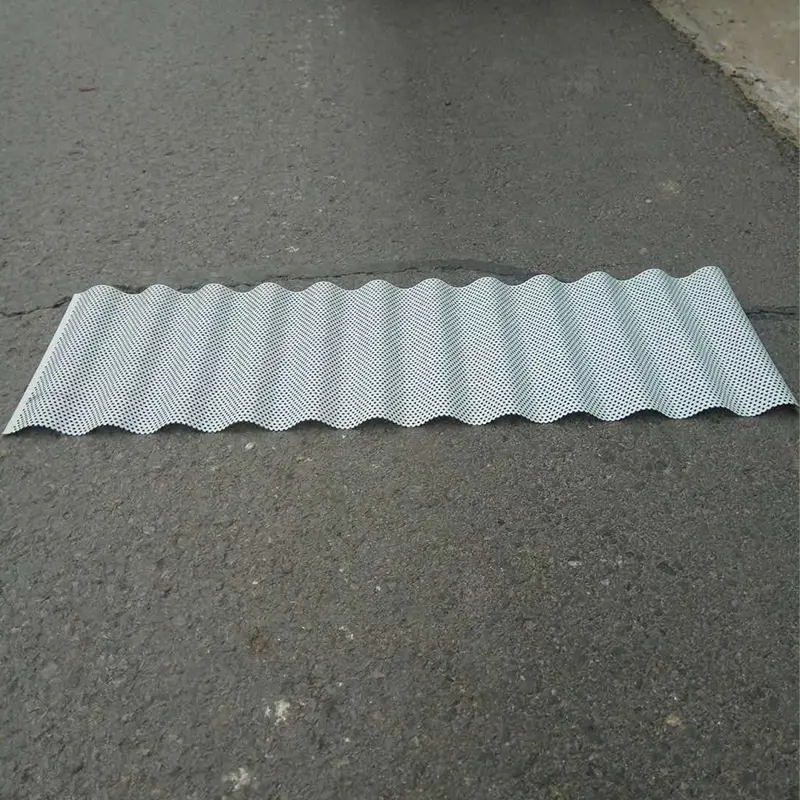
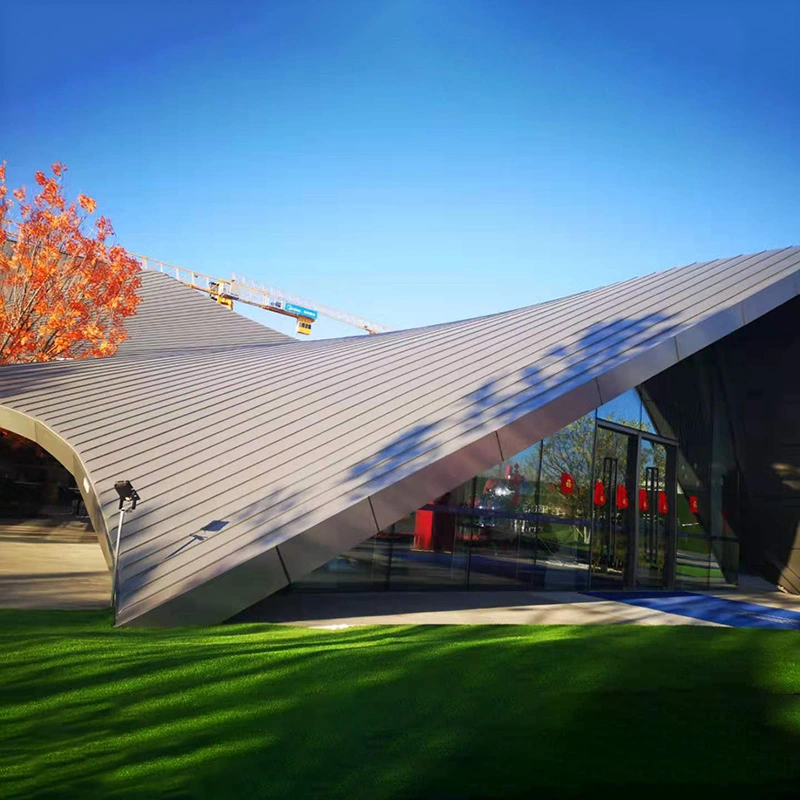
SENBO Alu-Mg-Mn Roofing Panels are made from AA3004 alloy, combining lightweight construction with high strength and corrosion resistance. Designed for roofing and exterior walls, they offer reliable weather resistance and long-term performance. Architects, contractors and project buyers can source or specify these panels for durable, low-maintenance building envelope systems.

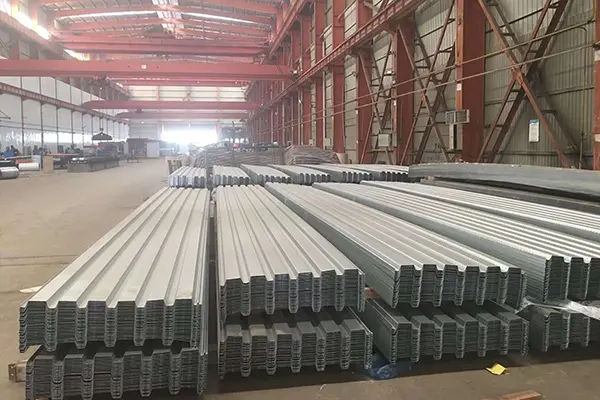
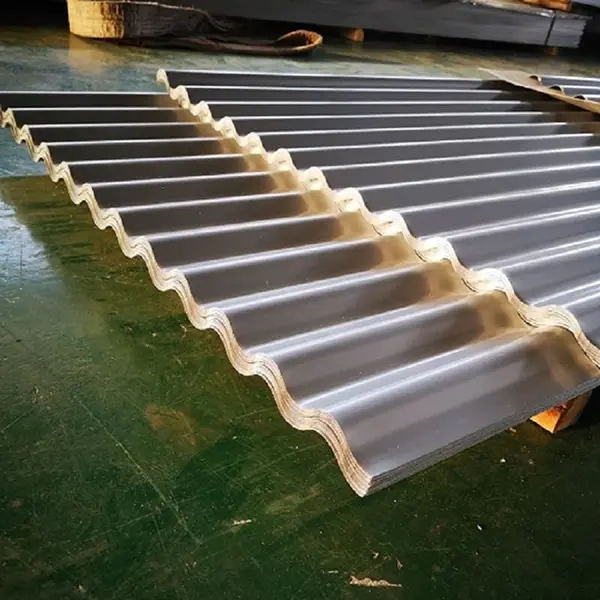
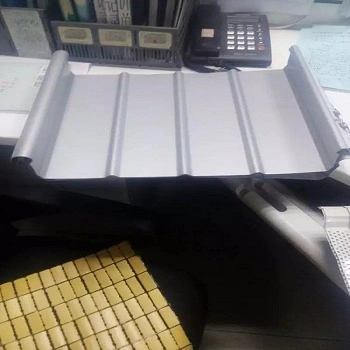
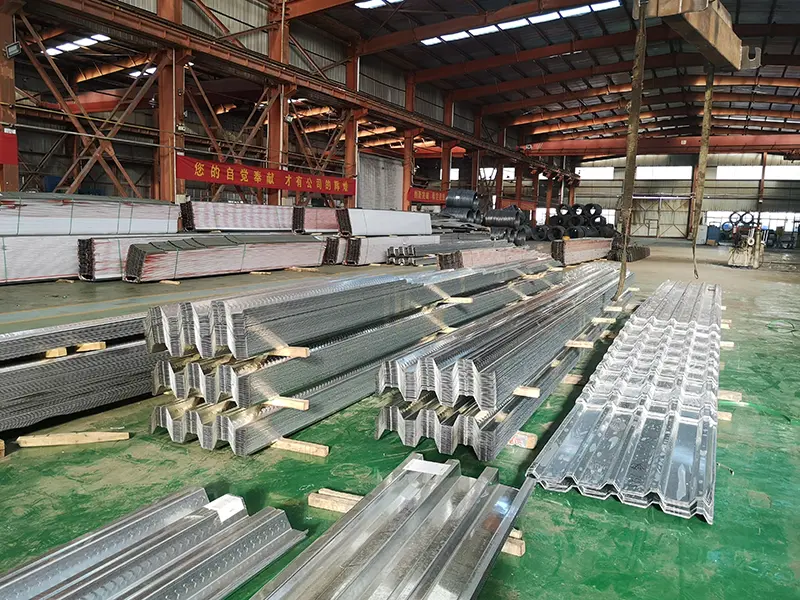
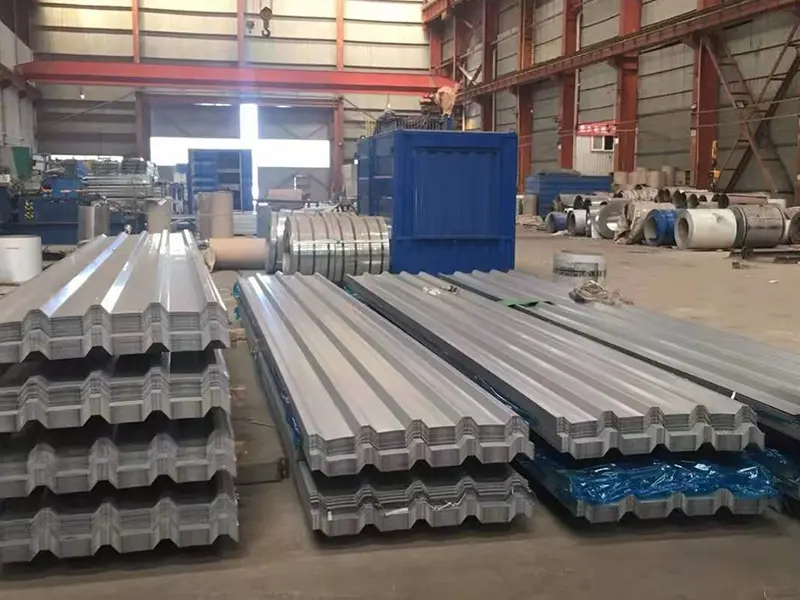
Alu-Mg-Mn Roofing Panelss are roll-formed from AA3004 aluminium alloy strip for standing seam roof and wall systems. The alloy contains manganese and magnesium, which together improve strength and corrosion resistance while keeping the material light enough for long-span roofs. SENBO checks the incoming alloy grade, temper, and coating thickness before roll forming, and the production line monitors rib height and panel width at regular intervals. This helps keep the finished profile within the specified tolerance.

Surface Coating and Connection Design

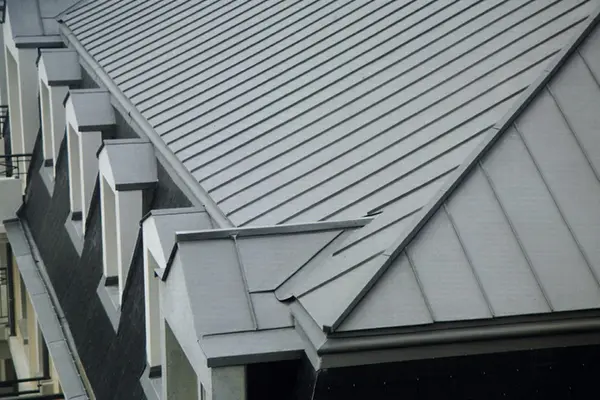
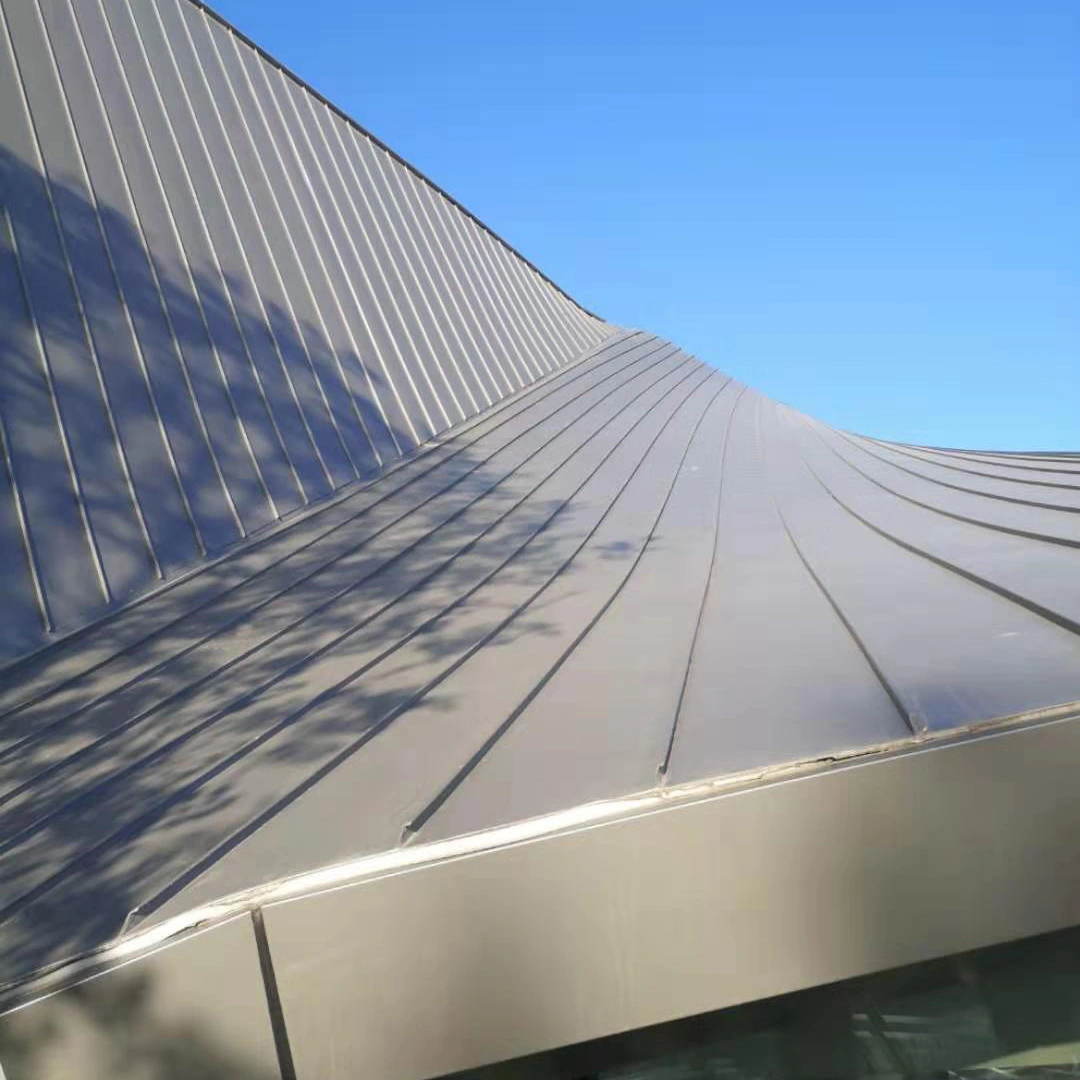
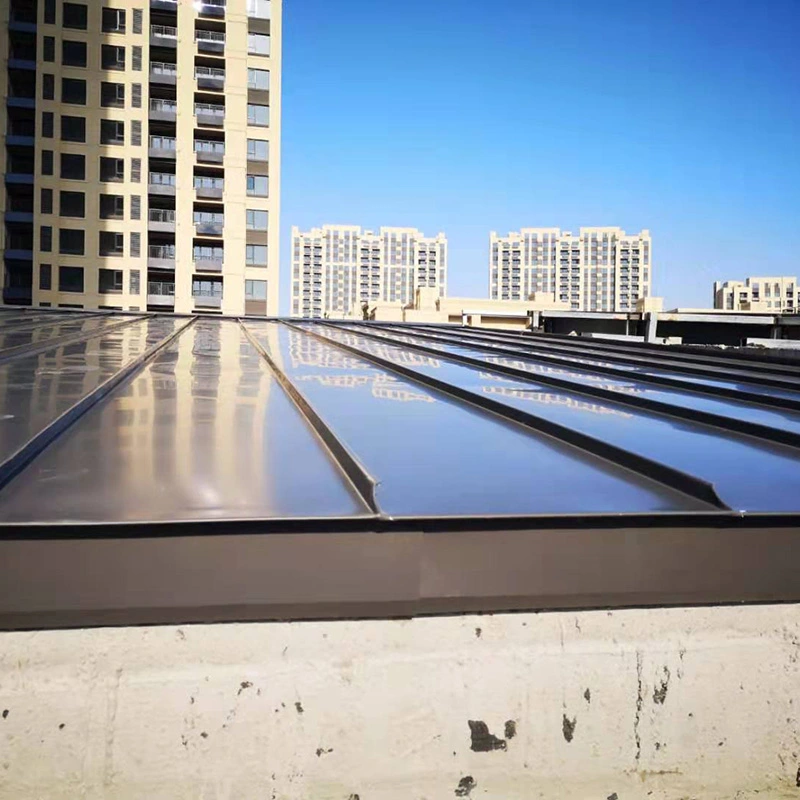
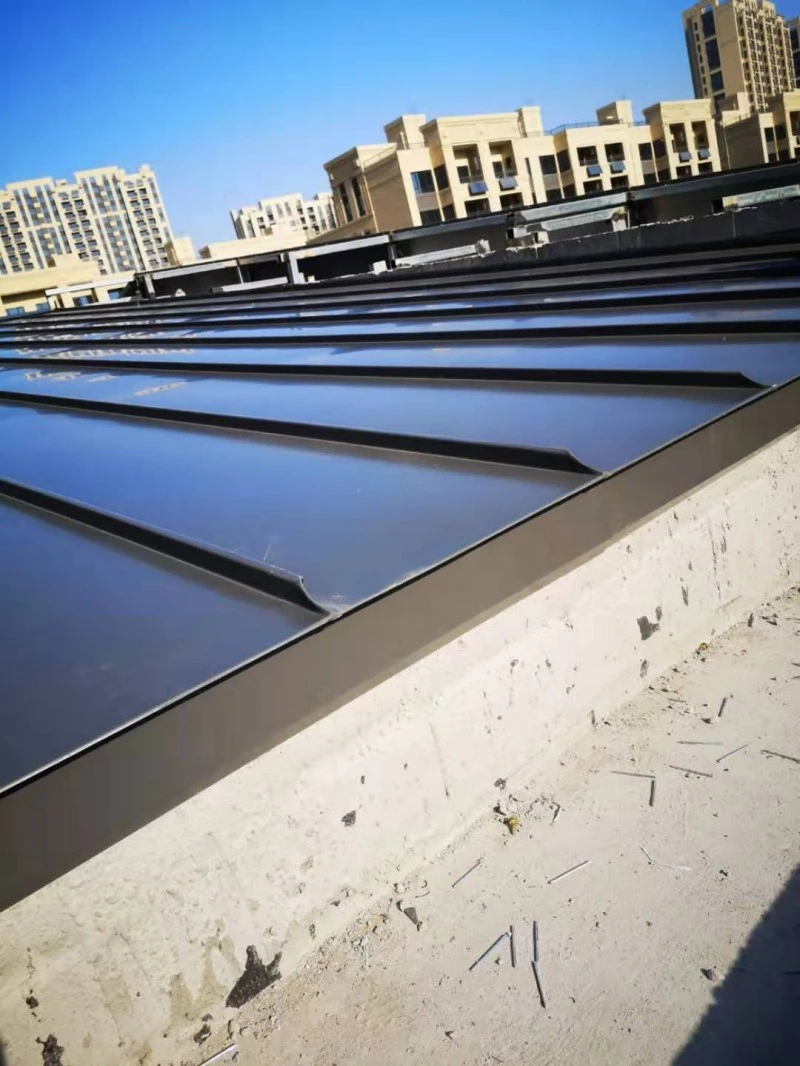
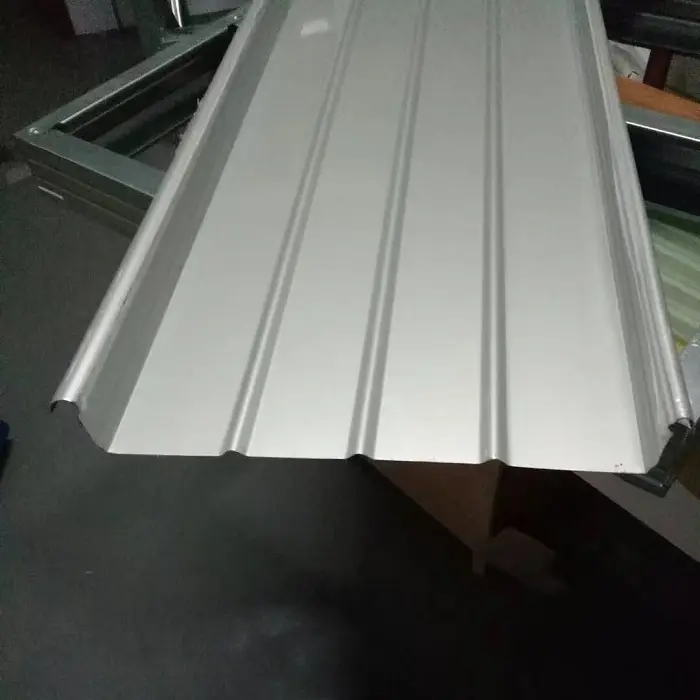
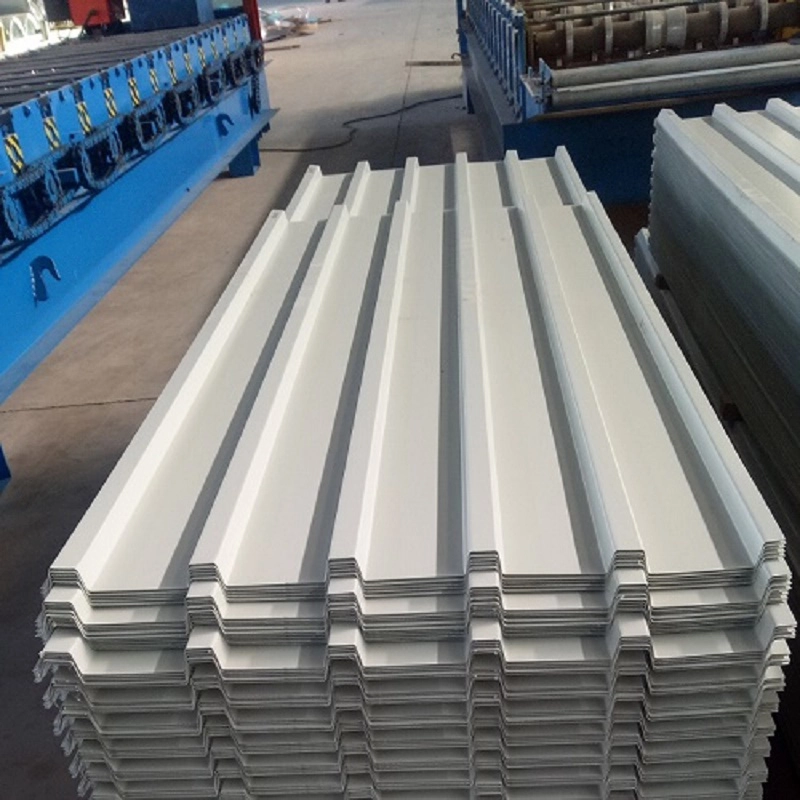
The Alu-Mg-Mn Roofing Panel surface is coated before forming with a PVDF fluorocarbon system containing at least 70% fluorocarbon resin. The coating is applied on a continuous line after cleaning and chromate treatment, which improves adhesion and colour uniformity. The roof system uses a standing seam profile with T-shaped clips. The clips hold the panels to the purlins while allowing movement along the roof slope, so thermal expansion and contraction do not stress the seams. The mechanically locked joint forms a watertight barrier without relying on sealant.

Alu-Mg-Mn Roofing Panels Alu-Mg-Mn Roofing Panels

Specification Table

Item Value Basis / Note
Base alloy AA3004 (AlMg1Mn1) Mn 1.0–1.5%, Mg 0.8–1.3%, balance Al
Thickness 0.7–1.2 mm 0.6 mm possible for corrugated profiles
Common profiles YX65-300, YX65-430, YX65-500 Standing seam; custom sections available
Density 2.73 g/cm³ About one third of steel
Tensile strength 240–285 MPa H36/H46 temper
Yield strength ≥190 MPa Minimum
Elongation ≥3% At break
Thermal expansion coefficient 0.000023 /°C 20–100°C
Fire rating A1 Non-combustible
Service life >50 years Coating warranty 15–20 years
Relevant standards GB 50345, GB 50207, EN 573-3 Design and material references

Measured Performance and Engineering Evidence

Panel Weight and Structural Efficiency

The density of aluminium is 2.73 g/cm³ compared with 7.85 g/cm³ for steel. A roof made from AA3004 panels therefore weighs about one third as much as an equivalent steel roof. This reduction in dead load can reach 30% for the overall roof structure, which allows smaller purlins, columns, and foundations. The tensile strength of 240 to 285 MPa is sufficient for standing seam profiles and for panels that must resist wind uplift over long spans.

Corrosion Behaviour and Service Life

When exposed to air, aluminium develops a dense oxide film that protects the base metal from further oxidation. Testing indicates an annual corrosion loss of about 0.5 micrometres in normal atmospheric conditions. A 0.7 mm panel would still have about 0.65 mm of thickness after 100 years. The PVDF coating adds another protective layer against industrial pollution and salt spray. These factors support a design life beyond 50 years for the base metal.

Thermal Movement and Seam Integrity

The standing seam system uses sliding T-clips that let each panel move along the roof slope while staying connected to the purlins. This prevents stress buildup at fixed points and avoids panel deformation. Single panels can be produced up to 120 metres long without end laps, which removes potential leak paths and improves overall watertightness. Installation tolerance is controlled within 3 mm, and the prefabricated system shortens construction time by more than 30% compared with traditional methods.

Fire and Lightning Behaviour

The roof system achieves a Class A1 fire rating. Aluminium melts at 660°C, and in a fire the roof tends to burn through locally rather than spreading flame across the surface. This helps firefighting efforts by allowing heat and smoke to escape. For lightning protection, panels at least 0.7 mm thick can act as air termination devices under GB 50057, which removes the need for separate lightning rods and additional roof penetrations.

Alu-Mg-Mn Roofing Panels Alu-Mg-Mn Roofing Panels

Product Characteristics

  • Lower roof weight: The panel is about one third the weight of steel, which reduces structural framing and foundation demands.
  • Long-term durability: The natural oxide layer and fluorocarbon coating together provide more than 50 years of service in normal environments.
  • Sealant-free watertightness: The mechanically locked standing seam does not rely on sealant that can age or crack.
  • Thermal movement control: Sliding T-clips allow the roof to expand and contract without stressing the seams or panels.
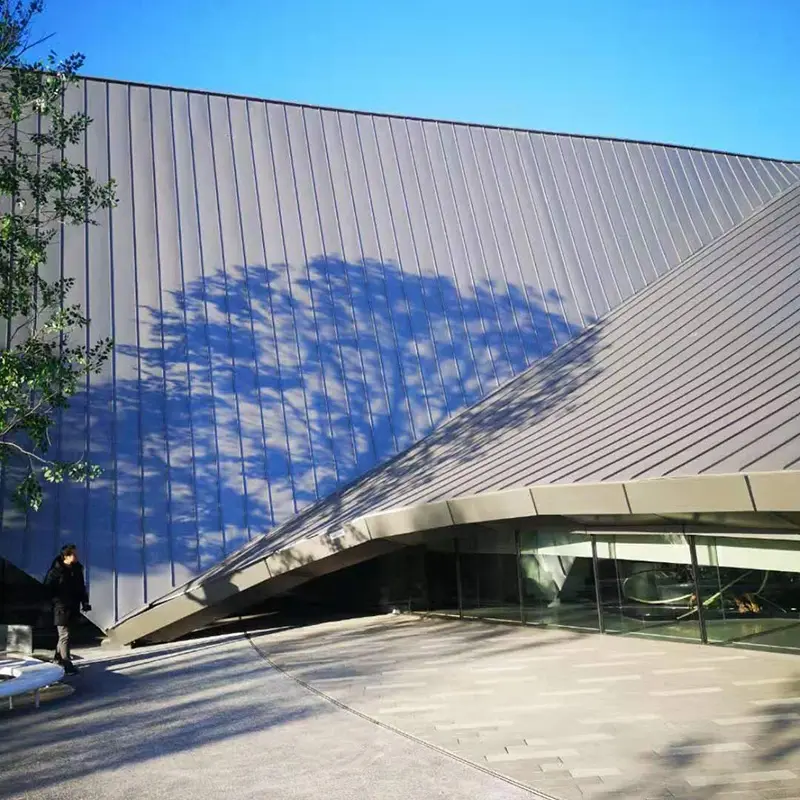
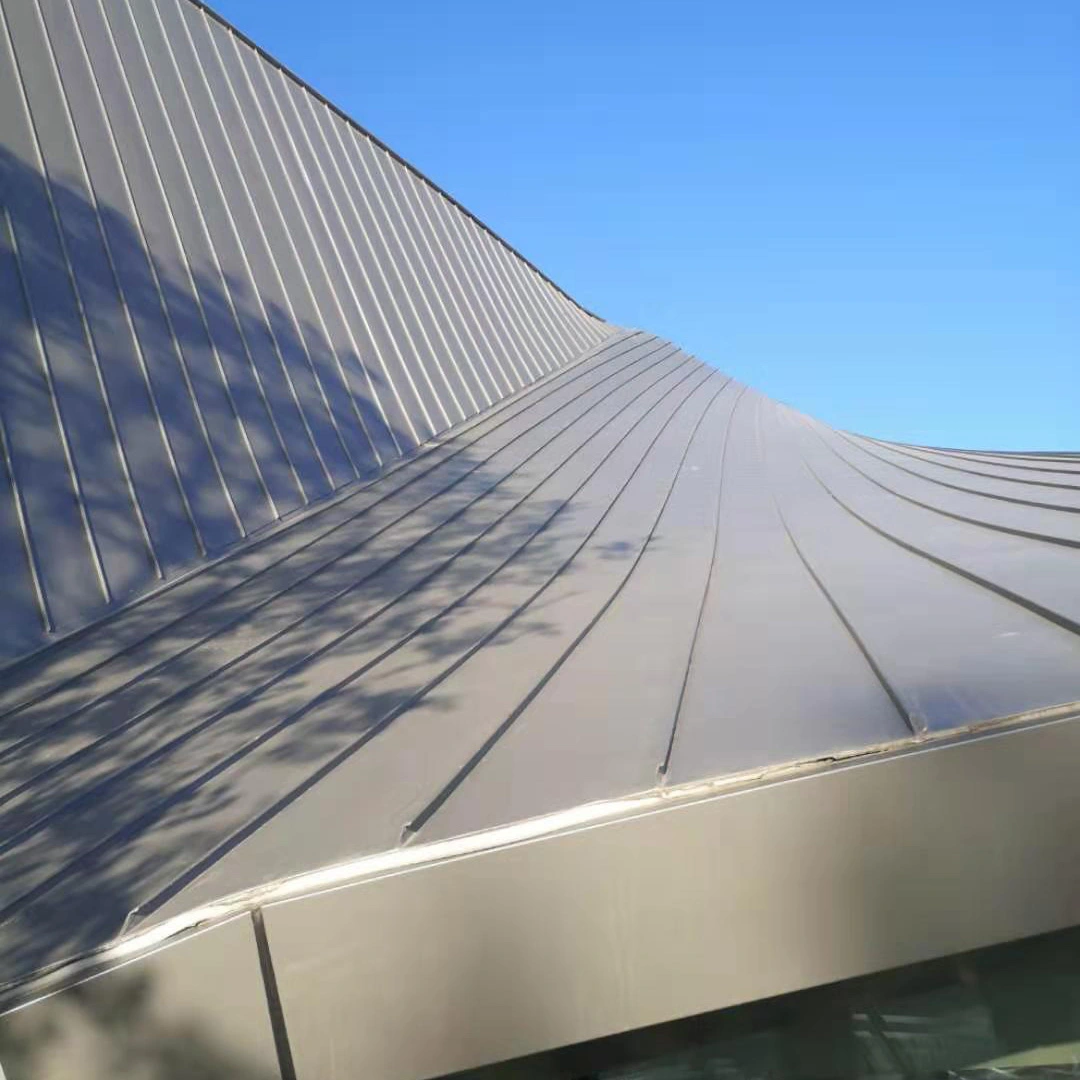
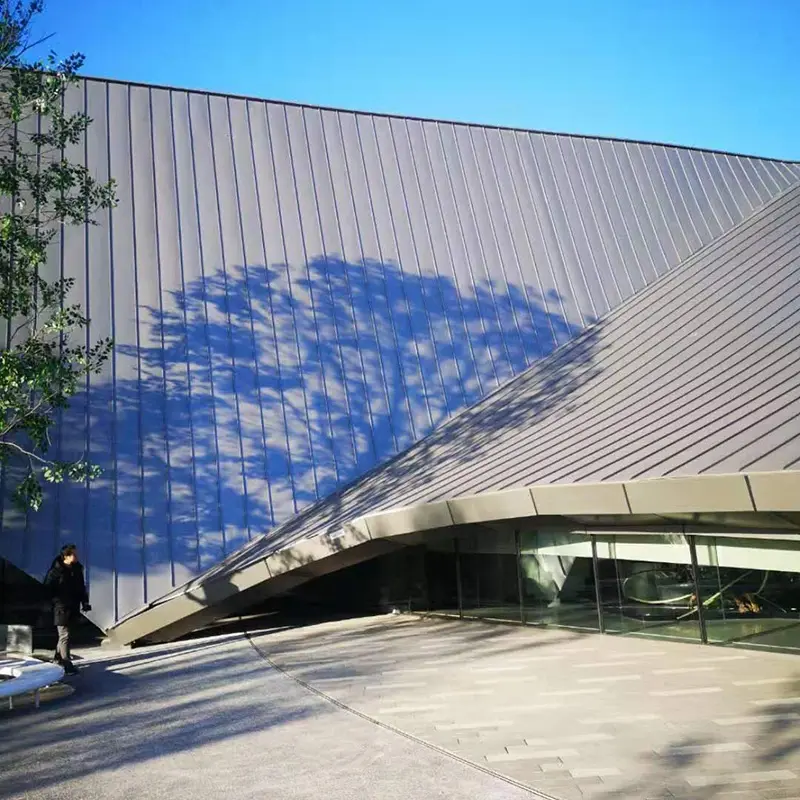
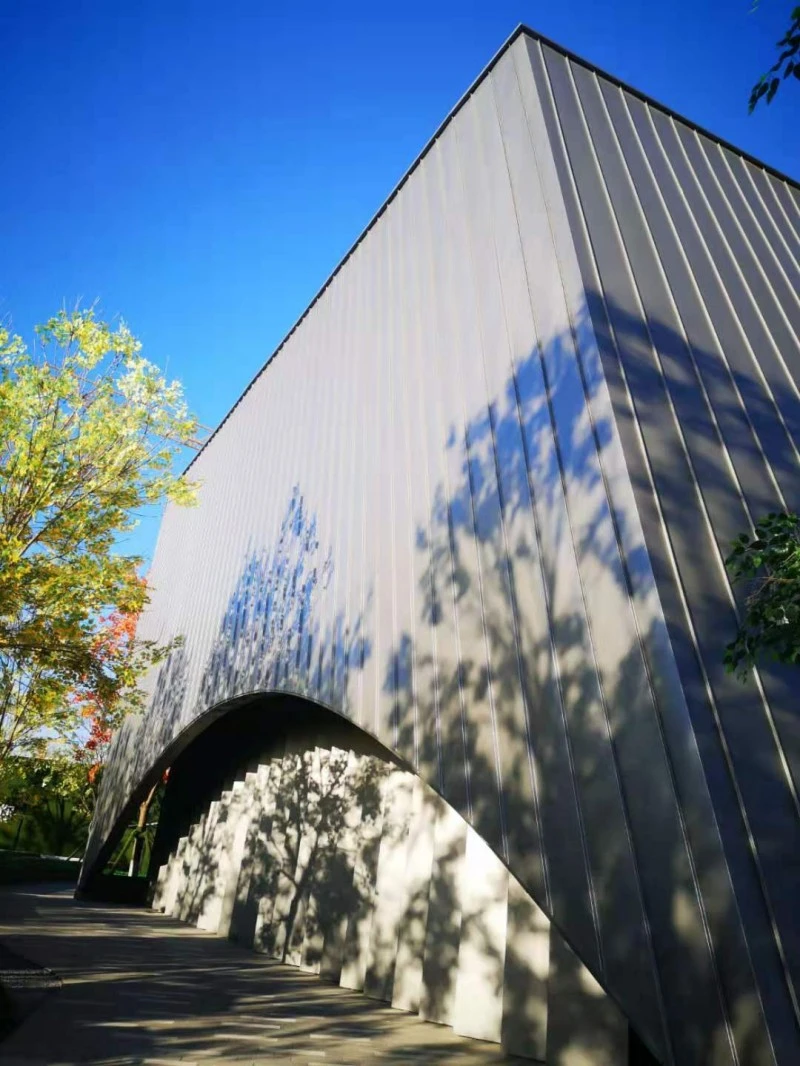
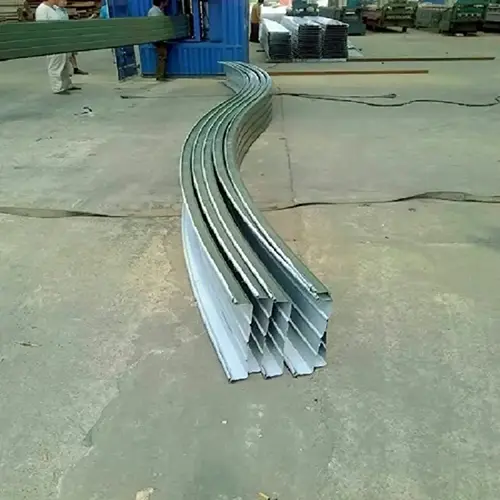
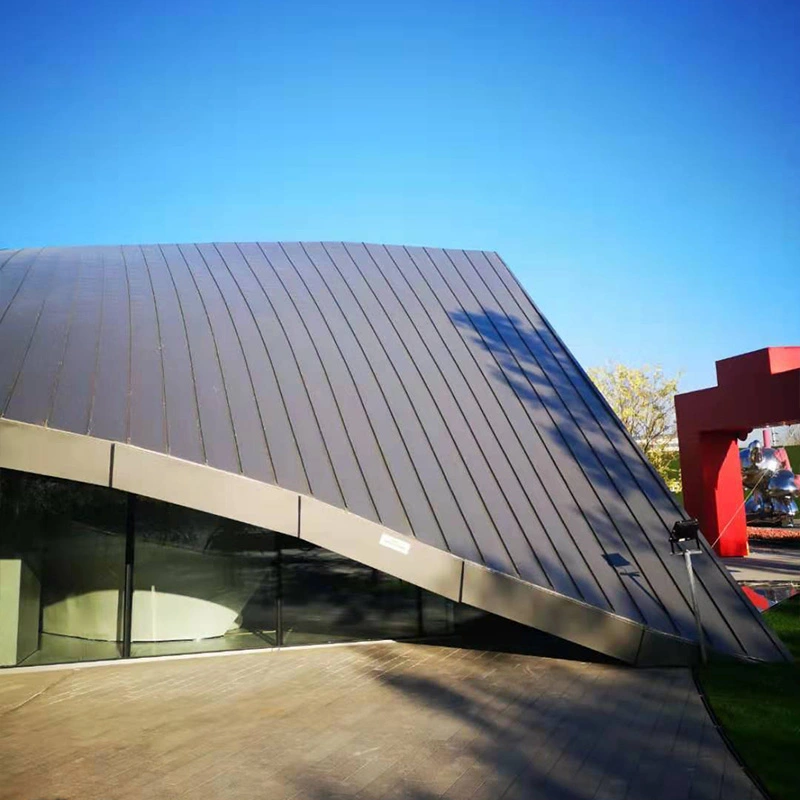
  • Shape flexibility: Panels can be formed into straight, curved, tapered, and fan-shaped profiles for complex roof geometries.
  • Recyclability: Aluminium is fully recyclable at the end of its service life.

Where the Product Is Used

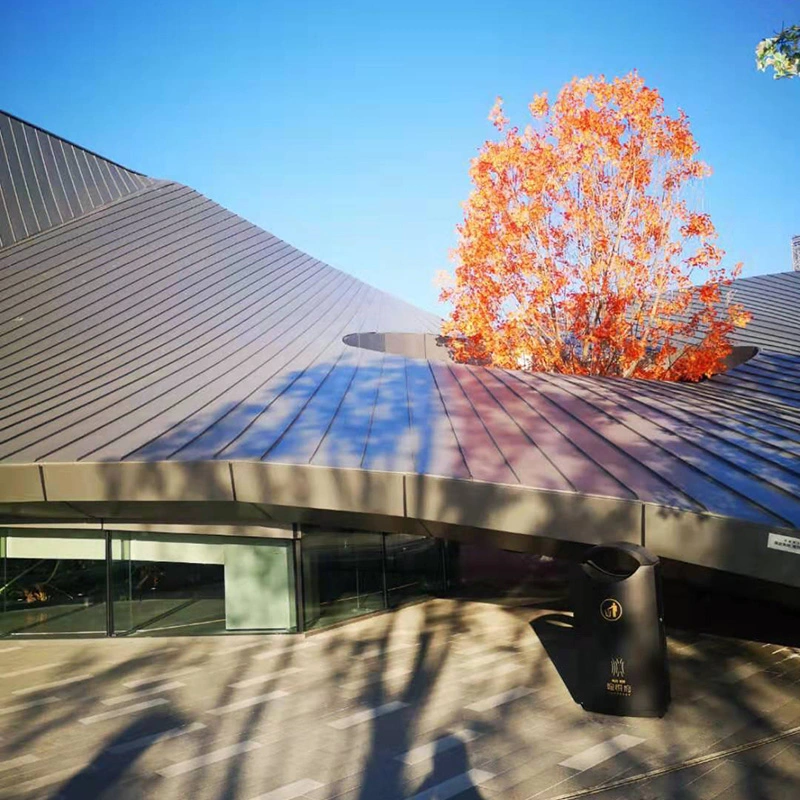
  • Roof and wall cladding for airport terminals and high-speed railway stations.
  • Large-span public buildings such as stadiums, exhibition centres, and theatres.
  • Buildings in marine or industrial environments where corrosion resistance is important.
  • Renovation and re-roofing projects where the existing structure cannot carry heavy steel panels.
  • Residential applications where a lightweight, long-lasting metal roof is preferred.

Installation and Handling Guidance

  • Store panels under cover and keep them dry. If outdoor storage is necessary, elevate the stack and use a breathable cover.
  • Lift panels with soft slings and spreader bars to prevent denting or scratching.
  • Cut panels with tools suitable for aluminium. Remove swarf and clean cut edges before installation.
  • Fix T-clips at the spacing shown on the approved drawing. Use fasteners compatible with aluminium to avoid galvanic corrosion.
  • Check panel alignment and clip engagement before seaming. Use the correct seaming machine settings for the panel profile.
  • For curved roofs, confirm the minimum bend radius with the manufacturer before fabrication.

Questions Often Raised by Contractors

How does AA3004 differ from AA3003 for roofing?

AA3004 contains more manganese and magnesium, which gives higher strength and better corrosion resistance. It is often chosen for standing seam roofs that must handle higher wind loads or longer spans without increasing panel thickness.

Can Al-Mg-Mn panels be installed on curved roofs?

Yes, the alloy can be roll-formed or press-braked into curved shapes. The minimum radius depends on the panel profile, material temper, and coating thickness. The supplier should confirm feasibility before the panels are fabricated.

What is the minimum roof slope for a standing seam Al-Mg-Mn roof?

A slope of 5% is standard for most details. Lower slopes may be possible with continuous panels and careful sealing, but the project engineer must verify the design for the local rainfall intensity and wind conditions.

Is a vapour barrier always needed under the metal roof?

A vapour control layer is normally included on the warm side of the insulation to prevent condensation inside the roof build-up. The exact layers depend on building use and climate. The roof system designer should specify the complete assembly.

Quality Control and Documentation

Material certificates should confirm the alloy grade, temper, mechanical properties, and coating type. Production checks cover panel width, rib height, and length. For large projects, samples can be tested for coating thickness and adhesion. On-site receiving should verify the panel count, profile, and surface condition before installation starts.

Selection Factors

  • Evaluate the atmospheric corrosion category of the site before choosing the coating specification.
  • For curved or complex roof shapes, involve the panel supplier early to review formability and installation sequencing.
  • Confirm the design wind load and check that the T-clip spacing and fastener selection match the calculated loads.
  • Review the maintenance access plan. While the coated surface requires little upkeep, flashings and penetrations still need periodic inspection.
  • Consider the roof's thermal movement range and confirm that the standing seam system can handle the expected expansion and contraction.
Hot Tags: Alu-Mg-Mn Roofing Panels Manufacturer, Aluminum Magnesium Manganese Roofing Panels Supplier, Al-Mg-Mn Roofing Sheets Wholesale
Send Inquiry
Contact Info
Send SENBO an inquiry for steel building materials. Request a free quote, sample or bulk order price list. Our sales team responds within 24 hours with factory direct pricing, stock availability and shipping options.
X
We use cookies to offer you a better browsing experience, analyze site traffic and personalize content. By using this site, you agree to our use of cookies.Privacy Policy
RejectAccept