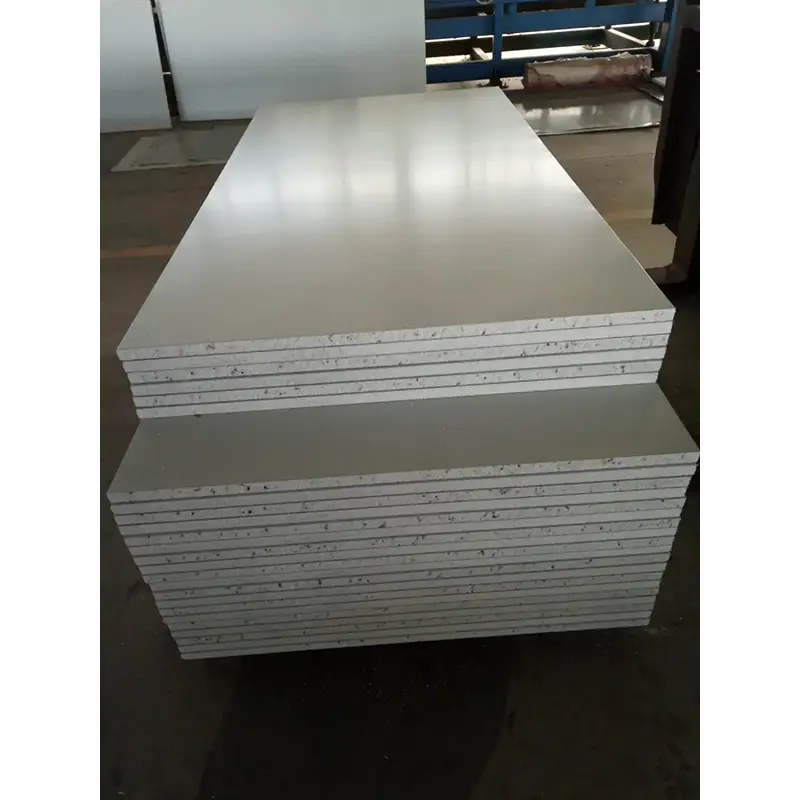
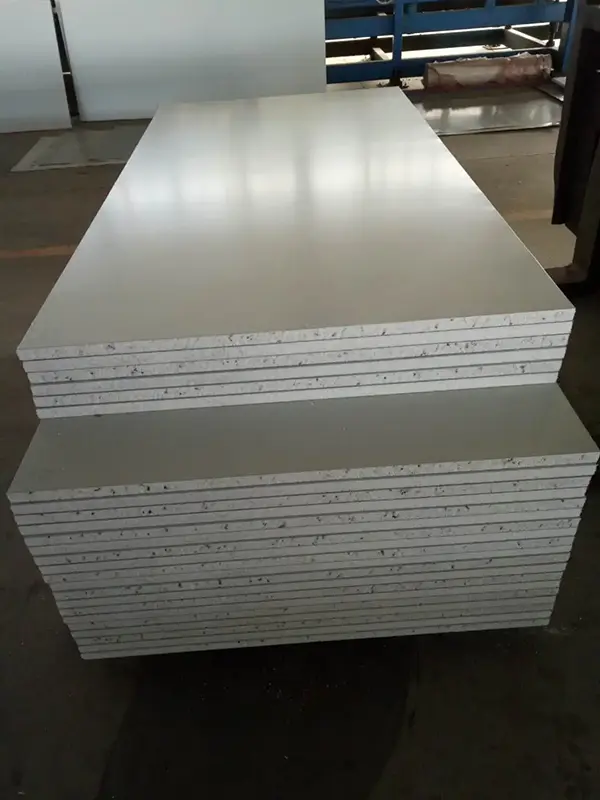
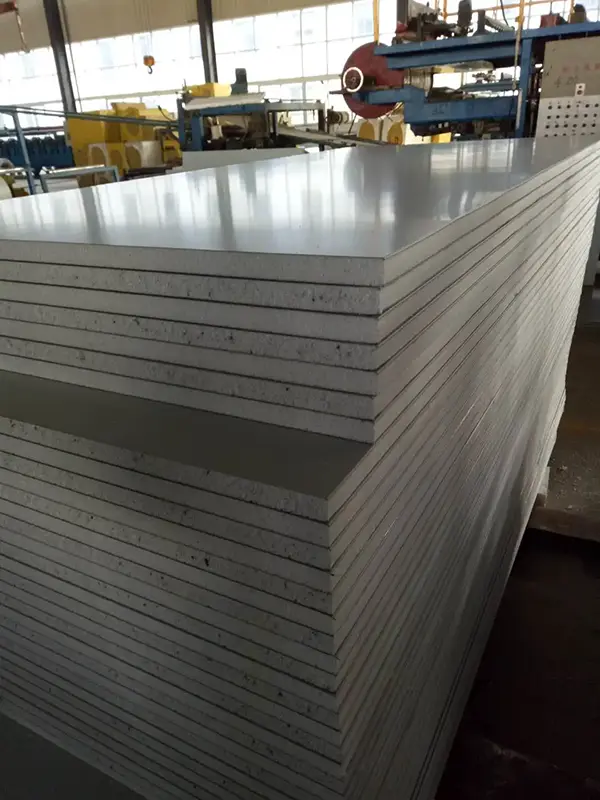
SENBO is a professional manufacturer and supplier of 30mm Polystyrene Panels (EPS). The closed-cell foam panels meet GB/T 10801.1-2021 and are available in B1/B2 fire ratings. Widely used for basement wall protection layers and roof leveling insulation. Custom sizes and OEM available; contact us for factory prices and samples.
SENBO Building Materials supplies molded polystyrene foam boards as part of its insulation product range. The 30mm polystyrene panel is a thinner option within the EPS board series, commonly used for basement waterproofing protection, thin-layer roof leveling, and similar applications where a lightweight, precise-thickness insulation or cushioning layer is required.
The 30mm Polystyrene Panel (fully designated as a 30mm-thick molded polystyrene foam board, or EPS board) is a closed-cell foam panel made from expandable polystyrene beads through pre-expansion, aging, mold-heated forming, and cutting. Its internal structure consists of millions of independent, sealed air cells; air accounts for over 98% of the volume. Because the air is trapped within the cells and cannot convect, combined with air's inherently low thermal conductivity, the material exhibits good thermal insulation properties.
Standard dimensions are 1200mm × 600mm, and density grades (such as 18 kg/m³ or 20 kg/m³) are available to meet specific project requirements. The 30mm Polystyrene Panels are classified into two grades based on combustion performance: Class B1 (flame-retardant, oxygen index ≥32%) and Class B2 (combustible, oxygen index ≥30%). Class B1 products are self-extinguishing after removal of the ignition source and are suitable for building sections with specific fire safety requirements. The boards comply with the GB/T 10801.1-2021 standard, with tolerances of +1.5mm/0.0mm for thickness, ±2.0mm for length, and ±1.0mm for width, and a surface flatness deviation of ≤1.0mm.
Real-world Project Validation
1. Application as a Waterproofing Protection Layer for Basement Exterior Walls
In the garage basement exterior wall construction of the Jingxiong World Trade Port "Yuexianggu" project, 30mm-thick polystyrene boards were selected as the protective layer for the waterproofing system. In this application, the boards were installed on the exterior side of the waterproofing layer to act as a buffer, separating the backfill soil from the waterproofing membrane. This helps prevent hard particles in the backfill from scratching the membrane while also providing thermal insulation. The project utilized Class B2 polystyrene boards measuring 1200mm × 600mm with a density of 18kg/m³.
2. Validation of the Molding Process
The polystyrene boards are produced by molding expandable polystyrene (EPS) resin in high-temperature molds. Unlike extrusion processes, the molding method creates an internal structure of independent cells, containing 3 to 6 million sealed cells per cubic meter. This process contributes to dimensional stability, with a dimensional change rate of ≤0.3%–0.5% after 48 hours at a constant temperature of 70°C, helping the boards resist warping or deformation during construction and service.
3. Validation of Typical Engineering Parameters
The typical parameter combination for the 30mm-thick polystyrene boards in engineering applications is: 30mm thickness, 18kg/m³ density, and Class B2 combustion performance. This configuration meets the design requirements for general building thermal insulation and protective layers. For projects requiring higher fire safety ratings, Class B1 products are available; these feature an oxygen index of ≥32% and meet the Class B1 combustion performance requirements specified in GB 8624.
Key Specifications
All parameters listed below are based on the GB/T 10801.1-2021 standard. Customization is available to meet specific project requirements.
Performance Indicator
Parameter/Specification
Standard / Notes
Executive Standard
GB/T 10801.1-2021
Molded polystyrene foam for thermal insulation
Thickness Specification
30mm
Tolerance: +1.5/0.0mm
Standard Dimensions
1200mm × 600mm
Length tolerance: ±2.0mm; Width tolerance: ±1.0mm
Apparent Density
18–22kg/m³ (customizable)
Standard: 18kg/m³
Thermal Conductivity
≤0.039–0.041 W/(m·K)
At 25℃
Compressive Strength
≥100kPa
At 10% deformation
Tensile Strength (Perpendicular to Surface)
≥0.10MPa
Dimensional Stability
≤0.3% (70℃, 48h)
Water Absorption Rate
≤3% (volume fraction)
Combustion Performance
Class B1 (Flame-retardant) / Class B2 (Combustible)
Oxygen Index: B1 ≥32%, B2 ≥30%
Technical Features
1. Precise Thickness for Thin-Layer Applications. The 30mm specification is designed for applications such as basement waterproofing protection layers and thin-layer roof leveling. The thickness tolerance of +1.5/0.0mm supports the precision requirements of thin-layer construction.
2. Lightweight with Adequate Compressive Strength. With a density of 18–22kg/m³, each board is lightweight and easy to handle and cut. The compressive strength of at least 100kPa provides resistance against lateral pressure from backfill soil in underground applications.
3. Stable Thermal Insulation Performance. Thermal conductivity is no more than 0.039–0.041 W/(m·K). The closed-cell structure helps maintain insulation performance over time.
4. Dimensional Stability. The dimensional change rate is no more than 0.3% after 48 hours at 70°C, and surface flatness is no more than 1.0mm, which supports a tight fit against the substrate after installation.
5. Grade Options for Different Fire Safety Requirements. Class B1 (flame-retardant) products are available for projects with specific fire safety requirements, while Class B2 products may be suitable for applications with lower fire safety demands, such as underground waterproofing protection.
Selection and Installation Considerations
For basement exterior wall waterproofing protection: The 30mm EPS board serves as a buffer layer between the waterproofing membrane and backfill soil. Select a density of at least 18kg/m³. Installation should be carried out carefully to avoid damaging the waterproofing layer; boards are typically placed or lightly adhered before backfilling.
For roof leveling or thin-layer insulation: Confirm that the compressive strength and dimensional stability meet the expected loads and temperature conditions. Surface flatness of ≤1.0mm helps achieve a smooth finish for subsequent layers.
For external wall insulation systems: Class B2 EPS boards must be used with appropriate fire barriers and in accordance with local building fire safety regulations. For higher fire safety requirements, Class B1 boards may be specified.
Storage and handling: Store boards flat in a dry, covered area, away from direct sunlight and sources of ignition. Protect from prolonged exposure to solvents or high temperatures. Handle with care to avoid edge damage and surface indentation.
Application Scenarios
1. Buffer or protection layer for basement exterior wall waterproofing, isolating the waterproofing layer from damage caused by backfill soil.
2. Thin-layer insulation for roof insulation and leveling courses.
3. Insulation layer for external wall insulation systems (to be used with fire barriers as required by code).
4. Insulation layer for underfloor heating systems.
Frequently Asked Questions
1. What is the difference between EPS and XPS insulation boards?
EPS (expanded polystyrene) boards are produced by molding expanded beads, resulting in a closed-cell structure with lower density and lower compressive strength compared to XPS (extruded polystyrene). XPS typically has a smoother surface and higher moisture resistance. For the 30mm thickness, EPS is often selected for basement waterproofing protection and thin-layer leveling where compressive strength requirements are moderate.
2. Can this 30mm EPS board be used for exterior wall insulation?
Yes, it can be used as part of an external wall insulation system, but fire safety regulations must be observed. For buildings with specific fire safety requirements, Class B1 boards are recommended. Fire barriers and proper detailing are required when using combustible insulation materials on facades.
3. How should the 30mm EPS board be installed on a basement wall?
After the waterproofing membrane is installed and inspected, the EPS boards are placed against the wall, typically without mechanical fasteners through the waterproofing layer. The boards should be butted tightly to form a continuous protective layer before backfilling. Avoid dragging or dropping boards during installation.
4. What density should be selected for a basement protection layer?
A density of 18kg/m³ is commonly used for basement protection applications because it provides a good balance of lightweight handling, cushioning effect, and resistance to backfill pressure. Higher densities (20–22kg/m³) may be used when additional compressive strength is desired.
5. Does the 30mm EPS board absorb water?
EPS boards have a water absorption rate of no more than 3% by volume, which means they resist moisture uptake. However, they are not intended to act as a primary waterproofing layer. In basement applications, they are used as a protective buffer outside the waterproofing membrane, not as a replacement for it.
About SENBO Building Materials
Tianjin SENBO Building Materials Technology Co., Ltd. is a manufacturer of molded polystyrene insulation boards, polyurethane panels, rock wool composite panels, and other building envelope products. Our production base is located in Jinghai Economic Development Zone, Tianjin, China, equipped with automated production lines and a four-stage quality inspection process. For more information about our factory, certifications, testing capabilities, and project references, please visit our About Us page or contact our engineering team.
Send SENBO an inquiry for steel building materials. Request a free quote, sample or bulk order price list. Our sales team responds within 24 hours with factory direct pricing, stock availability and shipping options.
We use cookies to offer you a better browsing experience, analyze site traffic and personalize content. By using this site, you agree to our use of cookies.Privacy Policy