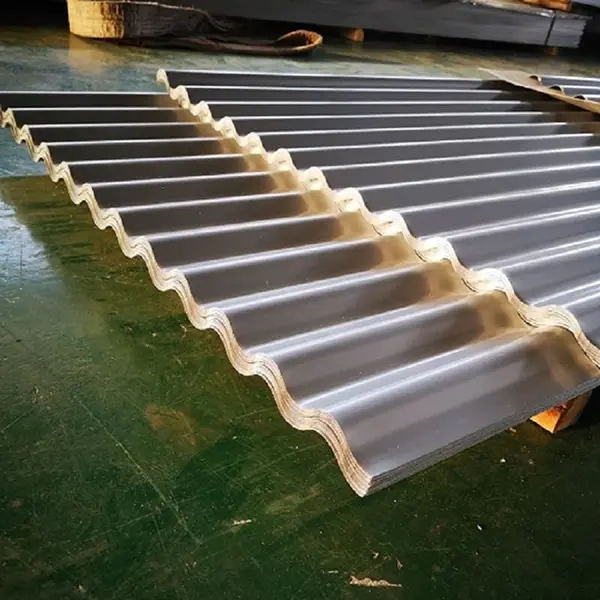
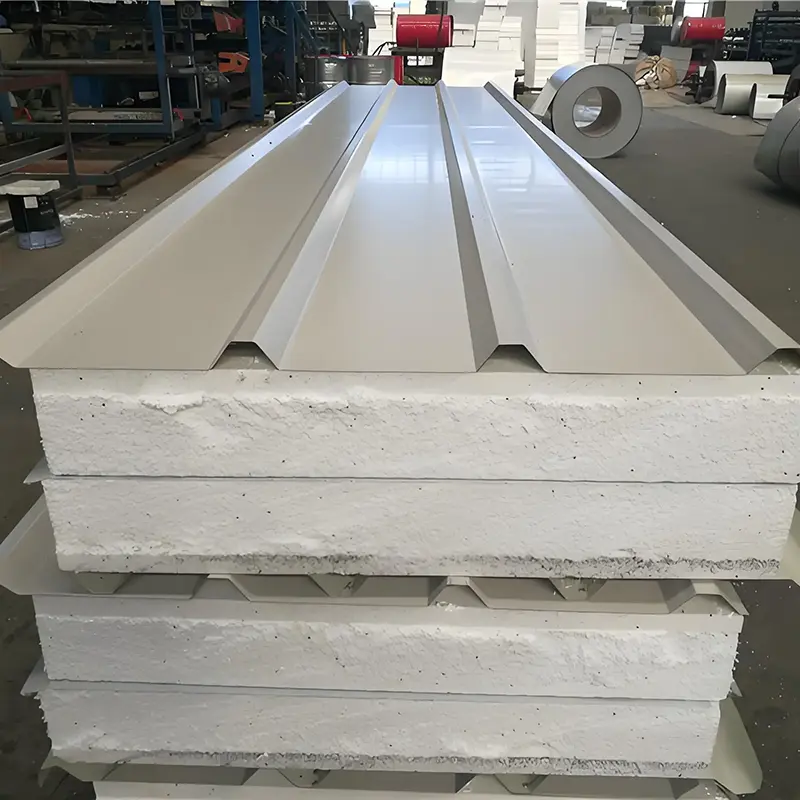
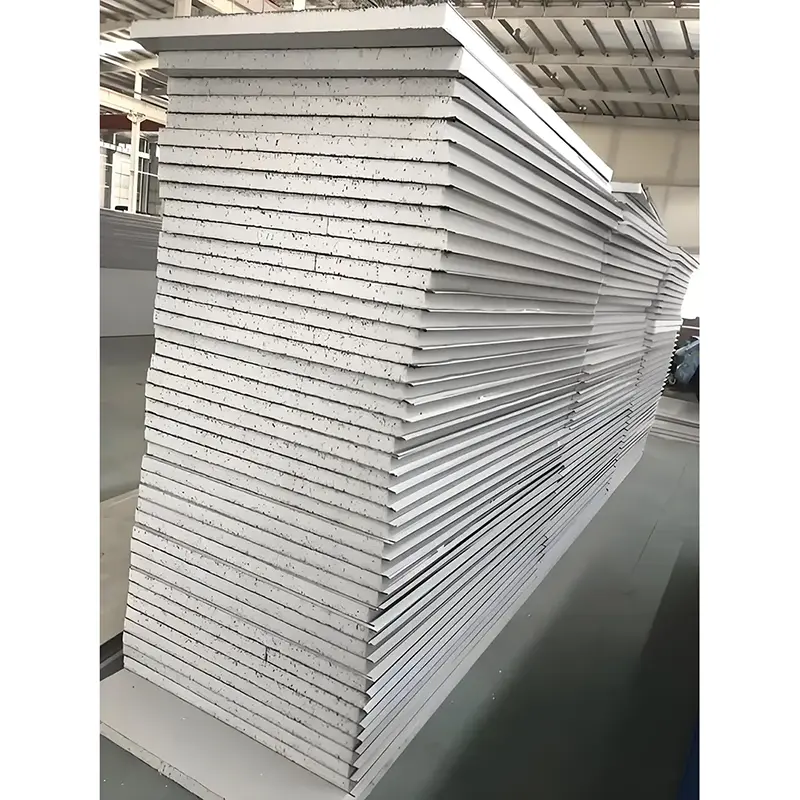
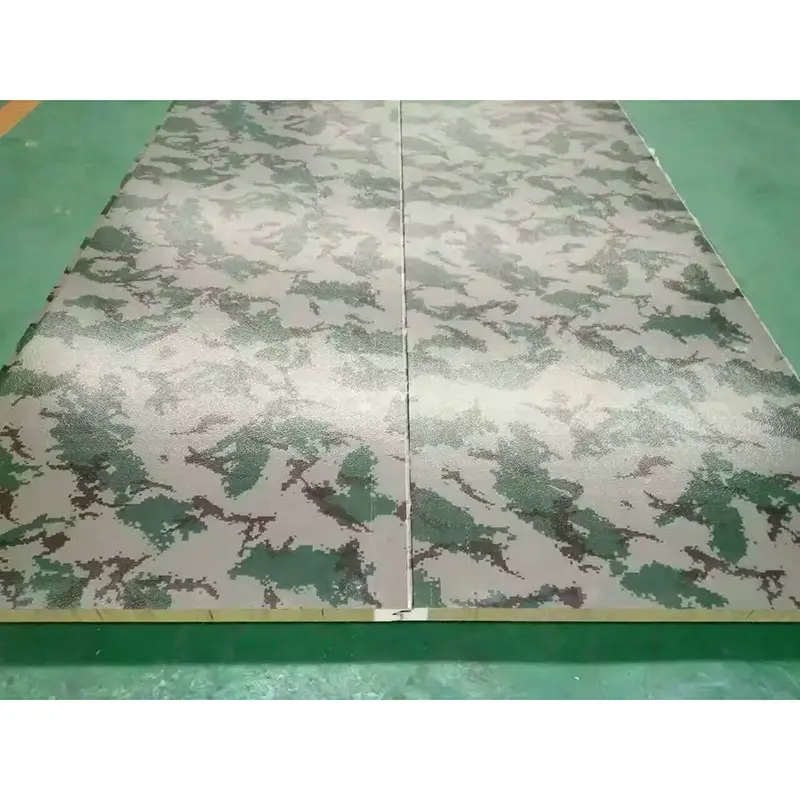
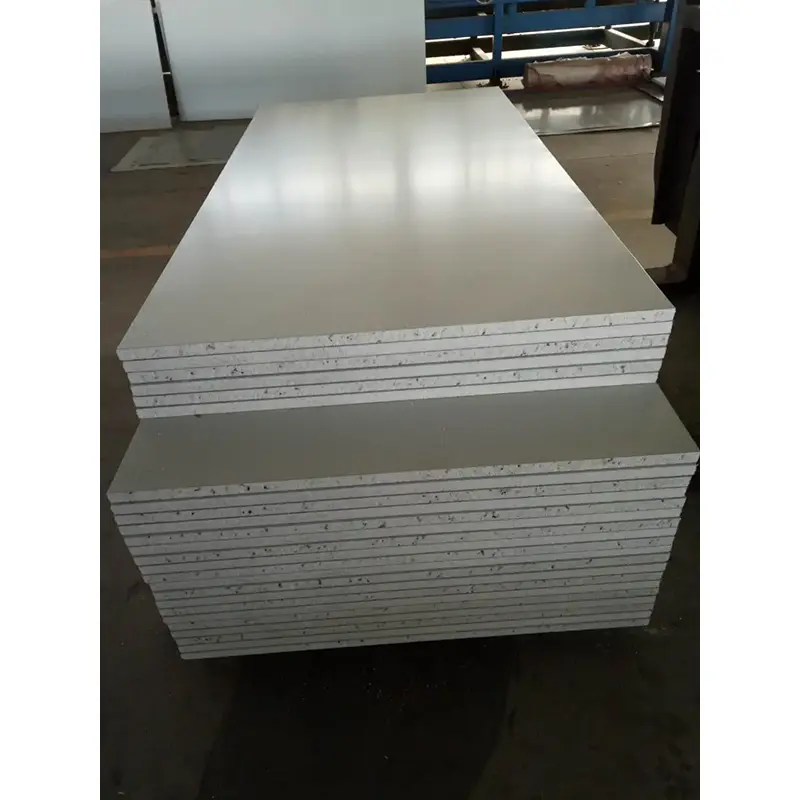
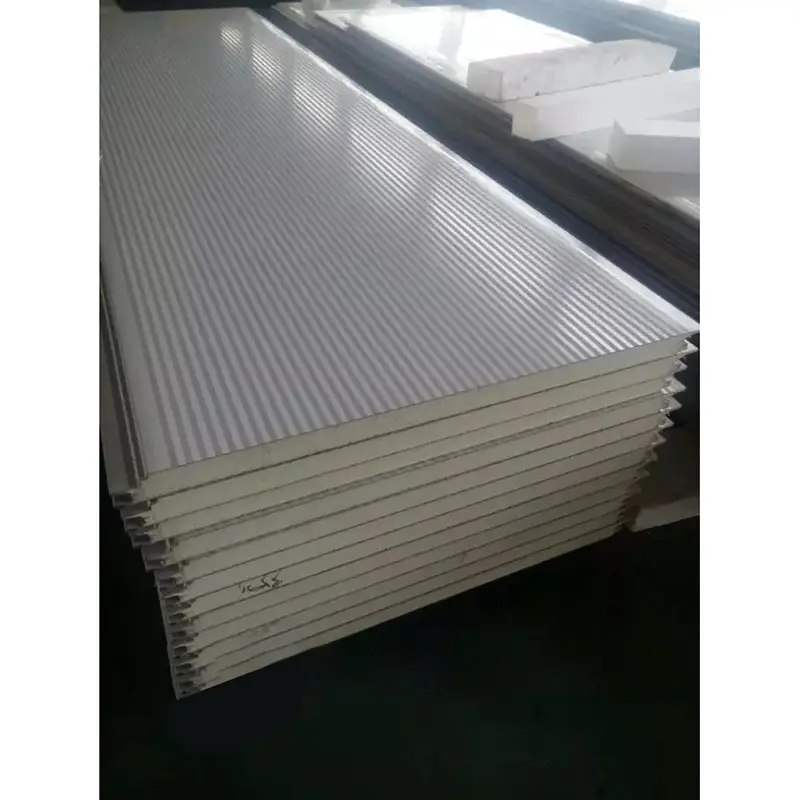
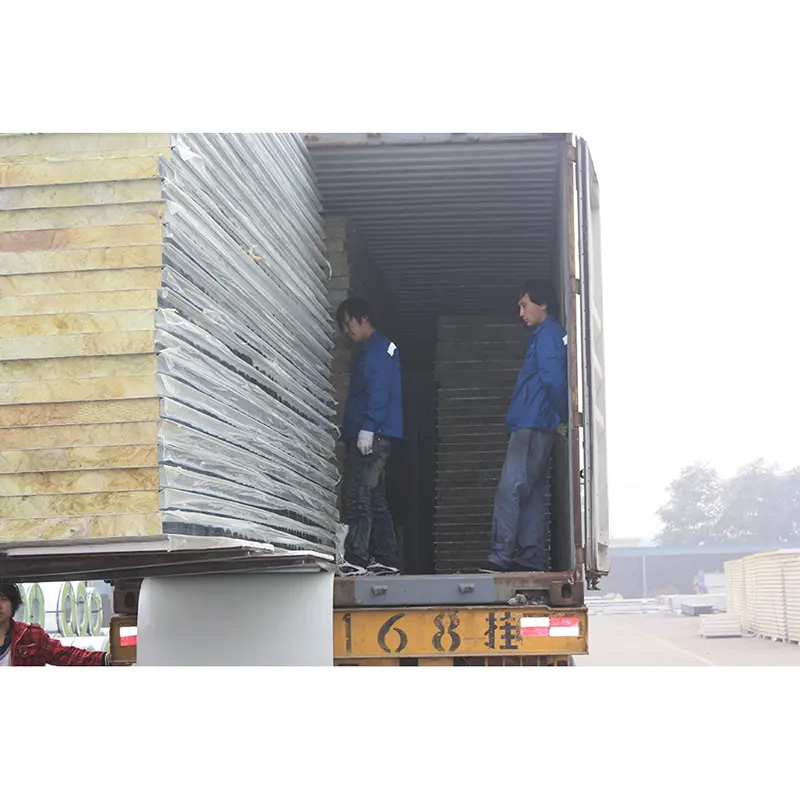
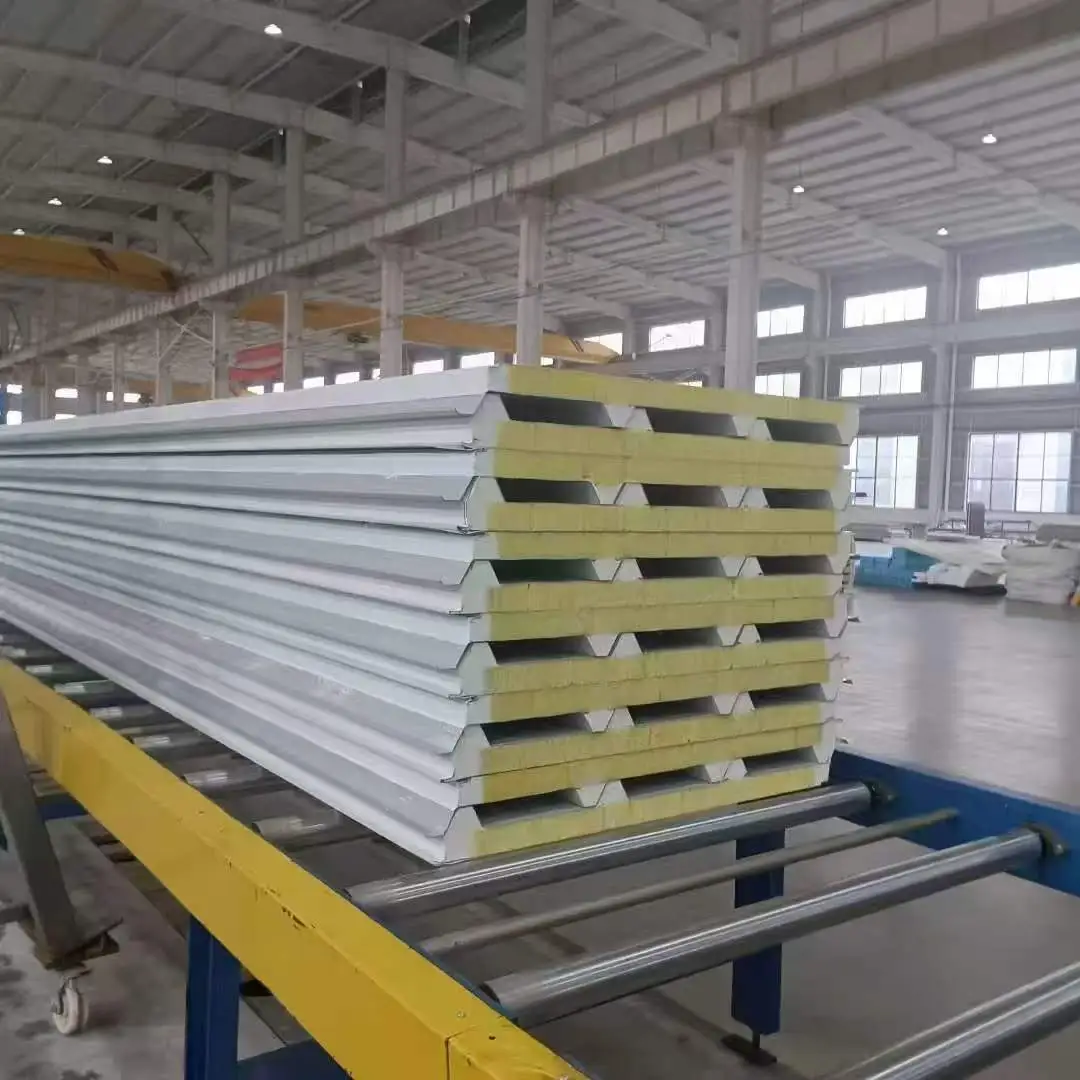
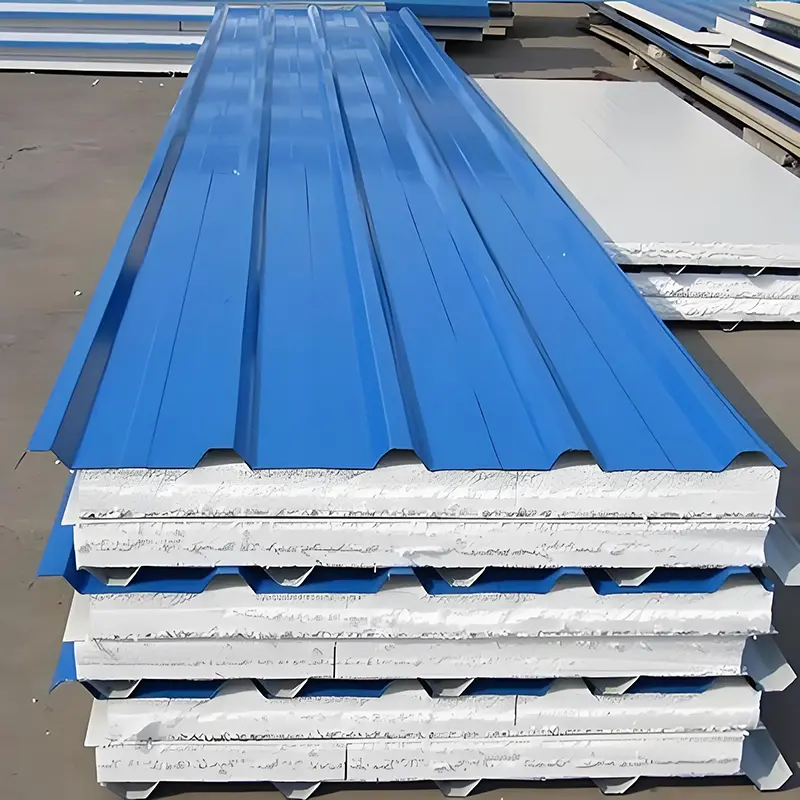
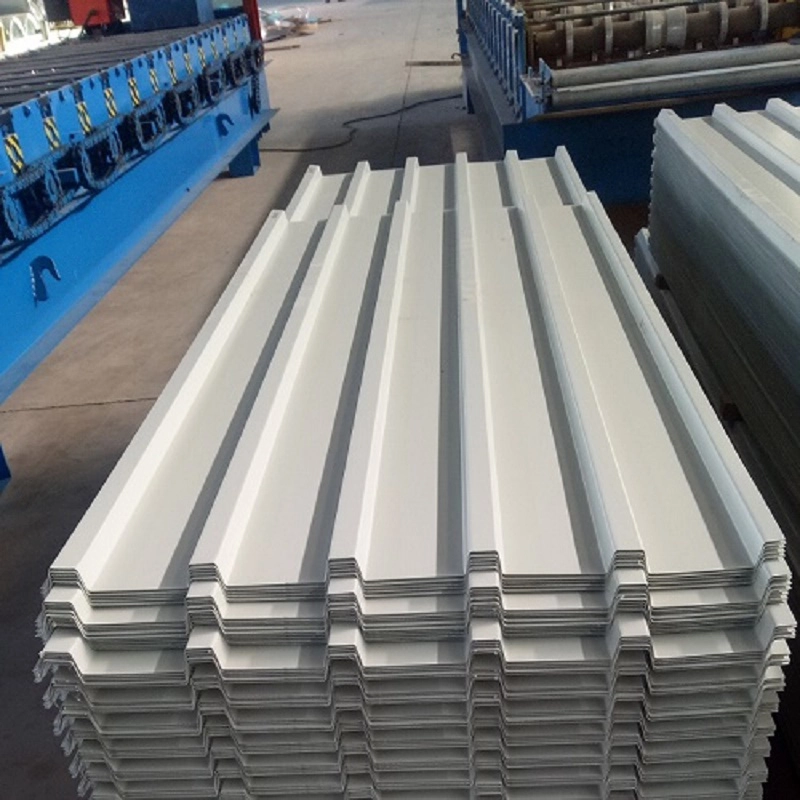
Tianjin SENBO supplies (EPS) Polystyrene Sandwich Panels with flame-retardant EPS cores and color-coated steel facings. Compliant with JC/T 689-1998, they offer thermal insulation, lightweight construction, and reliable bonding. Available for wholesale and bulk orders, suitable for warehouses, industrial plants, modular buildings, and cold storage facilities.
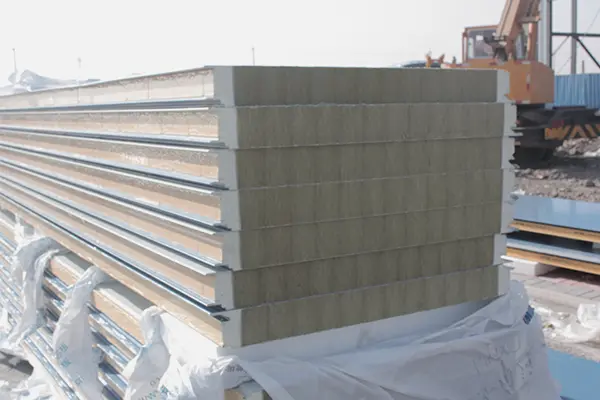
Polystyrene sandwich panels, also referred to as EPS color-steel composite panels, consist of a flame-retardant polystyrene foam core bonded between two color-coated steel facings. The steel facings are typically 0.4 mm to 0.8 mm in thickness. The core is a molded expanded polystyrene board. A two-component polyurethane adhesive is commonly used to bond the facings and core into a single component. Tianjin SENBO manufactures these panels on dedicated continuous lamination lines, with in-house control over facing material selection, adhesive application, and core density to maintain consistent product quality.
The panel works on the stressed-skin principle. Under bending, the metal facings resist tensile and compressive forces, while the core transfers shear stress and holds the facings apart. This design provides higher flexural rigidity than would be expected from the panel's weight alone. Senbo's production monitoring covers core density and bond strength at regular intervals, which helps ensure that the stressed-skin behavior remains reliable over the panel's service life.
Standard thickness options include 50 mm, 75 mm, 100 mm, 150 mm, 200 mm, and 250 mm. Effective widths are 1150 mm or 1200 mm. Panels can be produced in lengths up to 12,000 mm, and custom sizes are available depending on transport and project requirements.
Technical Specifications
Performance Indicator
Parameter / Specification
Basis or Remarks
Executive Standard
JC/T 689-1998
Industry standard for metal-faced polystyrene sandwich panels
Facing Material
Color-coated steel sheet
Thickness 0.4–0.8 mm
Core Material
Flame-retardant polystyrene (EPS)
Molded board
Core Density
≥18 kg/m³
Required for panel rigidity
Thermal Conductivity
≤0.041 W/(m·K)
Measured for EPS core
Bond Strength
>0.1 MPa
Higher than typical rock wool or polyurethane panels
Flexural Load Capacity
≥0.5 kN/m at deflection L₀/250
Meets general envelope requirements
Core Oxygen Index
>30%
Per GB/T 10801.1
Combustion Performance
Class B2 (Combustible)
Not suitable for areas with specific fire-resistance requirements
Common Thicknesses
50–250 mm
Custom sizes available
Effective Width
1150 mm / 1200 mm
Standard widths
Performance Data and Verification
1. Bond Strength and Peel Performance
The minimum bond strength for polystyrene sandwich panels is specified as 0.1 MPa. By comparison, polyurethane panels require at least 0.09 MPa, and rock wool panels require at least 0.06 MPa. In peel tests, the core material remaining on each facing must be evenly spread and cover no less than 85% of the bonded area. This requirement helps ensure that the facings and core continue to act together during service.
2. Thermal Insulation Performance
The EPS core has a thermal conductivity no higher than 0.041 W/(m·K). Its closed-cell content is close to 100%, meaning the material contains a large number of independent air pockets that reduce convective heat transfer. A 50 mm panel shows a total heat transfer coefficient of approximately 0.68 W/(m²·K) and weighs roughly 10 kg per square meter.
3. Mechanical Properties
The flexural load capacity is at least 0.5 kN/m when the deflection reaches L₀/250, where L₀ is the distance between supports. This level is sufficient for standard building enclosure applications. The core density of 18 kg/m³ or higher contributes to the panel's overall stiffness.
4. Fire Performance and Application Limits
GB/T 10801.1 requires the polystyrene core to have an oxygen index above 30% and to meet the B2 combustible classification. Polystyrene sandwich panels are not intended for building parts that require a formal fire-resistance rating. They should be limited to areas with low fire safety demands. When a rated assembly is required, panels with rock wool or polyurethane cores should be specified.
5. Sound Insulation
A 50 mm EPS sandwich panel typically provides an average sound insulation of about 40 dB. This level is generally adequate for industrial buildings and storage facilities where moderate acoustic separation is sufficient.
Product Characteristics
Lightweight construction: A 50 mm panel weighs approximately 10 kg/m², which reduces load on the supporting structure and simplifies handling during transport and installation.
Stable insulation performance: The EPS core has a thermal conductivity of ≤0.041 W/(m·K) and a closed-cell structure that limits internal air movement, helping maintain consistent thermal resistance over time.
High bond strength: The bond between the steel facing and the EPS core exceeds 0.1 MPa, higher than the minimum values specified for polyurethane and rock wool sandwich panels.
Cost efficiency: Compared with rock wool and polyurethane panels of similar thickness, EPS panels generally have lower material and installation costs.
Factory prefabrication: Panels are produced to size in a controlled factory environment and assembled on site, which reduces construction waste and shortens on-site installation time.
Common Applications
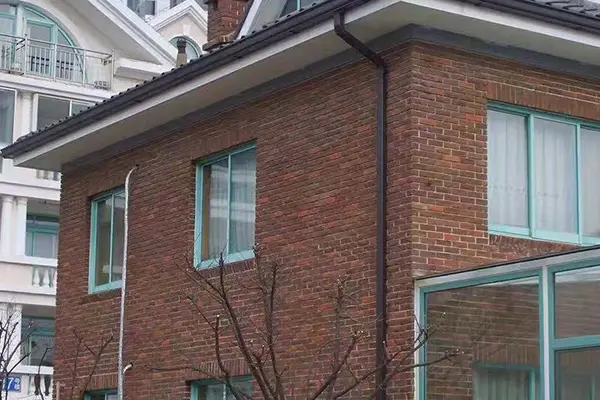
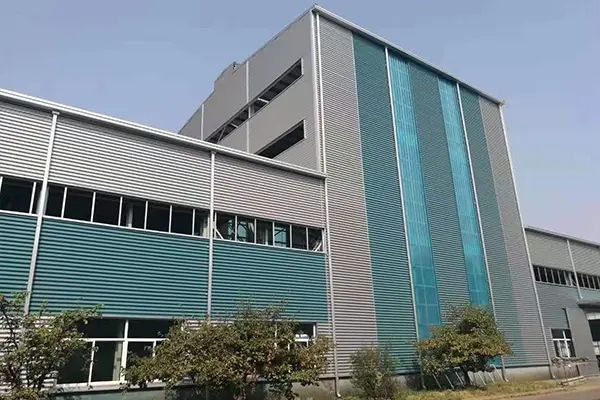
Industrial buildings and warehouses: Used for wall and roof enclosures where fire resistance requirements are low and a lightweight, economical envelope is preferred.
Temporary and modular structures: Suitable for site offices, prefabricated cabins, and other short-term buildings that require quick assembly and easy relocation.
Temperature-controlled storage: Can be used in cold storage or general temperature-controlled warehouses, provided fire safety measures are separately addressed according to project specifications.
Light commercial and display buildings: Applied in sales centers, exhibition pavilions, and similar light structures where design flexibility and cost control are priorities.
On-site Handling and Storage
Lift panels with fabric slings or padded forks to avoid denting the steel surfaces.
Cut panels with a fine-toothed saw or a dedicated panel blade; remove foam particles from edges before installation.
Keep panels away from open flames, welding sparks, and high-temperature equipment during storage and installation.
Do not expose EPS cores to organic solvents or strong chemicals that can dissolve the foam.
Store panels flat or slightly inclined, off the ground, under a waterproof cover, and away from direct sunlight.
Common Questions
Can EPS sandwich panels be used in occupied buildings?
They are generally used in buildings where fire safety requirements for the envelope are low, such as some warehouses, temporary offices, and agricultural structures. For occupied buildings or areas governed by strict fire codes, panels with non-combustible cores are usually required.
What makes EPS panels different from polyurethane panels?
EPS panels are lighter and often less expensive, but their B2 fire rating limits their use. Polyurethane panels offer better thermal performance per unit thickness and usually achieve B1 flame retardancy. The right choice depends on fire codes, insulation targets, and budget.
How should EPS panels be protected during long-term storage?
They should be kept dry, covered, and away from heat sources. Prolonged UV exposure can affect the steel coating, and moisture can enter the core if edges are not sealed. Inspect the protective film and packaging regularly.
Can these panels be recycled at the end of their service life?
The steel facings are recyclable. EPS foam can also be recycled or used as a raw material in some processes, but local recycling facilities and regulations should be checked in advance.
Inspection and Quality Control
Each batch of incoming steel and EPS is checked for thickness, density, and surface condition. Production monitoring covers panel dimensions, adhesive application, and bonding consistency. Before shipment, panels are reviewed for edge quality, facing damage, and package integrity. Reports aligned with JC/T 689-1998 can be supplied, and additional third-party testing is available when required by the project.
Points to Consider Before Ordering
Confirm that the project's fire safety requirements allow a B2 core material.
Select thickness based on thermal calculations and span tables rather than guesswork.
Check that the effective width matches the building module to reduce cutting waste.
Plan joint sealing and drainage details carefully, especially for roofs and exterior walls.
Discuss delivery lengths with the supplier to avoid unnecessary site joints.
Send SENBO an inquiry for steel building materials. Request a free quote, sample or bulk order price list. Our sales team responds within 24 hours with factory direct pricing, stock availability and shipping options.
We use cookies to offer you a better browsing experience, analyze site traffic and personalize content. By using this site, you agree to our use of cookies.Privacy Policy