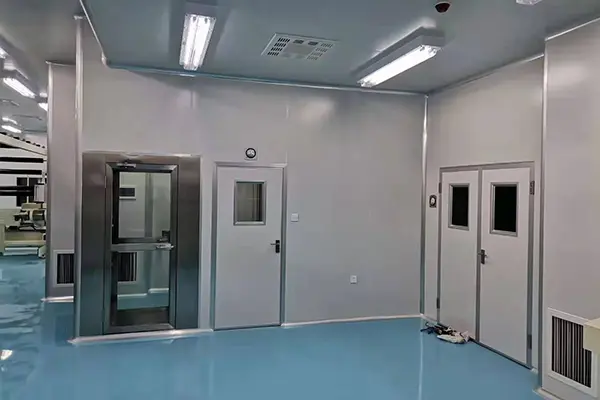
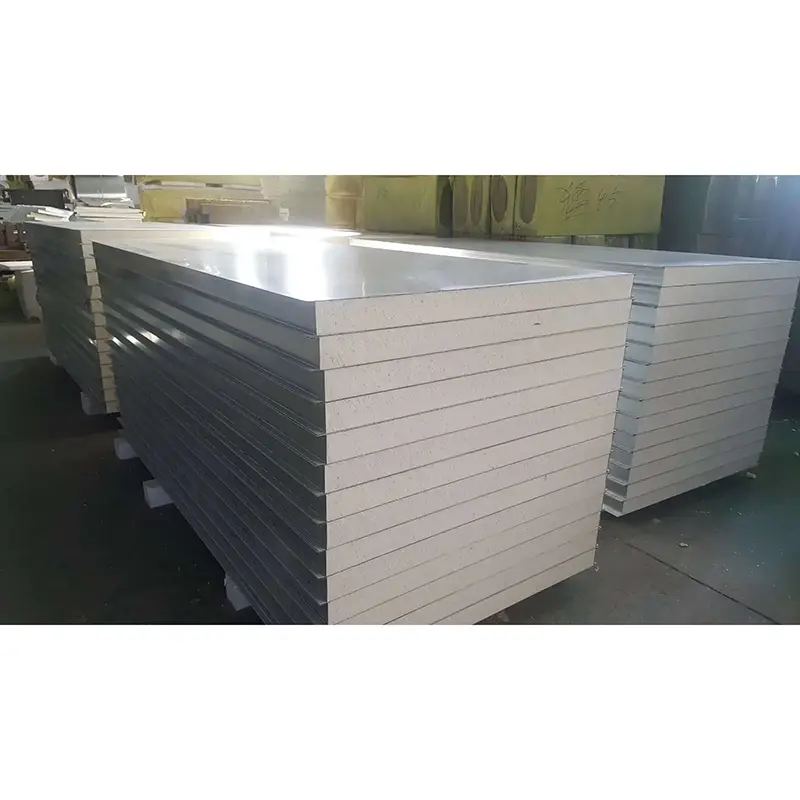
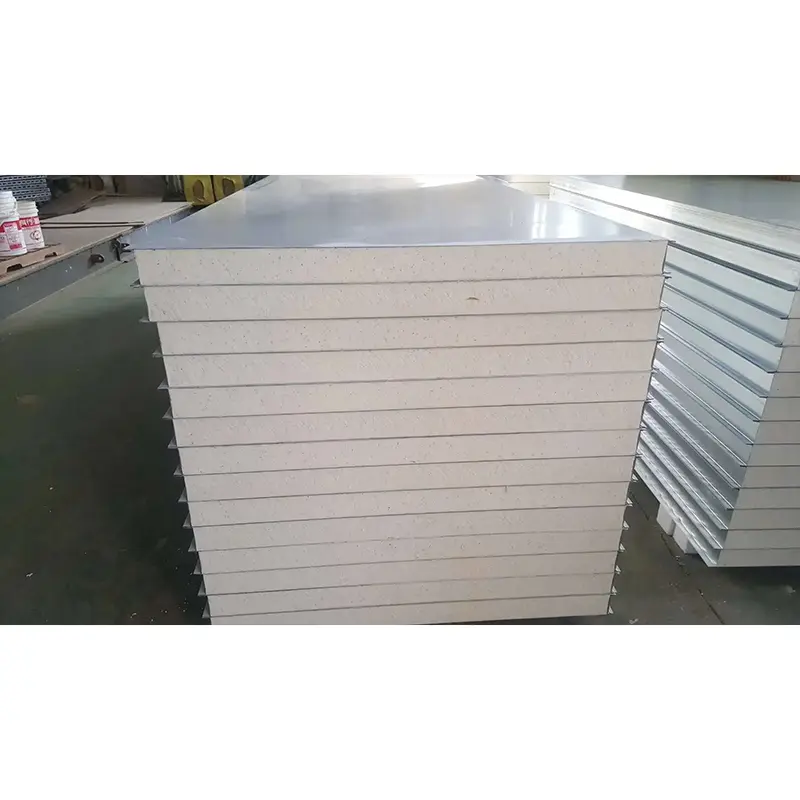
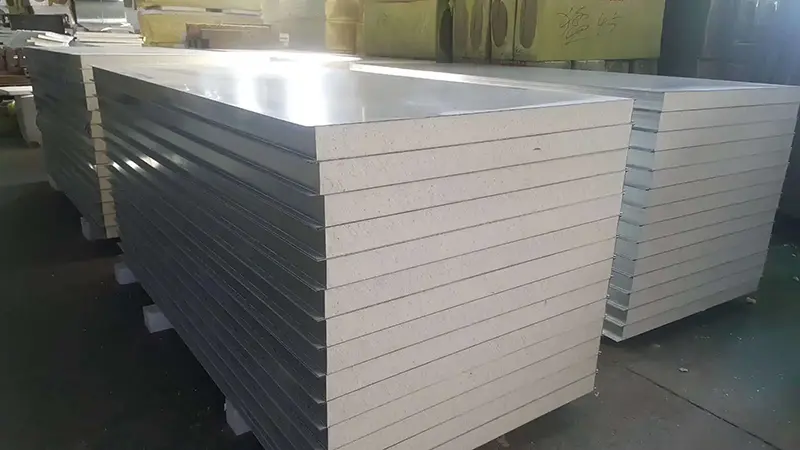
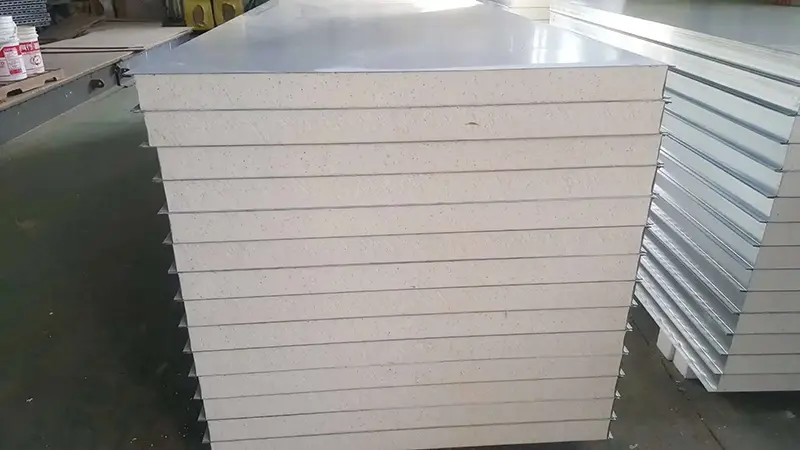
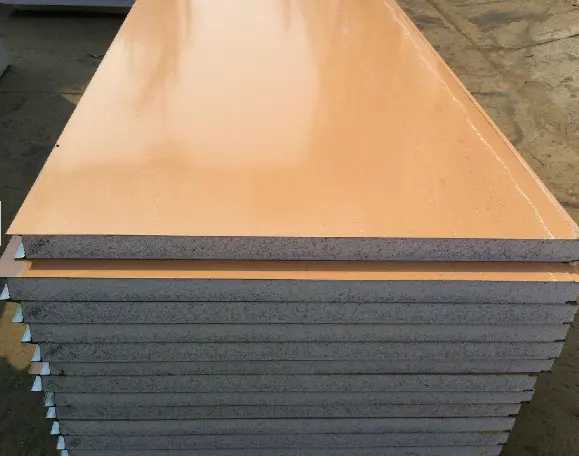
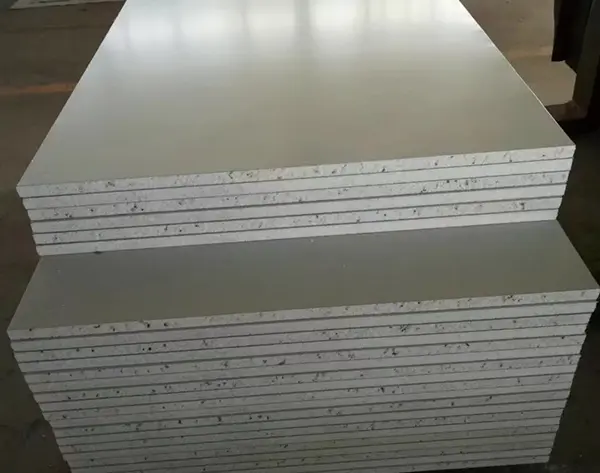
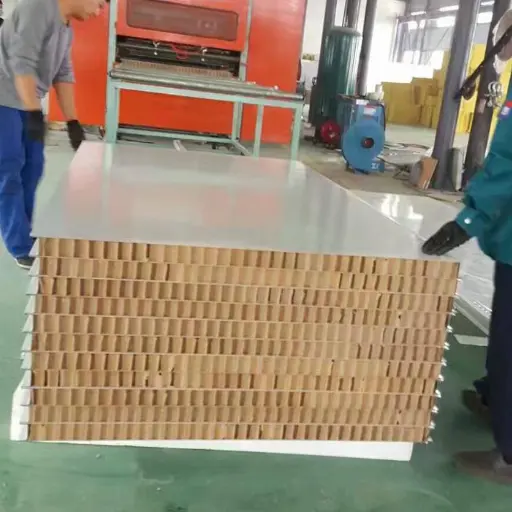
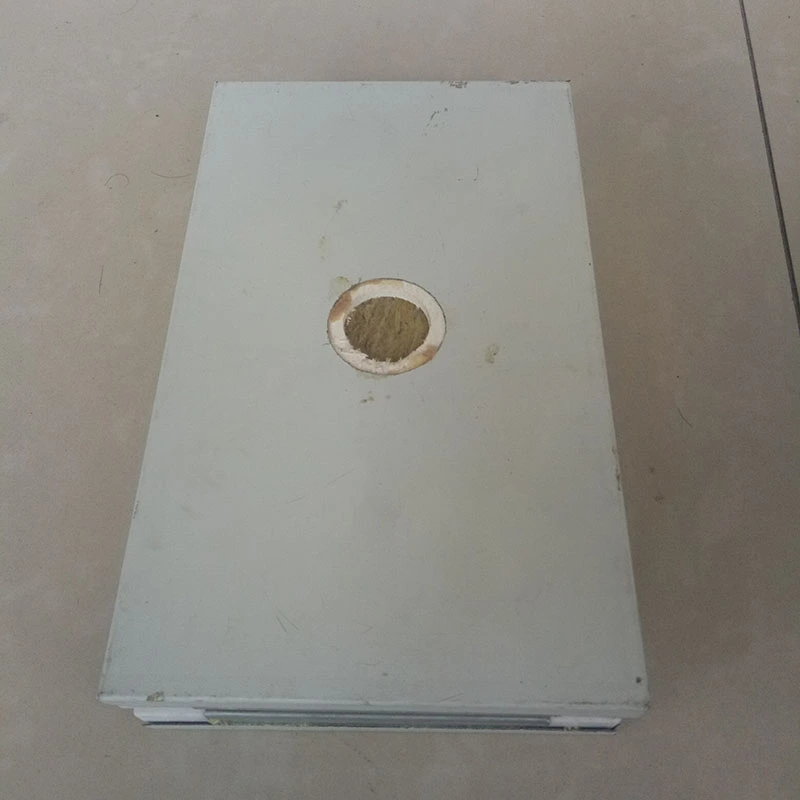
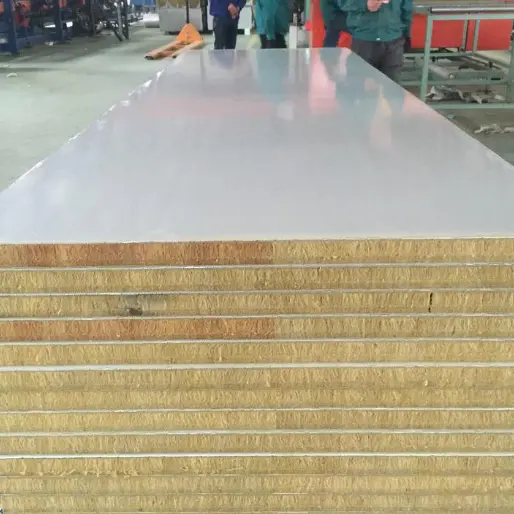
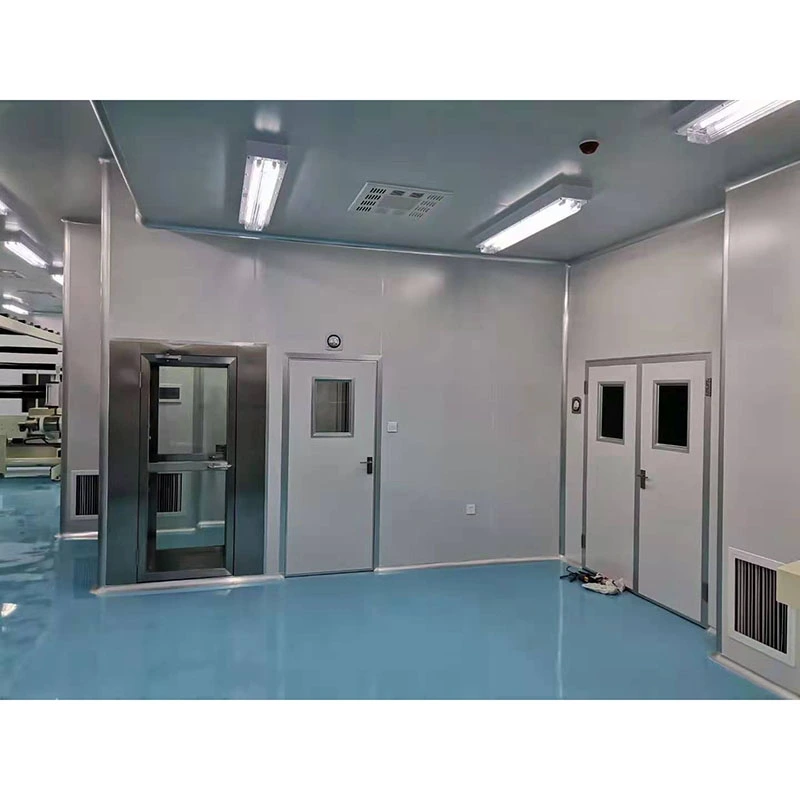
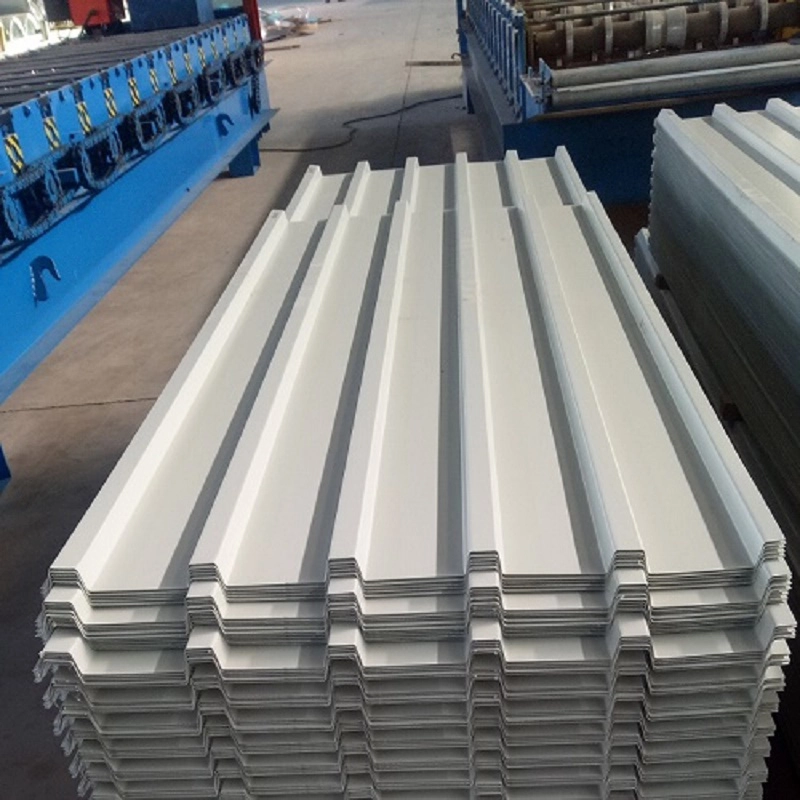
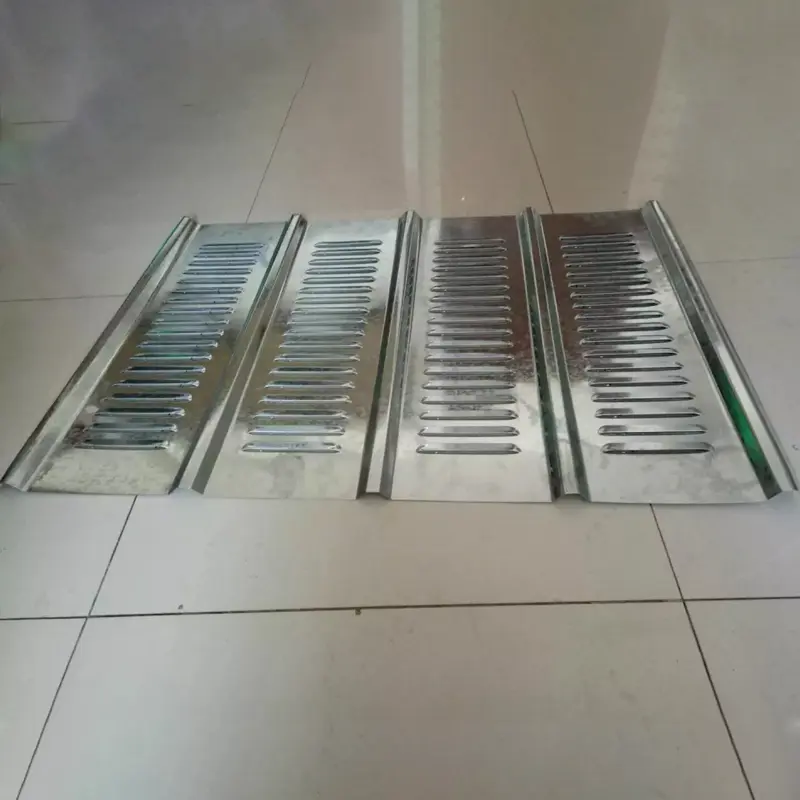
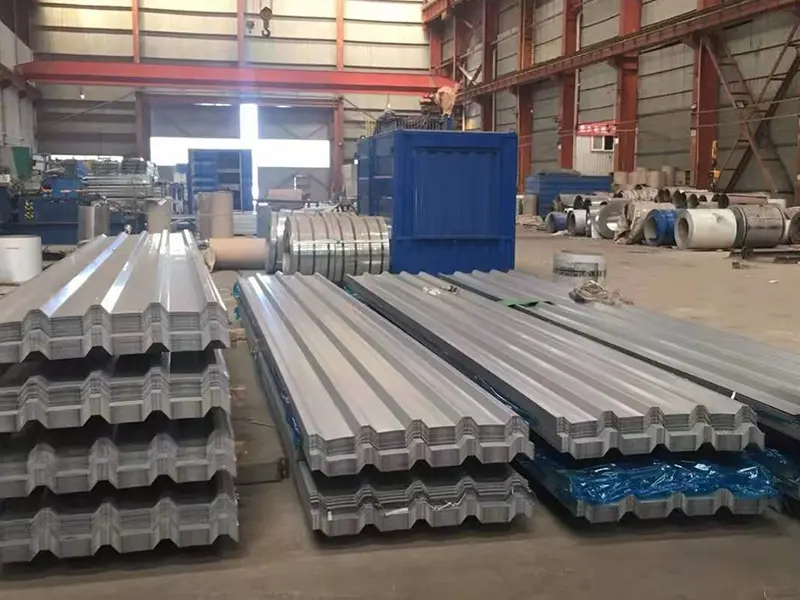
SENBO Polystyrene Cleanroom Panels are lightweight, cost-effective steel-faced sandwich panels with flame-retardant EPS core. Combustible, no fire rating—use only in non-fire-rated zones. Ideal for electronics, food, and general cleanrooms. Buy SENBO EPS panels at competitive wholesale prices.
Polystyrene cleanroom panels, also known as EPS cleanroom panels, are lightweight sandwich panels produced on a continuous production line. SENBO Building Materials supplies these panels for controlled environments where thermal insulation and cost efficiency are primary considerations and where fire rating requirements are limited.
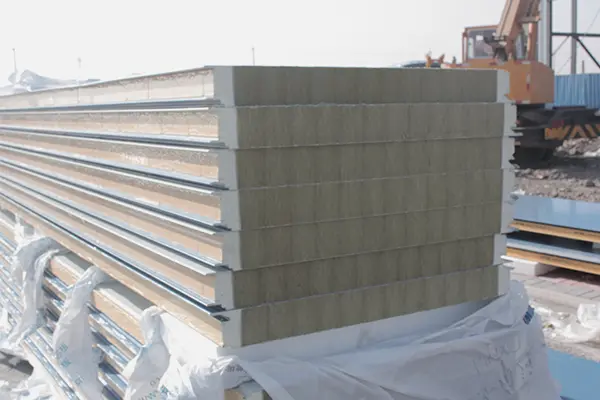
The panels consist of facings made from color-coated steel, galvanized steel, or stainless steel, bonded under heat and pressure to a core of polystyrene foam. Facing thickness ranges from 0.4 mm to 1.2 mm. The EPS core has a density of 12–25 kg/m³, with 16 kg/m³ as the standard. The closed-cell structure contains independent, sealed air bubbles that contribute to thermal insulation.
The standard connection method is a tongue-and-groove joint, also referred to as a male-female interlocking system. Centered joint options are also available. Both methods provide a tight seal between adjacent panels.
Available Dimensions and Surface Options
Panel thickness ranges from 40 mm to 250 mm, with standard sizes of 50 mm, 75 mm, and 100 mm. Customization is available within this range. Standard widths are 950 mm and 1150 mm, and panel length can reach 12,000 mm depending on project requirements.
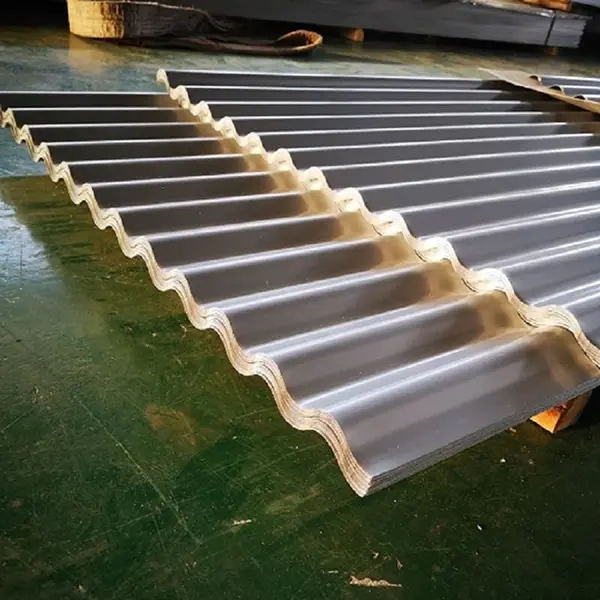
The surface profile can be flat or ribbed, and a PVC protective film covers the surface to prevent scratches during transport and installation.
Products are classified into two categories based on fire-retardant rating. Standard EPS panels have no fire-retardant additives and are limited to areas where fire ratings are not required. Fire-retardant EPS panels contain additives and can achieve Class B1 or B2 ratings.
Measured Performance Data
1. Thermal Insulation: Heat Transfer Coefficients by Thickness
The EPS foam core has low thermal conductivity, which provides effective thermal insulation. The table below lists measured heat transfer coefficients for various panel thicknesses, based on 0.5 mm color-coated steel facings and an EPS density of 16 kg/m³.
Panel Thickness (mm)
Heat Transfer Coefficient W/(m²·K)
50
0.663
75
0.442
100
0.330
150
0.220
200
0.160
250
0.133
At a thickness of 75 mm, the heat transfer coefficient is below 0.45 W/(m²·K), which is better than rock wool sandwich panels of the same thickness. This makes EPS panels suitable for cleanrooms with temperature control requirements.
2. Lightweight Characteristics: Surface Density Data
The low self-weight of EPS cleanroom panels is one of their defining features. The table below shows weight per square meter for various thicknesses, based on the same facing and core specifications.
Panel Thickness (mm)
Weight (kg/m²)
50
10.00
75
10.44
100
10.89
150
11.79
200
12.69
250
13.59
By comparison, a 50 mm rock wool cleanroom panel weighs approximately 15–16 kg/m². The lighter weight of EPS panels simplifies handling and installation, and makes them suitable for retrofitting onto existing structures with lower load-bearing capacity.
3. Sound Insulation: Test Data by Thickness
Polystyrene Cleanroom Panels provide a basic level of sound insulation. Measured values for different thicknesses are listed below.
Panel Thickness (mm)
Sound Insulation (dB)
50
20.0
75
21.5
100
23.0
This level of sound insulation is adequate for general industrial plants and standard cleanrooms, but it is lower than that of rock wool or magnesium oxysulfate panels.
4. Vertical Load Capacity
When used as wall panels, the allowable vertical loads vary by thickness and wind load condition. The table below provides reference values.
Wind Load (kg/m²)
50mm
75mm
100mm
150mm
200mm
250mm
2.5
1100
2000
2700
4700
6800
8800
3.5
1400
2500
2400
5000
6200
8200
4.0
800
1600
2400
4200
7000
9400
A 75 mm thick panel supports an allowable vertical load of 2,000 kg/m² under a wind load of 2.5 kg/m², which meets the load-bearing requirements for standard cleanroom partition walls.
5. Engineering Application Experience
EPS cleanroom panels are commonly used in general clean environments with limited fire-resistance requirements:
Electronics industry: Partitions and suspended ceilings for general electronics production workshops, meeting basic dust-proof requirements.
Food processing: Wall and ceiling finishes for food production workshops and warehouses, helping to keep dust and impurities out of production areas.
Healthcare: Corridors, changing rooms, and other auxiliary areas in non-critical hospital departments.
General industrial plants: Internal partitions and enclosure structures for machining and assembly workshops.
Technical Specifications
The following parameters are based on standard production and measured test data. Customization is available.
No fire rating (standard) / B1 or B2 (fire-retardant)
Standard EPS prohibited in fire-rated areas
Key Features and Practical Benefits
1. Cost-Effective Solution. EPS panels offer significant cost advantages over rock wool and aluminum honeycomb panels, making them an economical choice for large general cleanroom projects.
2. Lightweight and Efficient Installation. A 50 mm thick panel weighs approximately 10 kg/m², which is considerably lighter than rock wool panels of the same thickness. This reduces handling costs and speeds up construction.
3. Good Thermal Insulation. A 75 mm thick panel has a heat transfer coefficient of 0.442 W/(m²·K), which is better than rock wool panels of the same thickness.
4. Adequate Load-Bearing Capacity. A 75 mm panel supports 2,000 kg/m² under 2.5 kg/m² wind pressure, meeting structural requirements for standard partition walls.
5. Clearly Defined Application Scope. The panels are suitable for general clean environments where fire resistance is not required, such as electronic component workshops and food processing areas.
Important Safety Limitations
The EPS core is combustible. When burned, it produces smoke and fumes that are toxic, and the standard product holds no fire-resistance rating. The following restrictions apply:
1. Standard EPS panels are prohibited in cleanroom projects that require specific fire ratings, including pharmaceutical GMP workshops, hospital operating rooms, and electronics chip manufacturing plants.
2. They may only be used in areas where local building fire safety codes permit non-fire-retardant materials.
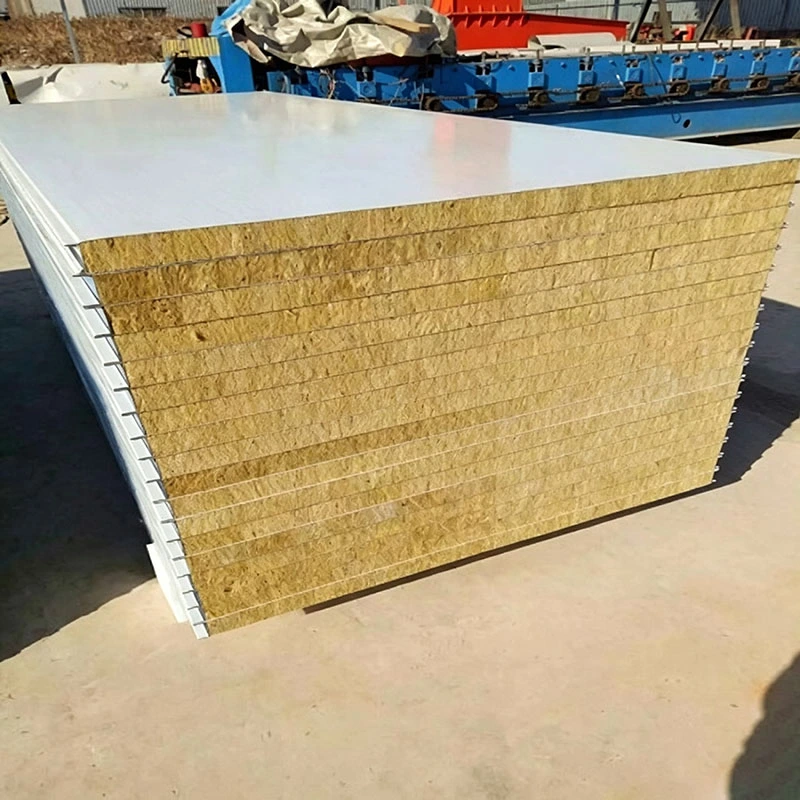
3. For projects that require fire-rated panels, alternatives such as rock wool cleanroom panels (Class A non-combustible) or magnesium oxysulfate panels should be selected.
4. If a fire-retardant rating is required, only EPS panels with added flame retardants that have been tested and certified as Class B1 or B2 should be considered, and their use must comply with local regulations.
Typical Application Areas
1. General electronics manufacturing and component assembly workshops without special fire rating requirements.
2. Food processing workshops and food warehouses in non-high-temperature areas.
3. Hospital corridors, changing rooms, and non-critical medical support areas.
4. Internal partitions and enclosures for standard industrial plants, such as machining and assembly workshops.
Frequently Asked Questions
1. How do EPS panels compare with rock wool cleanroom panels?
EPS panels are lighter and less expensive, and they offer slightly better thermal insulation at the same thickness. However, rock wool panels are Class A non-combustible and are suitable for areas with fire rating requirements, while standard EPS panels are not. The choice depends on the project's fire safety requirements and budget.
2. Can fire-retardant EPS panels be used in pharmaceutical GMP workshops?
In most cases, no. Pharmaceutical GMP workshops typically require Class A non-combustible panels. Even fire-retardant EPS panels with B1 or B2 ratings may not meet the fire safety requirements of these facilities. Rock wool or magnesium oxysulfate panels are generally recommended instead.
3. How should EPS panels be stored on site?
EPS panels should be stored flat in a dry, covered area away from sources of ignition, sparks, and open flames. They should be protected from direct sunlight for extended periods, as UV exposure can degrade the facing and core. The PVC protective film should remain in place until final installation.
4. Are EPS panels suitable for exterior applications?
These panels are designed for interior use. For exterior applications, the facing material and structural support must be specifically designed for outdoor conditions, and the fire safety of the assembly must be evaluated. It is recommended to consult the manufacturer before using EPS panels externally.
5. What is the difference between standard EPS and fire-retardant EPS?
Standard EPS has no fire-retardant additives and holds no fire rating. Fire-retardant EPS contains additives that slow the spread of flames and can achieve Class B1 or B2 ratings when tested. However, even fire-retardant EPS remains combustible and should only be used where permitted by fire safety codes.
About SENBO Building Materials
Tianjin SENBO Building Materials Technology Co., Ltd. is a manufacturer of polystyrene cleanroom panels, paper honeycomb purification panels, handmade sound-absorbing cleanroom panels, and other metal envelope products. Our production base is located in Jinghai Economic Development Zone, Tianjin, China, equipped with automated production lines and a four-stage quality inspection process. For more information about our factory, certifications, testing capabilities, and project references, please visit our About Us page or contact our engineering team.
Send SENBO an inquiry for steel building materials. Request a free quote, sample or bulk order price list. Our sales team responds within 24 hours with factory direct pricing, stock availability and shipping options.
We use cookies to offer you a better browsing experience, analyze site traffic and personalize content. By using this site, you agree to our use of cookies.Privacy Policy